
Aruba
For: Visitors from the US, UK, Canada and Australia planning a stay in Aruba, a constituent country of the Kingdom of the Netherlands, with the online ED card and Sustainability Fee, the florin, the regulated taxi fares, the Arubus routes and the Arikok park pass, each checked and dated. Every traveller to Aruba, infants included, needs an approved online ED card from edcardaruba.aw, and visitors arriving by air pay a 20 dollar Sustainability Fee with it. The florin is pegged at Afl. 1.79 to the US dollar; a bus ride costs 2.60 dollars and the Arikok park pass 22.
- Currency
- Aruban florin (Afl.[3]AWG), pegged to the US dollar at US$1.00 = Afl. 1.79.
- Time zone
- UTC-4 (AST), all year
- Advisories
- US: Level 1UK: FCDO does not advise against travel to any part of ArubaCanada: Level 1US advice checked Each government's advice
Quick answers
- Do I need a visa?
- US passport: Visa-free, up to 90 days. Checked .
- UK passport: Visa-free, 30 days, extendable to 90. Checked .
- Canadian passport: Visa-free, 30 days, extendable to 90. Checked .
- Australian passport: Visa-free, 30 days, extendable to 90. Checked .
- The entry table below has the rule in full.
- Is it safe?
- Each government's advice for this country:
- US: Level 1. Checked .
- UK: FCDO does not advise against travel to any part of Aruba. Checked .
- Canada: Level 1. Checked .
- What currency do they use?
Currency: Aruban florin, the official currency since Aruba obtained its Status Aparte within the Kingdom of the Netherlands in 1986, pegged to the US dollar at US$1.00 = Afl. 1.79. Checked .
i

The one thing
Parke Nacional Arikok
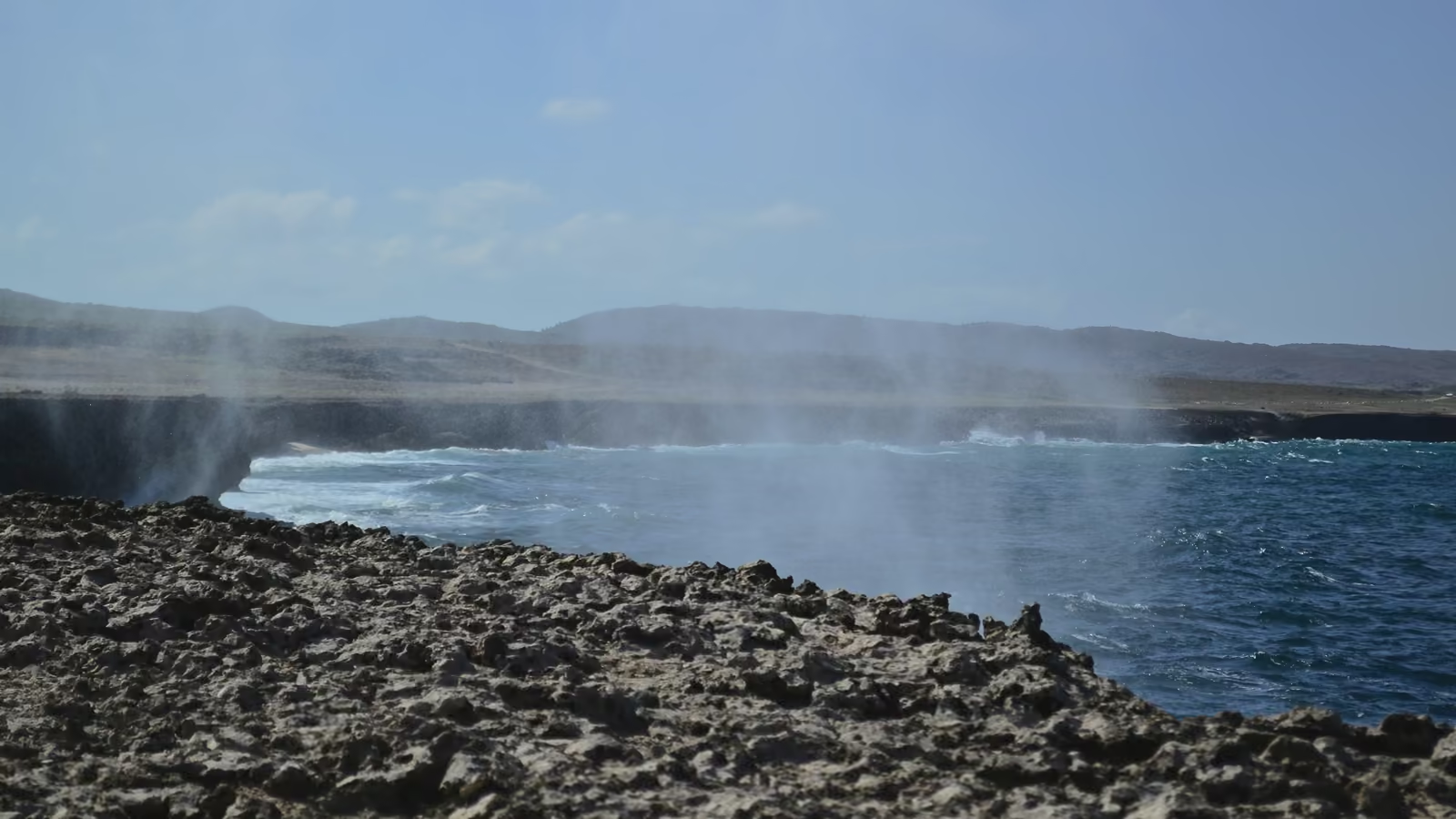
Arikok covers 34 square kilometres of the windswept north-east of Aruba: rugged hills, dry gullies running down to the sea, and Jamanota, the island's highest point at 188 metres. It is the wild side the hotel strip never shows, and rangers lead hikes into it.
Buy the conservation day pass at the San Fuego or Vader Piet entrance; a valid pass is required by law to enter. Stay on the park roads, which have a 20 km/h limit, and use the marked parking. ATVs, UTVs and motorbikes are not allowed in the protected areas, and drones are banned.[1][2] Price: Conservation day pass USD 22 per adult; children under 17 free. Residents of Aruba, Bonaire and Curacao with government photo ID get a local discount.[1] Hours: Visitor centres: San Fuego 8:00 to 15:30, Vader Piet 8:30 to 15:00.[1] Booking: No booking for the day pass: buy it at either entrance. Guided ranger hikes (Cunucu Arikok, Jamanota Hill, Rooi Tambu and Dos Playa) are booked through the Aruba Conservation Foundation at reservations@acf.aw.[1] Find guided visits on Viator (opens Viator in a new tab) paid linkSome links earn us a commission. How we work
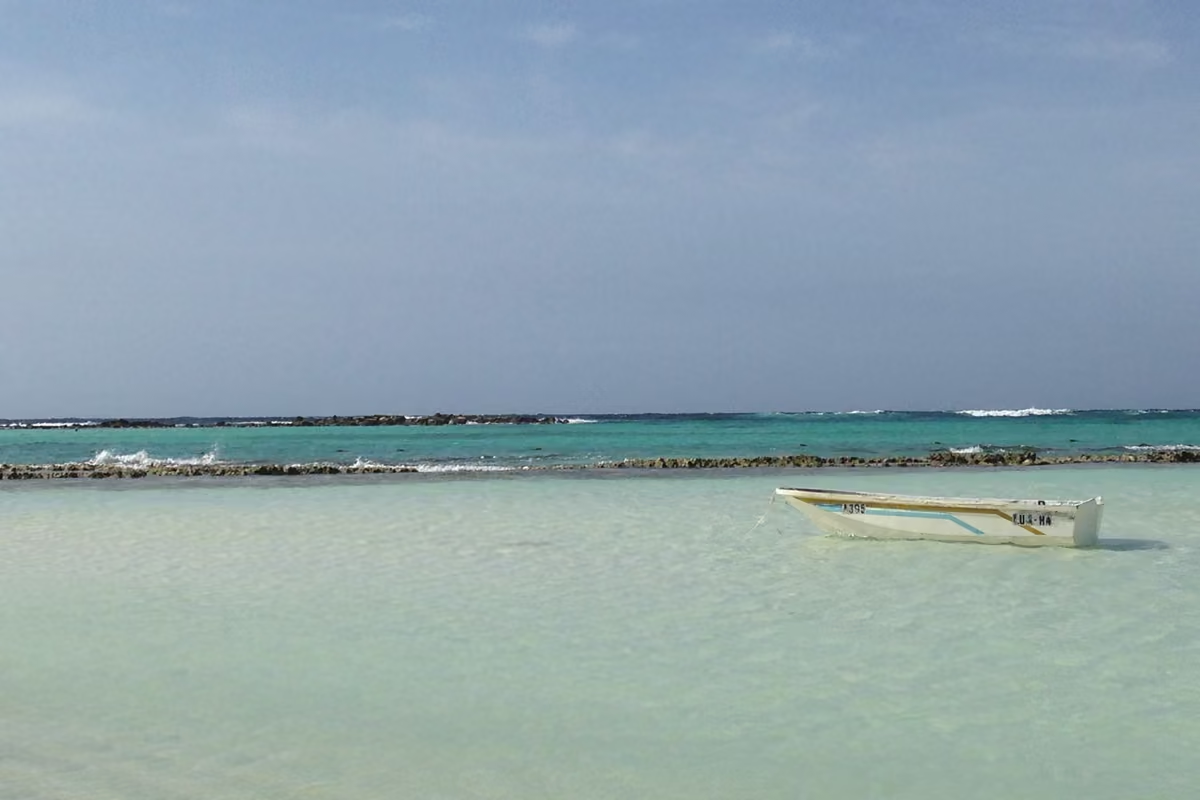
Aruba in pictures
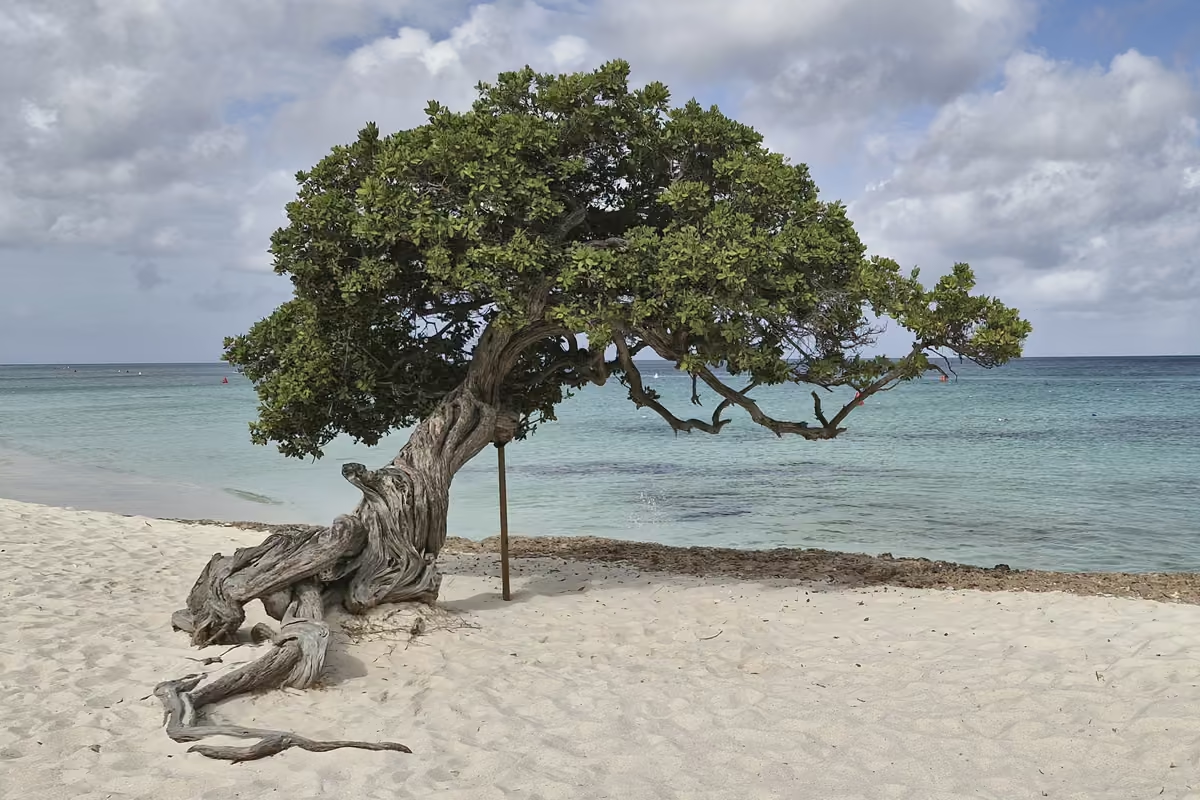
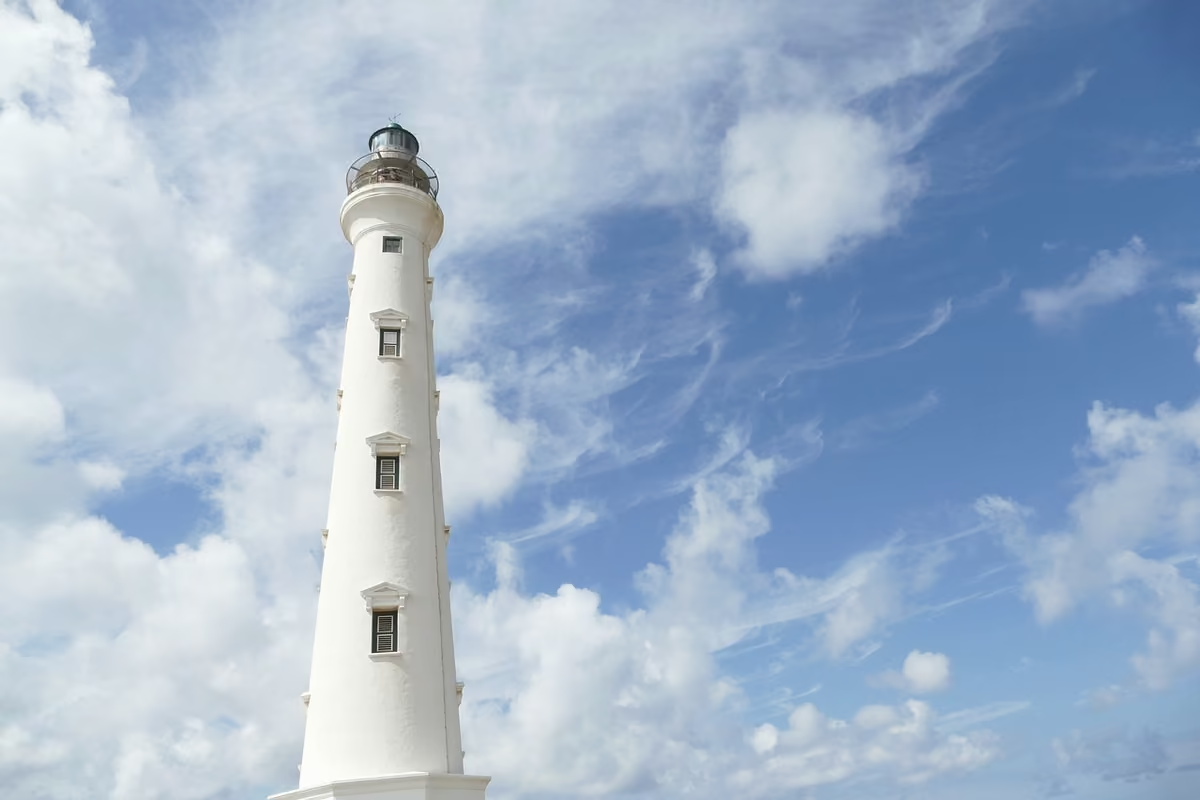
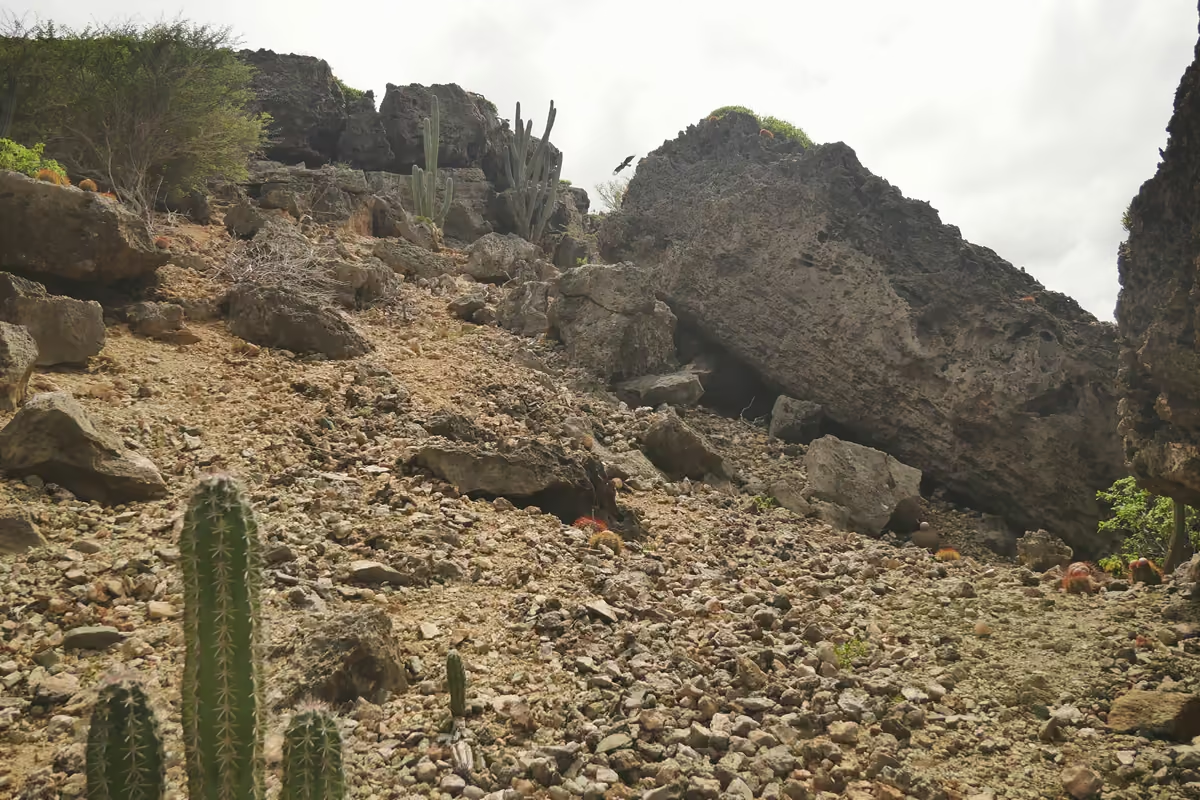
4 photographs, each with its photographer and licence.



Jump to
Highlights
Parke Nacional Arikok
National park of 34 square kilometres on the north-east of the island, home to the Aruba Island rattlesnake, with visitor centres at San Fuego and Vader Piet.
Conservation day pass USD 22 per adult; children under 17 free.[1]Visitor centres: San Fuego 8:00 to 15:30, Vader Piet 8:30 to 15:00.[1]Pass sold at both entrances. Speed limit 20 km/h; drones, rock stacking and collecting are banned.[1][2]Official site
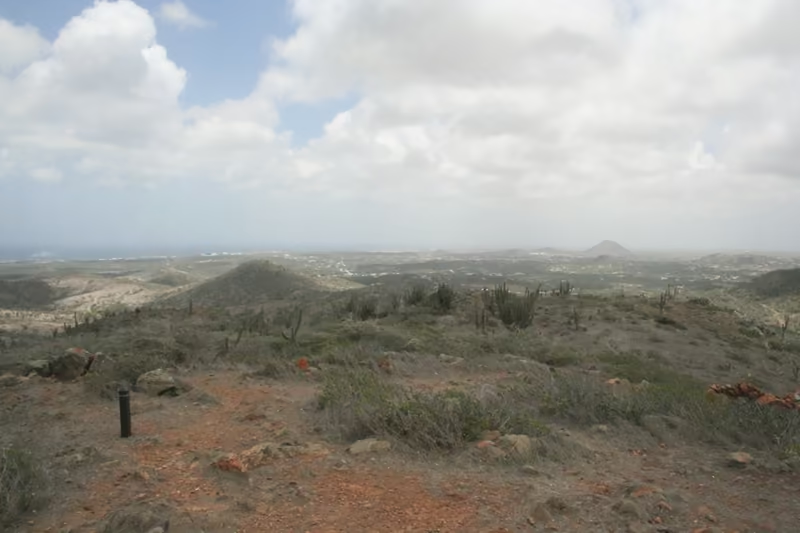
Photo: Ian Mackenzie, Wikimedia Commons (CC BY 2.0) Jamanota Hill guided hike
A 4.8 km ranger-led hike to the sub-top of Jamanota, at 188 m the highest point on Aruba, passing the Miralamar gold mine ruins trail.
Book with the Aruba Conservation Foundation at reservations@acf.aw.[1]Official site
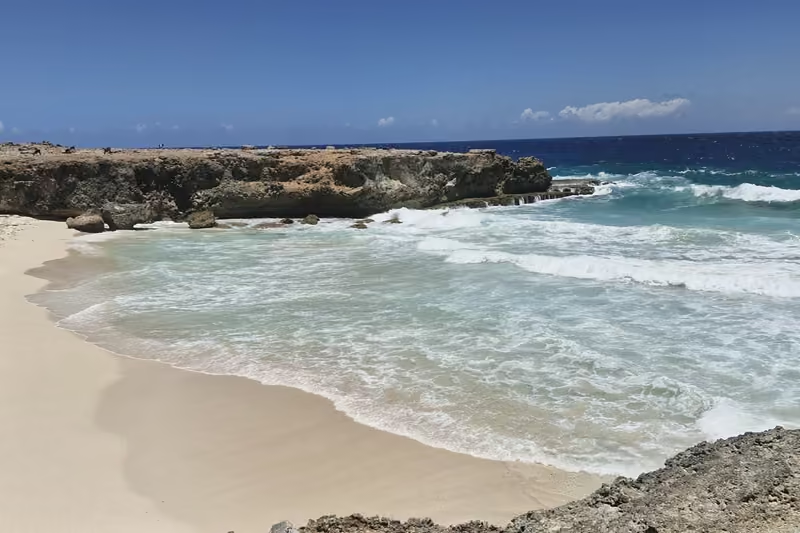
Photo: Ginelly.Q, Wikimedia Commons (CC BY 4.0) Rooi Tambu and Dos Playa guided hike
A 7.5 km ranger-led walk down Rooi Tambu, one of the island's largest gullies, to Dos Playa beach, one of Aruba's most important sea turtle nesting sites.
Book with the Aruba Conservation Foundation at reservations@acf.aw.[1]Official site
Parke Marino Aruba
Four marine protected areas covering 6,020 hectares of mangroves, coral reefs and seagrass beds. Wildlife feeding and kitesurfing are prohibited.
Free.[1]Open at all hours.[1]Official site
Eagle Beach
Wide public beach of soft white sand in the Eagle Beach neighbourhood of Oranjestad, lined by low-rise resorts.
Bus 2.60 dollars each way.[27]Arubus L10 from the Oranjestad bus station, opposite the cruise terminal.[35][21]Official site
Arashi Beach
Beach on the north-western tip of the island, near Malmok and the California Lighthouse, used for swimming and snorkelling.
Bus 2.60 dollars each way.[27]Arubus L10A or L10C between Oranjestad and Arashi.[26][35]Official site
Baby Beach
A shallow, sheltered man-made lagoon at Seroe Colorado on the south-east tip, calm enough for small children to snorkel.
2.60 dollars per bus ride; from the hotel area it takes three rides each way.[21][35]L10 to Oranjestad, L1, L2 or L3 to San Nicolas, then L900 to Baby Beach.[35]Official site
National Archaeological Museum Aruba
Interactive exhibition on Aruba's past in a restored historic building complex with gardens at Schelpstraat 42, Oranjestad, near the bus station.
Monday to Friday 9:00 to 17:00; closed weekends. Open with adapted hours on the 25 January and 18 March holidays.[32]Official site
The Butterfly Farm
A meshed tropical garden with hundreds of free-flying butterflies and a guided tour of the life cycle, on the hotel strip opposite the Divi Aruba Resort.
Adults 19 dollars, seniors and students 16, children 4 to 17 10, under 4 free. The ticket includes return visits for up to one month.[29]Daily 8:30 to 16:30; the last guided tour starts at 16:00.[29]Tickets at reception, no booking needed except for groups of 20 or more.[29]Official site
Donkey Sanctuary Aruba
Refuge for more than 130 donkeys, with volunteers to show visitors round and a covered porch where the donkeys can be fed.
No admission fee; donations welcome.[31]Daily 9:00 to 16:00, except 1 January.[31]Official site


Tours across Aruba
Tours, day trips and tickets across Aruba, booked on Viator.
See Aruba tours on Viator (opens Viator in a new tab) paid link
Before you go
Checklist
- Visa or travel authorisation for your passport
- Money: cards, cash and ATMs
- A SIM or eSIM for data on arrival
- Government travel advisories
| Passport | Rule |
|---|---|
| United States | No visa needed. Aruba admits visitors for 30 days as standard, and US nationals may stay up to 90 days without asking for an extension. An approved online ED card is required before travel, and the Sustainability Fee is paid with it.[7][8][9] |
| United Kingdom | No visa needed: British nationals are on the Dutch government's visa-free list for the Caribbean parts of the Kingdom. Standard admission is 30 days; within that time the stay can be extended to up to 90 days if the requirements are met. An approved online ED card is required before travel. The FCDO lists visits of up to 3 months without a visa and an embarkation card completed up to 7 days before arrival.[7][8][10][9][11] |
| Canada | No visa needed: Canadian nationals are on the Dutch government's visa-free list for the Caribbean parts of the Kingdom. Standard admission is 30 days; within that time the stay can be extended to up to 90 days if the requirements are met. An approved online ED card is required before travel. Global Affairs Canada lists stays of up to 90 days in a 180-day period without a visa.[7][8][6][9] |
| Australia | No visa needed: Australian nationals are on the Dutch government's visa-free list for the Caribbean parts of the Kingdom. Standard admission is 30 days; within that time the stay can be extended to up to 90 days if the requirements are met. An approved online ED card is required before travel.[7][8][9] |
Every traveller, infants and children included, needs a complete and approved online Embarkation and Disembarkation (ED) card before flying to Aruba, and the Sustainability Fee is paid with it. The ED card is not a visa.[8][12][13]
Visitors arriving by air pay a 20 dollar Sustainability Fee when completing the ED card application. The fee is collected by Aruba Wastewater Sustainable Solutions for wastewater and environmental care. Children under eight, crew on duty, transit passengers staying under 24 hours and repeat visitors returning within a year are exempt; exemptions are linked to the passport number.[14][15][12][13]
Complete the ED card up to six days before the flight. A changed itinerary needs a new ED card, but the system recognises a fee already paid on the same passport; a new passport means paying again.[12][14]
Visa-free visitors need a passport issued within the last 10 years and valid for the whole stay, proof of a return or onward ticket, proof of the reason for the visit, enough money (150 to 200 US dollars per person per day in a hotel, 100 when staying with family) and medical or travel insurance covering at least 15,000 US dollars, including hospital care and repatriation.[16]
Arrivals aged 16 or over may bring in duty-free 200 cigarettes, or 25 cigars, or 50 cigarillos, or 250 g of tobacco; 1 litre of spirits, or 2.25 litres of wine, or 3 litres of beer; and other goods for personal use up to an invoice value of Afl. 900.[17]
A yellow fever vaccination certificate is required for travellers aged nine months or older arriving from a country with risk of yellow fever transmission, or after more than 12 hours in transit at an airport in such a country. Entry is refused without it.[18]
Entry rules for every destination, by passport Check one passport and destination Passport planner for a trip with several stops
Money
| Item | What to know |
|---|---|
| Currency | Aruban florin, the official currency since Aruba obtained its Status Aparte within the Kingdom of the Netherlands in 1986, pegged to the US dollar at US$1.00 = Afl. 1.79. The Centrale Bank van Aruba issues the notes; the current series was issued on 3 June 2019.[3][19] |
| Cards | The ED card and its Sustainability Fee are paid by credit card only (Visa, Mastercard or Discover).[9][12] |
| Cash | Taxi fares must be paid in US dollars or florins, counted at US$1 = Afl. 1.80. Bus fares can be paid in cash on board.[20][21] |
| ATMs | Queen Beatrix International Airport has one RBC drive-through ATM, in the secondary access lane.[22] |
SIM and data
- SETAR Tourist Package, as a physical SIM or an eSIM, each with unlimited data up to 5 GB a day: 3 days 20 dollars (100 SETAR minutes, 20 other minutes, 25 SMS), 7 days 30 dollars, 14 days 50 dollars. The other minutes and SMS cover the US, Canada, the Netherlands and the Dutch Caribbean among others.[23]
An eSIM bought before the flight works from the arrivals hall. Airalo
Airport to city
Queen Beatrix International Airport[24] AUA
| Option | Fare | Pay |
|---|---|---|
| Taxis at fares set by the Government of Aruba; taxi.aw publishes the official fare for each pickup and destination.[24][20]taxi | For 1 to 4 passengers: airport to Oranjestad 26 dollars, Eagle Beach 38, Low-Rise hotels 37, High-Rise hotels 40 to 41. Each extra passenger 3 dollars; one bag and one handbag each are free, then 3 dollars a piece. A 5 dollar surcharge, once per trip, applies on Sundays, on official holidays, from 23:00 to 7:00 and from 24 December to 1 January.[20] | Cash in US dollars or florins (US$1 = Afl. 1.80); minimum fare 10 dollars.[20] |
| Arubus Line 2 (Oranjestad to San Nicolas via Dakota and the airport), from stops just outside the airport property.[21][25][26]bus | 2.60 dollars (AWG 4.50) per person per trip.[27][21] | Cash on the bus, a retour card or a day pass. Buses take carry-on items only, not luggage.[21] |
A pre-booked transfer meets late arrivals at a fixed price. Welcome Pickups
First 48 hours
- Before you fly
Complete the ED card on edcardaruba.aw for every traveller, babies included, up to six days ahead, and pay the 20 dollar Sustainability Fee by credit card inside it. Use no other site.
- Arrival, Queen Beatrix International Airport
Take a taxi at the government fare: 26 dollars to Oranjestad, 38 to Eagle Beach, cash in dollars or florins. Arubus Line 2 stops outside the airport for 2.60 dollars, but buses take no luggage.
- Phone
SETAR's Tourist Package starts at 20 dollars for 3 days, as a SIM or an eSIM.
- Day one, the hotel coast
Arubus L10 runs from the Oranjestad bus station, opposite the cruise terminal, along Eagle Beach and Palm Beach to Arashi, 2.60 dollars a ride. A 15 dollar day pass is sold at hotel gift shops and the station booth.
- Day two, Arikok
Drive to the San Fuego entrance (visitor centre from 8:00) and buy the 22 dollar conservation pass. No ATVs or UTVs inside the park.
- Departure day, to the US
Check in three hours before a US-bound flight: you clear US customs and immigration in Aruba before boarding.
Safety and advisories
| Government | Advice | Updated | Checked |
|---|---|---|---|
| US State Department | Level 1: Exercise Normal Precautions | ||
| UK Foreign Office (FCDO) | FCDO does not advise against travel to any part of Aruba; the page still carries dated safety, entry and health notes. | ||
| Government of Canada | Level 1 of 4 Take normal security precautions |
UK advice: The FCDO does not advise against travel to any part of Aruba. Its Aruba advice was last updated on 7 July 2026.[5]
Aruba lies on the southern fringe of the hurricane belt; the island's meteorological department says considerable damage from tropical cyclones passing just south happens about once every 100 years, while storms passing to the north can still cause beach erosion and coastal flooding.[28]
Scams to watch for
- The Sustainability Fee operator asks travellers to make sure they use the correct website for the ED card, edcardaruba.aw.[12]
Travel medical cover is sold by the week for trips like this one. SafetyWing
What things cost
| Item | What it costs |
|---|---|
| Sustainability Fee, visitors arriving by air | 20 dollars, paid by credit card with the ED card[13][14] |
| Arubus single trip | 2.60 dollars (AWG 4.50)[27] |
| Arubus day pass | 15 dollars (AWG 26.25); retour card 5 dollars (AWG 8.75)[27] |
| Taxi, airport to Oranjestad, 1 to 4 passengers | 26 dollars[20] |
| Taxi, airport to Eagle Beach, 1 to 4 passengers | 38 dollars[20] |
| Parke Nacional Arikok conservation day pass, adult | 22 dollars; under 17 free[1] |
| SETAR Tourist Package, 7 days | 30 dollars[23] |
| Butterfly Farm, adult | 19 dollars; children 4 to 17 10 dollars[29] |
When to go
| Month | Weather | Holidays | Closures |
|---|---|---|---|
| January | DMA normals 1991 to 2020: mean 27.0 C (81 F), average high 30.3 C (87 F), average low 24.8 C (77 F), 44.0 mm of rain on 10.8 days. The rainy season ends in January.[30][28] | 1 January 2027 New Year's Day; 25 January Dia di Betico.[20] | The Donkey Sanctuary closes on 1 January. The National Archaeological Museum opens with adapted hours on 25 January.[31][32] |
| February | Mean 27.1 C (81 F), average high 30.6 C (87 F), 19.5 mm of rain on 4.5 days. The dry season runs roughly from February to June, and February has the least cloud.[30][28] | 8 February 2027, Carnival Monday.[20] | |
| March | Mean 27.4 C (81 F), average high 31.1 C (88 F), 10.0 mm of rain on 2.0 days.[30] | 18 March 2027 National Anthem and Flag Day; Good Friday 26 March; Easter Monday 29 March.[20] | The National Archaeological Museum opens with adapted hours on 18 March.[32] |
| April | Mean 28.2 C (83 F), average high 31.9 C (89 F), 8.6 mm of rain on 1.5 days, the driest month.[30] | 27 April 2027, King's Day.[20] | |
| May | Mean 28.7 C (84 F), average high 32.0 C (90 F), 14.1 mm of rain on 1.7 days. May has the most cloud, mainly high cloud.[30][28] | 1 May 2027 Labour Day; 6 May Ascension Day.[20] | |
| June | Mean 29.0 C (84 F), average high 32.5 C (91 F), 17.4 mm of rain on 2.8 days.[30] | ||
| July | Mean 28.9 C (84 F), average high 32.4 C (90 F), 31.4 mm of rain on 4.1 days.[30] | ||
| August | Mean 29.5 C (85 F), average high 33.2 C (92 F), 19.6 mm of rain on 3.1 days.[30] | ||
| September | Mean 29.6 C (85 F), average high 33.2 C (92 F), the warmest month; 42.9 mm of rain on 3.3 days as the rainy season starts.[30][28] | ||
| October | Mean 29.1 C (84 F), average high 32.4 C (90 F), 76.5 mm of rain on 7.3 days.[30] | ||
| November | Mean 28.4 C (83 F), average high 31.5 C (89 F), 87.1 mm of rain on 9.6 days, the wettest month by total.[30] | ||
| December | Mean 27.5 C (82 F), average high 30.7 C (87 F), 80.1 mm of rain on 11.0 days. Showers usually fall in the early morning or in the evening.[30][28] | 26 December Boxing Day.[20] | Taxis add a 5 dollar surcharge every day from 24 December to 1 January.[20] |
Common mistakes
Myth: Any website that offers the Aruba ED card will do.
Actually: The ED card is completed on edcardaruba.aw, and the Sustainability Fee operator asks travellers to make sure they use that site.[12][9]
Myth: Babies and young children do not need an ED card.
Actually: Every traveller, including infants and children, must complete and get approval for the ED card. Children under eight are exempt from the Sustainability Fee, not from the card.[13][14]
Myth: The Sustainability Fee comes back if the trip is cancelled.
Actually: The fee is non-refundable as a rule, even if plans change, the trip is cancelled or the ED card QR code is never used. Refunds are limited to verified technical problems, claimed within 60 days to the same card.[14]
Myth: An ATV or UTV is the way to see Arikok.
Actually: All-terrain vehicles, utility task vehicles and motorbikes are prohibited in Aruba's protected nature areas, including Parke Nacional Arikok.[1]
Myth: The airport bus is an easy ride to the hotel with your suitcases.
Actually: Arubus does not accept luggage on its buses, only carry-on items.[21]
Myth: Florin notes from an earlier trip can still be spent.
Actually: The 2003 series stopped being legal tender on 12 August 2019; those notes can be exchanged at the Centrale Bank van Aruba until 12 August 2049.[33]
Myth: You clear US customs when you land back home.
Actually: Aruba airport has full US pre-clearance: you pass Aruban passport control and then US Customs and Border Protection before boarding, so check in three hours before a US-bound flight.[34][18]
Sources
Show all sources (35)
- Experiences: Parke Nacional Arikok and Parke Marino Aruba, Aruba Conservation Foundation.
- Parke Nacional Arikok rules and regulations, Aruba Conservation Foundation.
- The Aruban florin, Centrale Bank van Aruba.
- Aruba travel advisory (from the advisories register), US Department of State.
- Aruba travel advice (from the advisories register), UK Foreign, Commonwealth and Development Office.
- Travel advice and advisories for Aruba (from the advisories register), Global Affairs Canada.
- Do I need a visa for the Caribbean parts of the Kingdom?, NetherlandsWorldwide, Government of the Netherlands.
- Immigration Regulations and Entry Requirements, Aruba Tourism Authority.
- Aruba Online ED Card, Government of Aruba, Immigration (Inmigracion Aruba).
- Aruba entry requirements, UK Foreign, Commonwealth and Development Office.
- Aruba travel advice: entry requirements, UK Foreign, Commonwealth and Development Office.
- Sustainability Fee FAQ, Aruba Wastewater Sustainable Solutions N.V. (Utilities Aruba N.V.).
- Immigration ED Card, Aruba Airport Authority N.V..
- Sustainability Fee Policy, Aruba Wastewater Sustainable Solutions N.V. (Utilities Aruba N.V.).
- Aruba Wastewater Sustainable Solutions, Aruba Wastewater Sustainable Solutions N.V. (Utilities Aruba N.V.).
- What are the requirements for travelling to the Caribbean parts of the Kingdom without a visa?, NetherlandsWorldwide, Government of the Netherlands.
- Vrijstelling reizigersbagage (passenger luggage exemption), Departamento di Aduana (Aruba Customs).
- Frequently Asked Questions, Aruba Airport Authority N.V..
- Notes and coins: 2019 banknotes, Centrale Bank van Aruba.
- Official Taxi Fares, fare calculator and taxi fare conditions, Government of Aruba.
- FAQ, Arubus N.V..
- ATMs at the airport, Aruba Airport Authority N.V..
- SETAR Tourist Package (Tourist SIM and eSIM), SETAR N.V..
- Taxi Transportation, Aruba Airport Authority N.V..
- Public Transportation, Aruba Airport Authority N.V..
- Routes and Schedules, Arubus N.V..
- Fares and Passes, Arubus N.V..
- Climate Data Aruba, Departamento Meteorologico Aruba.
- Visitor information, The Butterfly Farm Aruba.
- Summary climatological normals, period 1991-2020, Departamento Meteorologico Aruba.
- Donkey Sanctuary Aruba, Donkey Sanctuary Aruba.
- Visit, National Archaeological Museum Aruba.
- Banknotes series 2003, Centrale Bank van Aruba.
- Checking In, Aruba Airport Authority N.V..
- Popular Destinations, Arubus N.V..