
Nepal
For: Visitors from the US, UK, Canada and Australia who want the visa on arrival, the rupee, a tourist SIM, the trekking guide rule, the TIMS card and the park and heritage fees from official pages, each checked and dated. A tourist visa is issued on arrival at the three international airports for US$30, US$50 or US$125, and the arrival form can be filled in online first. On most Himalayan trekking routes a licensed guide and an agency-issued TIMS card are compulsory, and park fees are paid on top.
- Currency
- Nepalese rupee (NPR)[3]Nepal Rastra Bank publishes buying and selling rates for foreign currencies every day.
- Time zone
- UTC+5:45, all year
- Advisories
- US: Level 2UK: FCDO does not advise against travel to any part of NepalCanada: Level 2US advice checked Each government's advice
Quick answers
- Do I need a visa?
- US passport: Visa on arrival, 15, 30 or 90 days, multiple entry. Checked .
- UK passport: Visa on arrival, 15, 30 or 90 days, multiple entry. Checked .
- Canadian passport: Visa on arrival, 15, 30 or 90 days, multiple entry. Checked .
- Australian passport: Visa on arrival, 15, 30 or 90 days, multiple entry. Checked .
- The entry table below has the rule in full.
- Is it safe?
- Each government's advice for this country:
- US: Level 2. Checked .
- UK: FCDO does not advise against travel to any part of Nepal. Checked .
- Canada: Level 2. Checked .
- What currency do they use?
Currency: The Nepalese rupee. Checked .
i
The one thing
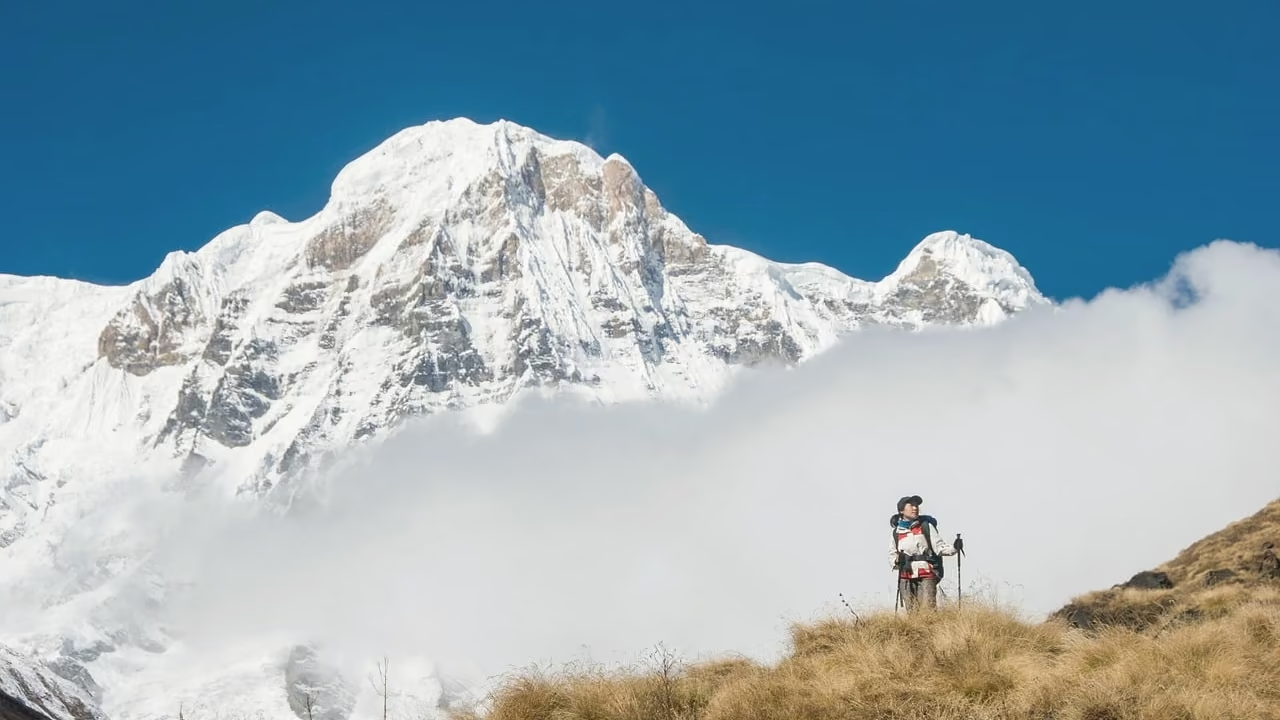
A trek into the Annapurna Conservation Area
Pokhara is the gateway to the Annapurna region, and from there the trails climb north towards Poon Hill, Annapurna Base Camp and the passes of the Circuit, with the range in view for days. Plan the guide and permits first, because on these routes walking alone is no longer allowed.
The Annapurna Circuit, Poon Hill to Annapurna Base Camp, Mardi Himal, Khopra and Tilicho routes are on the list where a licensed trekking guide and an agency-issued TIMS card are compulsory, under the revised TIMS provision in force since 31 March 2023.[1] Price: Annapurna Conservation Area entry NPR 3,000 a person for foreign visitors (SAARC nationals NPR 1,000, under 10 free), plus the TIMS card at NPR 2,000.[2][1] Booking: Arrange the guide and the TIMS card through a government-registered trekking agency. Park entry fees are paid at the Tourist Service Center, Bhrikutimandap, Kathmandu, or at the entry points.[1][2] Find guided visits on Viator (opens Viator in a new tab) paid linkSome links earn us a commission. How we work
Nepal in pictures
4 photographs, each with its photographer and licence.

Jump to
Where to go
 KathmanduKTM
i
Photo: delmee on Pixabay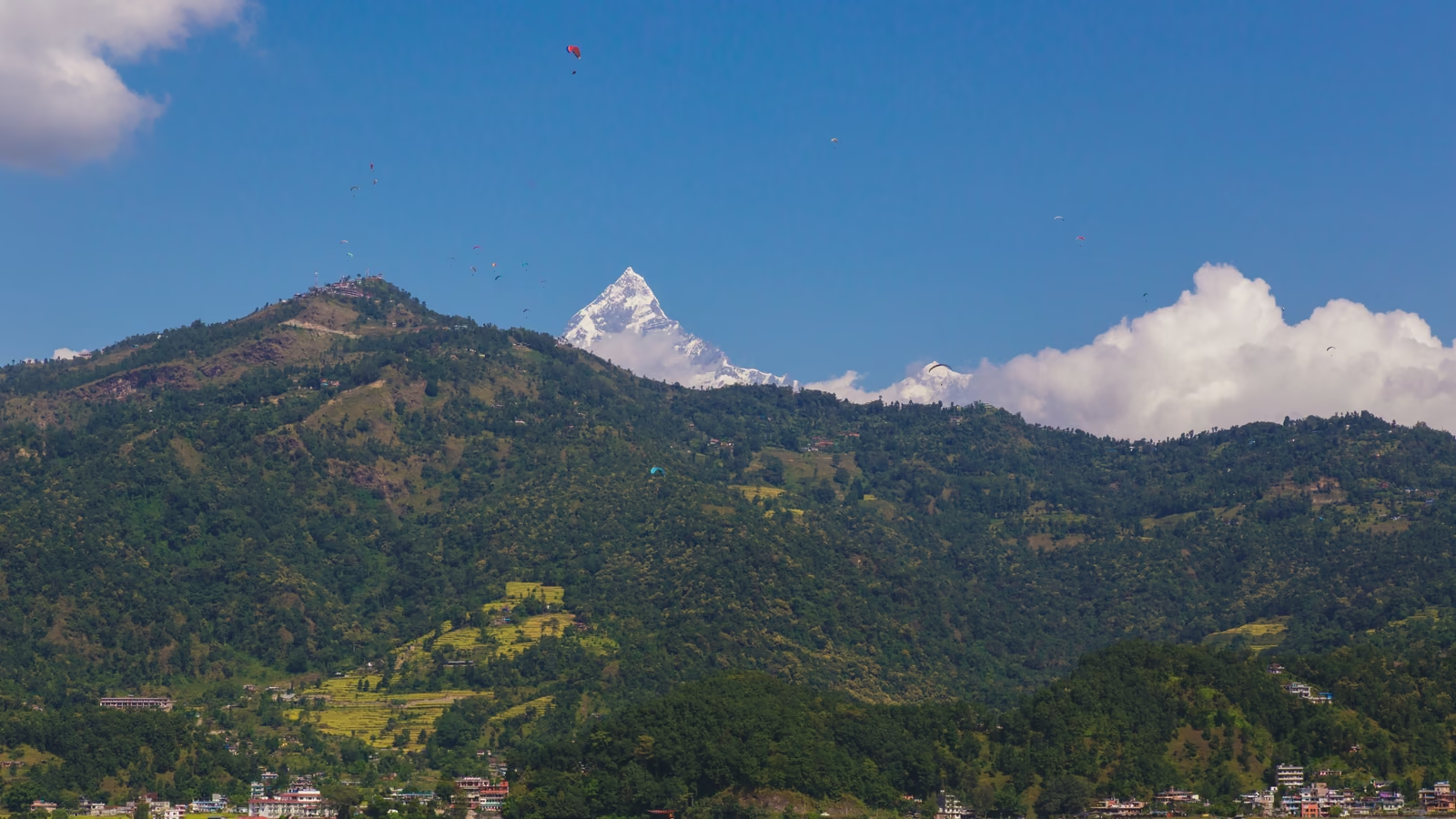 PokharaPKR
i
Photo: Jean-Marie Hullot from France, Wikimedia Commons (CC BY 2.0)

Highlights
Kathmandu
Kathmandu Durbar Square (Hanuman Dhoka)
The old royal palace square in the centre of Kathmandu, with palaces, courtyards, more than 50 temples and the Kumari Ghar, home of the Living Goddess; one of the seven monument zones of the Kathmandu Valley World Heritage site.
NPR 1,000 for foreign visitors, including the Tribhuvan Museum; SAARC (BIMSTEC) nationals NPR 500; under 10 free.[19]Pay at the entry point.[19]Official site
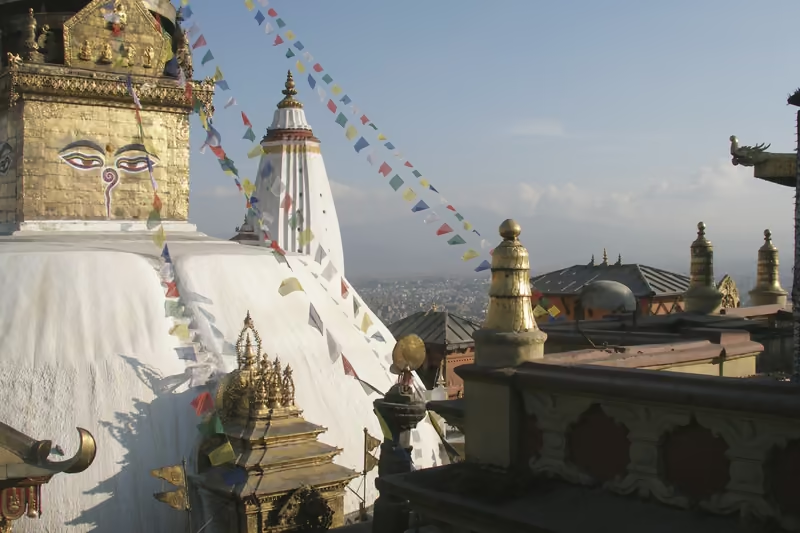
Photo: Vyacheslav Argenberg, Wikimedia Commons (CC BY 4.0) Swayambhu Stupa
The stupa on a hillock about 3 km west of Kathmandu, the oldest Buddhist monument in the valley, with Hindu shrines inside the Buddhist complex; devotees walk around it at all hours.
NPR 200 for foreign visitors; SAARC nationals NPR 50; under 10 free.[19]Official site
Pashupatinath Temple
The most revered Hindu temple in Nepal, on the banks of the Bagmati; the main complex is open only to Hindus, and other visitors watch from the terraces across the river.
NPR 1,000 a day per entry for foreign and SAARC visitors; free for Indian nationals.[19]Official site
Patan Durbar Square
The palace square of Patan, one of the three Durbar squares in the Kathmandu Valley World Heritage site, with the Patan Museum in the old palace.
NPR 1,000 for foreign visitors, including the Patan Museum; SAARC (BIMSTEC) nationals NPR 500.[19]Official site
Bhaktapur Durbar Square
The palace square of Bhaktapur, the third of the valley's Durbar squares on the World Heritage list, with the National Art Museum.
US$18 or NPR 1,800 for foreign visitors; SAARC nationals NPR 500; under 10 free.[19]Official site
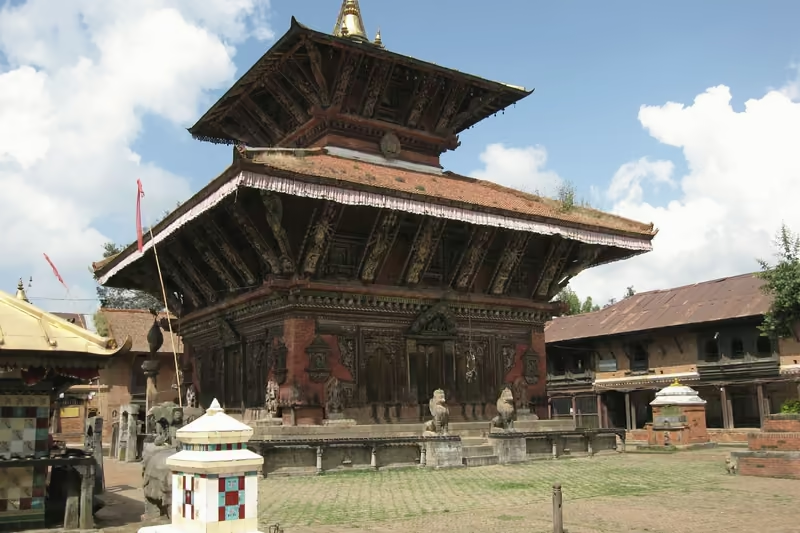
Photo: Stefan Krasowski from New York, NY, USA, Wikimedia Commons (CC BY 2.0) Changu Narayan Temple
A Hindu temple complex in a traditional Newar settlement, with one of the earliest inscriptions in the valley, from the fifth century AD.
NPR 300 for foreign visitors; SAARC nationals NPR 100.[19]Official site


Pokhara
Phewa Lake, Pokhara
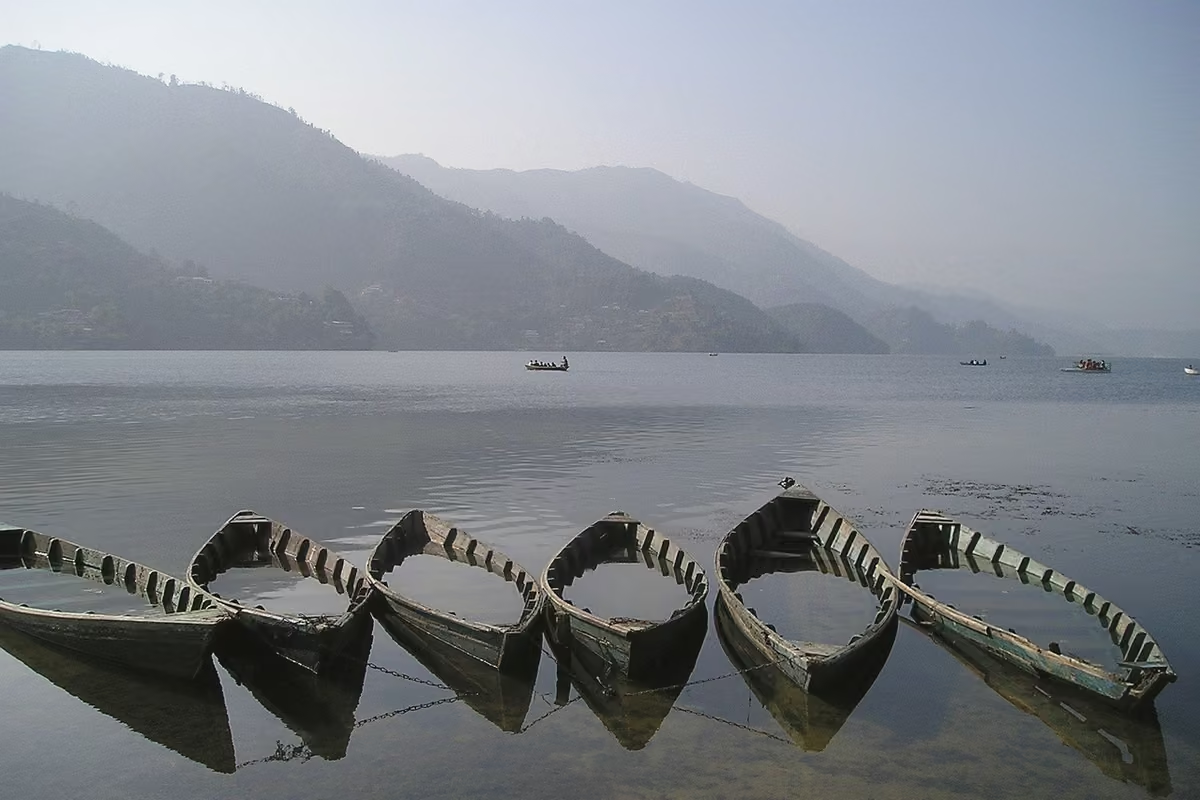
The largest of Pokhara's cluster of lakes, part of a Ramsar site since 2021, with Lakeside on its eastern shore and the Tal Barahi temple on an island; boats are hired by the shore.
More in Nepal
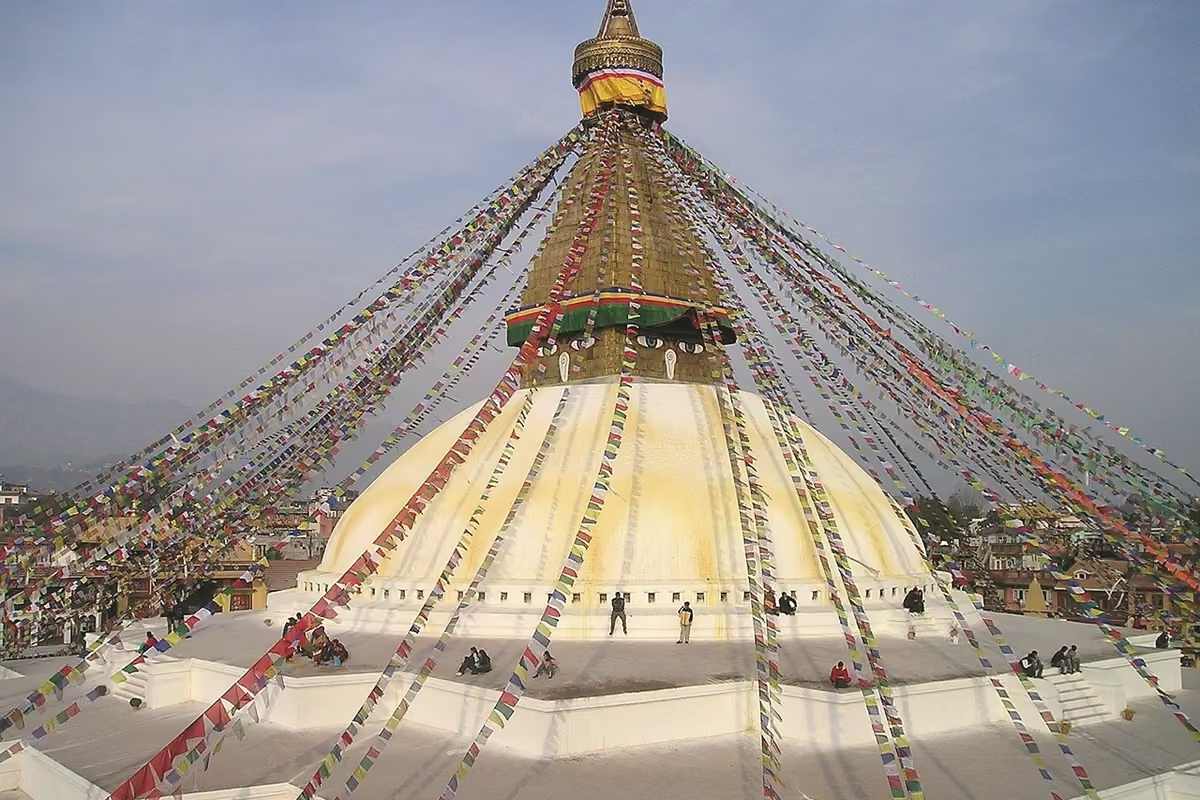
Boudhanath Stupa
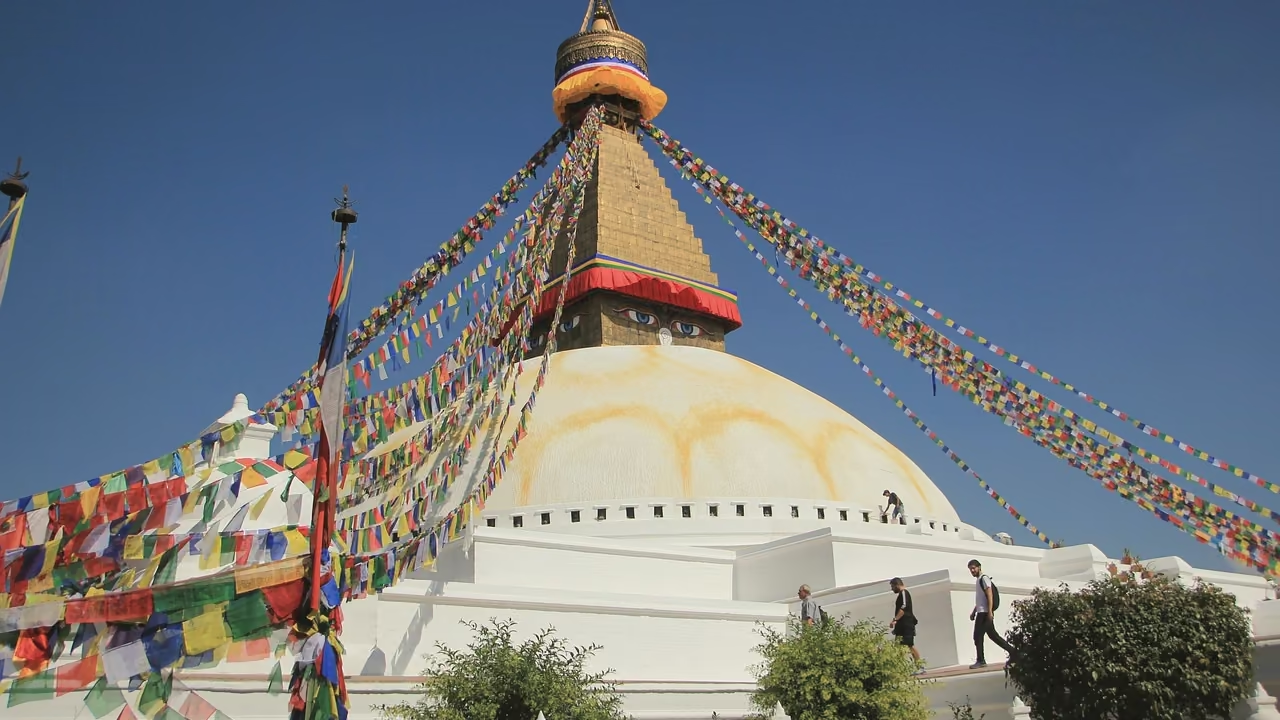
The largest stupa in Nepal and a centre of Tibetan Buddhist devotion, where devotees circle the stupa chanting mantras and turning prayer wheels; a World Heritage site since 1979.
NPR 400 for foreign visitors; SAARC nationals NPR 100; under 10 free.[19]Official site
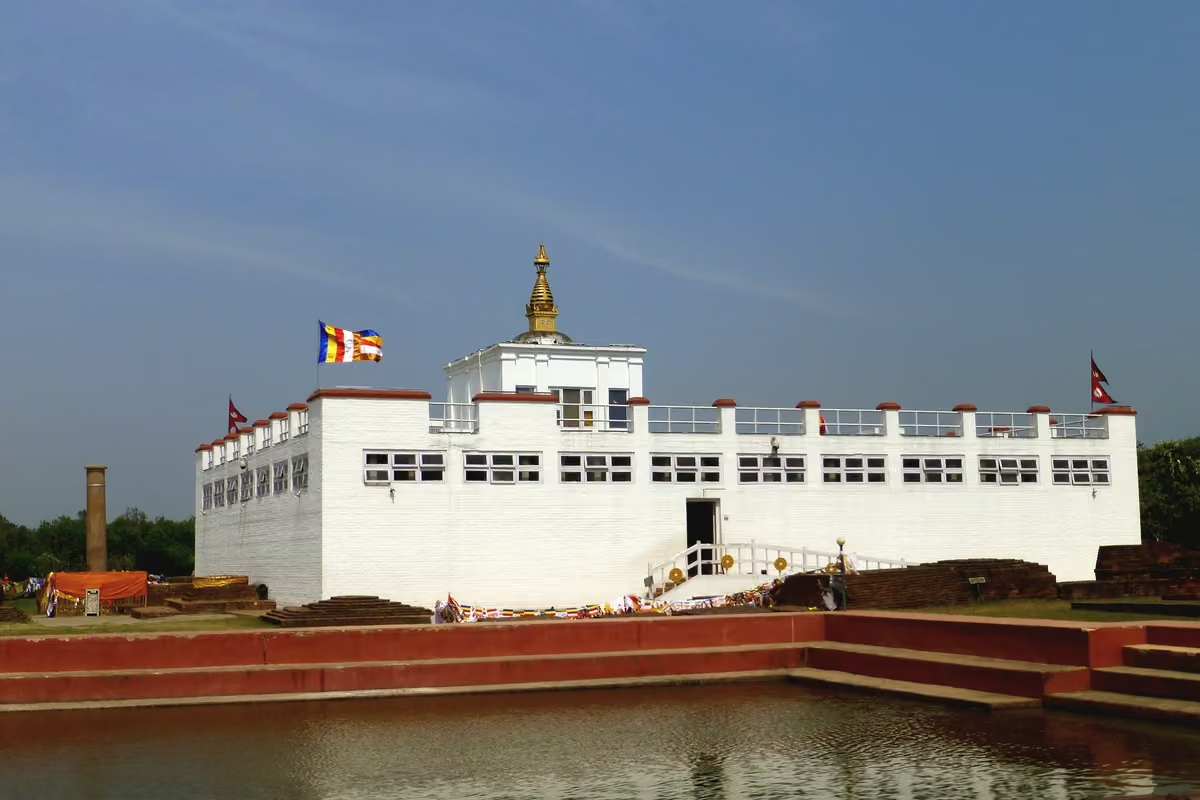
Lumbini
The birthplace of the Buddha in the Terai plains, marked by the pillar the Mauryan emperor Asoka raised in 249 BC, with the Maya Devi Temple and the remains of early monasteries.
NPR 700 for foreign visitors; SAARC nationals NPR 400.[19]Official site
Chitwan National Park
Nepal's first national park, established in 1973 in the southern Terai, home to one of the last populations of the greater one-horned rhinoceros and a refuge of the Bengal tiger.
NPR 2,000 a day per entry for foreign visitors, plus 13 percent VAT; SAARC nationals NPR 1,000; under 10 free.[19][2]Park entry permits at the Tourist Service Center, Bhrikutimandap, Kathmandu, or at the entry points.[2]Official site
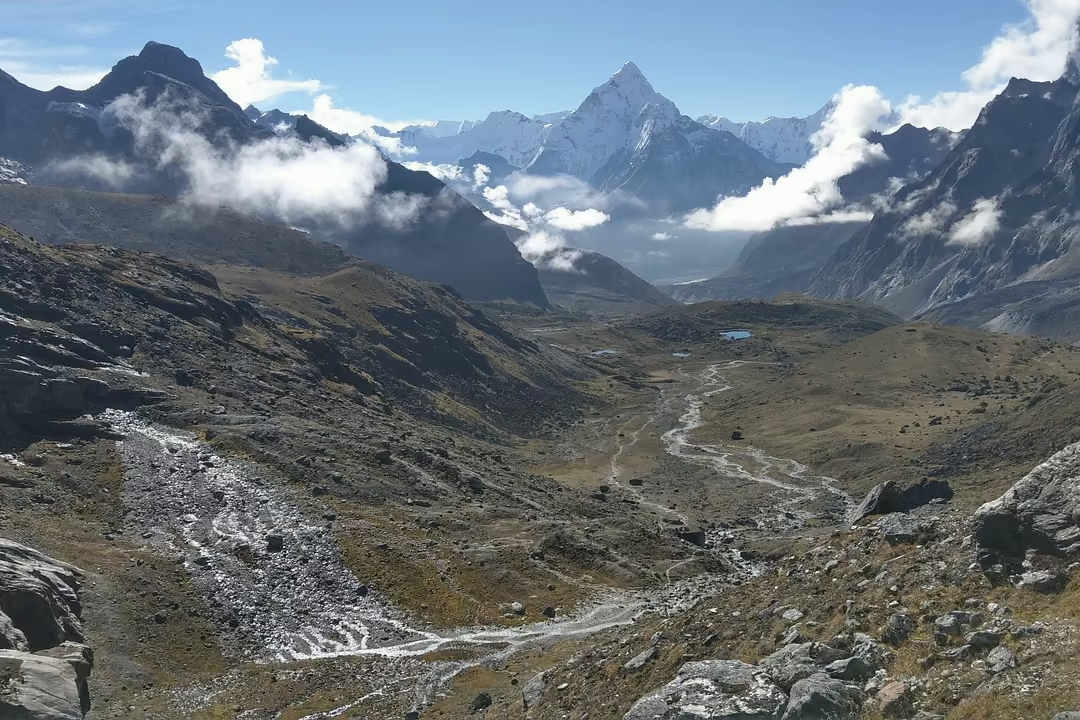
Sagarmatha National Park
The Everest park in Solukhumbu, 124,400 hectares of peaks, glaciers and valleys with seven summits over 7,000 m besides Everest, and more than 2,500 Sherpa people living inside it.
NPR 3,000 per entry for foreign visitors; SAARC nationals NPR 1,500; under 10 free.[2]Park entry permits at the Tourist Service Center, Bhrikutimandap, Kathmandu, or at the entry points; the Everest routes also need a licensed guide and a TIMS card.[2][1]Official site
Tours across Nepal
Tours, day trips and tickets across Nepal, booked on Viator.
See Nepal tours on Viator (opens Viator in a new tab) paid link
Before you go
Checklist
- Visa or travel authorisation for your passport
- Money: cards, cash and ATMs
- A SIM or eSIM for data on arrival
- Government travel advisories
| Passport | Rule |
|---|---|
| United States | Tourist visa on arrival: the United States is not among the countries whose nationals must get a visa before travel. Multiple entry, 15 days US$30, 30 days US$50 or 90 days US$125, paid in US dollars or another convertible currency or by international credit card.[7][8][9] |
| United Kingdom | Tourist visa on arrival: the United Kingdom is not among the countries whose nationals must get a visa before travel. Multiple entry, 15 days US$30, 30 days US$50 or 90 days US$125, paid in US dollars or another convertible currency or by international credit card.[7][8][10] |
| Canada | Tourist visa on arrival: Canada is not among the countries whose nationals must get a visa before travel. Multiple entry, 15 days US$30, 30 days US$50 or 90 days US$125, paid in US dollars or another convertible currency or by international credit card.[7][8][6] |
| Australia | Tourist visa on arrival: Australia is not among the countries whose nationals must get a visa before travel. Multiple entry, 15 days US$30, 30 days US$50 or 90 days US$125, paid in US dollars or another convertible currency or by international credit card.[7][8] |
The visa on arrival is issued by the Department of Immigration at Tribhuvan International Airport in Kathmandu, Pokhara International Airport, Gautam Buddha International Airport in Lumbini and the land entry points. Bring a valid passport, a passport photo with a light background and the fee.[7]
The visa application form can be filled in online before arriving in Nepal, using the link on the Nepal Tourism Board visa page.[7]
A visa from a Nepalese embassy must be used within six months of issue, and the stay counts from the day of entry. The Embassy of Nepal in Washington asks for a passport valid for at least six months from the date of entry, with two blank visa pages.[7][9]
Extensions are made by the Department of Immigration in Kathmandu or Pokhara: at least 15 days for US$45, then US$3 a day. A late extension, up to 150 days late, adds a fine of US$5 a day.[7]
Restricted areas such as Upper Mustang, Upper Dolpa, Manaslu and Tsum Valley need a special trekking permit from the Department of Immigration, Kalikasthan, Kathmandu, carried on the trek and shown to immigration staff or police on request.[11]
Entry rules for every destination, by passport Check one passport and destination Passport planner for a trip with several stops
Money
| Item | What to know |
|---|---|
| Currency | The Nepalese rupee. Nepal Rastra Bank's rates for 15 November 2026: US dollar NPR 150.49 buying and NPR 151.09 selling, euro NPR 166.43 and NPR 167.10, pound sterling NPR 199.16 and NPR 199.95; 100 Indian rupees NPR 160.00 and NPR 160.15.[3] |
| Cards | International credit cards are accepted for the visa fee on arrival. At Pokhara International Airport most ATMs accept international Visa, MasterCard and UnionPay cards.[7][12] |
| Cash | The Tourist Police advise exchanging foreign currency only at government-authorised financial institutions. Pokhara International Airport has foreign exchange counters in its arrival area.[13][12] |
| ATMs | Pokhara International Airport has 24-hour ATMs from major Nepali banks in its international arrival and departure halls.[12] |
| Tipping | No tip is expected by taxi drivers.[14] |
SIM and data
- Ncell TouristPro plans with unlimited data and all-network calls under a fair usage policy and 100 SMS: 7 days NPR 595, 14 days NPR 995, 28 days NPR 1,995. Sold as a SIM or a tourist eSIM.[15]
- Nepal Telecom sells a new prepaid eSIM online through its digital services portal, after registration by email.[16]
Ncell tourist SIMs are sold at Tribhuvan International Airport; bring your original passport to register and activate the SIM. The Nepal Tourism Board advises bringing a spare passport photo for a SIM bought in the arrival halls.[15][14]
Airport to city
Tribhuvan International Airport, Kathmandu, where the Department of Immigration issues visas on arrival[7] KTM
Pokhara International Airport at Chhinne Danda, now the main airport for regular passenger flights in Pokhara, about 5 to 10 km and 15 to 25 minutes from the city PKR
The old Pokhara Airport keeps Jomsom, helicopter, mountain and rescue flights.[17]
| Option | Fare |
|---|---|
| Free shuttle bus run by Pokhara Metropolitan City between Amarsingh and the airport, announced by the airport on 22 April 2026.[18]bus | Free.[18] |
First 48 hours
- Before you fly
Fill in the arrival form on nepaliport.immigration.gov.np, and carry the visa fee in US dollars or a credit card plus a passport photo with a light background.
- Arrival, Kathmandu
Get the visa on arrival, then an Ncell tourist SIM at the airport with your original passport; the 7-day plan is NPR 595.
- Day one, Kathmandu
Kathmandu Durbar Square is NPR 1,000, Swayambhu NPR 200 and Boudha Stupa NPR 400, each paid at the entry point.
- Before any trek
Check whether your route needs a licensed guide and an agency-issued TIMS card, and budget the park fee on top: NPR 3,000 for the Annapurna Conservation Area or Sagarmatha.
- On the trail
Above 2,500 m, sleep no more than 300 to 500 m higher than the night before and rest a day after every 1,000 m gained.
Travel medical cover is sold by the week. SafetyWing
Safety and advisories
| Government | Advice | Updated | Checked |
|---|---|---|---|
| US State Department | Level 2: Exercise Increased Caution | ||
| UK Foreign Office (FCDO) | FCDO does not advise against travel to any part of Nepal; the page still carries dated safety, entry and health notes. | ||
| Government of Canada | Level 2 of 4 Exercise a high degree of caution (with regional advisories) |
UK advice: The FCDO does not advise against travel to any part of Nepal (updated 1 October 2026).[5]
Canada: Exercise a high degree of caution, with regional advisories (3 November 2026).[6]
Emergency: Tourist Police toll-free hotline 1144; Police 100; Traffic Police 103.[13]
Scams to watch for
- The Tourist Police advise using only government-registered travel agencies, trekking agencies, hotels and lodges, riding only in authorised tourist vehicles and noting the vehicle number, and carrying certified copies of your documents while the originals stay safe.[13]
Travel medical cover is sold by the week for trips like this one. SafetyWing
What things cost
| Item | What it costs |
|---|---|
| Tourist visa on arrival, 15 days | US$30[7] |
| Tourist visa on arrival, 30 days | US$50[7] |
| Tourist visa on arrival, 90 days | US$125[7] |
| TIMS card, foreign trekker | NPR 2,000 (SAARC nationals NPR 1,000)[1] |
| Sagarmatha (Everest) National Park entry, foreign visitor | NPR 3,000 per entry[2] |
| Annapurna Conservation Area entry, foreign visitor | NPR 3,000 per entry[2] |
| Kathmandu Durbar Square, foreign visitor | NPR 1,000[19] |
| Ncell TouristPro, 7 days | NPR 595[15] |
When to go
| Month | Weather | Crowds |
|---|---|---|
| January | Kathmandu mean minimum 2.1 C (36 F), maximum 18.0 C (64 F), 14.2 mm of rain on about 2 days; Pokhara 7.1 C (45 F) to 19.7 C (67 F), 23.1 mm.[20][21] | |
| February | Kathmandu 3.8 C (39 F) to 20.2 C (68 F), 16.7 mm on about 3 days; Pokhara 9.2 C (49 F) to 22.2 C (72 F), 34.6 mm.[20][21] | |
| March | Kathmandu 7.5 C (46 F) to 24.3 C (76 F), 31.2 mm on about 4 days; Pokhara 12.8 C (55 F) to 26.7 C (80 F), 60.0 mm. Spring is when the rhododendrons flower.[20][21][22] | |
| April | Kathmandu 11.3 C (52 F) to 27.4 C (81 F), 54.4 mm on about 6 days; Pokhara 15.7 C (60 F) to 29.8 C (86 F), 127.6 mm.[20][21] | |
| May | Kathmandu 15.5 C (60 F) to 28.2 C (83 F), 114.2 mm on about 12 days; Pokhara 18.4 C (65 F) to 30.1 C (86 F), 359.2 mm.[20][21] | Swayambhu draws its largest crowds on Buddha's birthday, which usually falls in May.[23] |
| June | Kathmandu 19.0 C (66 F) to 28.3 C (83 F), 256.4 mm on about 17 days; Pokhara 20.9 C (70 F) to 30.6 C (87 F), 669.0 mm. About 80 percent of Nepal's rain falls in the monsoon, June to September.[20][21][22] | |
| July | Kathmandu 20.0 C (68 F) to 27.7 C (82 F), 359.6 mm on about 23 days, the wettest month there; Pokhara 22.0 C (72 F) to 30.0 C (86 F), 940.3 mm.[20][21] | |
| August | Kathmandu 19.7 C (67 F) to 28.0 C (82 F), 314.2 mm on about 22 days; Pokhara 22.0 C (72 F) to 30.2 C (86 F), 866.3 mm.[20][21] | |
| September | Kathmandu 18.2 C (65 F) to 27.2 C (81 F), 183.1 mm on about 15 days; Pokhara 20.8 C (69 F) to 29.3 C (85 F), 640.8 mm.[20][21] | Pashupatinath fills with devotees on Teej, a festival observed by Hindu women in mid-September.[24] |
| October | Kathmandu 13.0 C (55 F) to 25.8 C (78 F), 59.4 mm on about 4 days; Pokhara 16.7 C (62 F) to 27.5 C (82 F), 139.7 mm. The clearest skies come after the monsoon, in October and November.[20][21][22] | |
| November | Kathmandu 7.4 C (45 F) to 22.7 C (73 F), 7.5 mm on about 1 day; Pokhara 11.9 C (53 F) to 24.1 C (75 F), 17.8 mm.[20][21] | |
| December | Kathmandu 3.0 C (37 F) to 19.4 C (67 F), 14.2 mm on about 1 day; Pokhara 8.0 C (46 F) to 20.7 C (69 F), 21.7 mm.[20][21] |
Common mistakes
Myth: Everest Base Camp and the Annapurna Circuit can be trekked alone.
Actually: Since 31 March 2023 the revised TIMS provision requires a licensed trekking guide and an agency-issued TIMS card on the listed routes in specific protected areas, including Everest Base Camp, Gokyo, the Annapurna Circuit, Poon Hill to Annapurna Base Camp, Langtang and the Manaslu Circuit.[1]
Myth: The TIMS card covers the park fees.
Actually: A separate entry fee is paid to enter each protected area: NPR 3,000 for foreign visitors to Sagarmatha National Park and to the Annapurna Conservation Area, at the Tourist Service Center in Bhrikutimandap, Kathmandu, or at the entry points.[2]
Myth: Upper Mustang needs only the usual trekking papers.
Actually: Upper Mustang is a restricted area: it needs a special trekking permit from the Department of Immigration at US$50 a person a day, and trekking off the route the permit names is a violation of law.[11]
Myth: Any visitor can walk into Pashupatinath Temple.
Actually: The main temple complex is open only to Hindus; other visitors watch from the terraces across the Bagmati River. Leather items, including shoes, belts and camera cases, stay outside, and photography is prohibited.[24]
Myth: A fit trekker can climb as fast as they like.
Actually: The Nepal Tourism Board's mountain safety page advises sleeping no more than 300 to 500 m higher than the night before above 2,500 m and resting a day after every 1,000 m gained, and warns that altitude illness can be life-threatening.[25]
Myth: Overstaying the visa by a few days costs nothing.
Actually: An extension costs US$45 for the first 15 days and US$3 a day after that, and a late extension adds a fine of US$5 a day, for up to 150 days.[7]
Sources
Show all sources (32)
- TIMS card, Nepal Tourism Board.
- Park entry fees, Nepal Tourism Board.
- Foreign exchange rates, Nepal Rastra Bank.
- Nepal Travel Advisory, US Department of State (as captured in this site's advisory index).
- Nepal travel advice, UK Foreign, Commonwealth and Development Office (as captured in this site's advisory index).
- Travel advice and advisories for Nepal, Global Affairs Canada (as captured in this site's advisory index).
- Tourist visa, Nepal Tourism Board.
- Online services: visa on arrival, ETA, extension and card payment, Department of Immigration, Nepal.
- Tourist visas, Embassy of Nepal, Washington, D.C..
- Nepal travel advice: entry requirements, UK Foreign, Commonwealth and Development Office.
- Trekking permit (restricted areas), Nepal Tourism Board.
- ATM and banking services, Pokhara International Airport, Civil Aviation Authority of Nepal.
- Tourist Police, Nepal Tourism Board (Tourist Police, Nepal Police).
- Local transportation, Nepal Tourism Board.
- Tourist SIM and eSIM, Ncell Axiata.
- Digital services portal: new prepaid eSIM, Nepal Telecom.
- Frequently asked questions, Pokhara International Airport, Civil Aviation Authority of Nepal.
- Free shuttle bus service run by Pokhara Metropolitan City, Amarsingh to the airport (22 April 2026), Pokhara International Airport, Civil Aviation Authority of Nepal.
- Heritage site entry fees, Nepal Tourism Board.
- Kathmandu climatological information, World Meteorological Organization, World Weather Information Service (data from the Department of Hydrology and Meteorology, Nepal).
- Pokhara climatological information (1981 to 2010), World Meteorological Organization, World Weather Information Service (data from the Department of Hydrology and Meteorology, Nepal).
- Climate of Nepal, Nepal Tourism Board.
- Swayambhunath Stupa, Nepal Tourism Board.
- Pashupatinath Temple, Nepal Tourism Board.
- Safety in the mountains, Nepal Tourism Board.
- Kathmandu Durbar Square, Nepal Tourism Board.
- Kathmandu Valley, UNESCO World Heritage Centre.
- Introduction, Shree Boudhanath Area Development Committee.
- Lumbini, the Birthplace of the Lord Buddha, UNESCO World Heritage Centre.
- Chitwan National Park, UNESCO World Heritage Centre.
- Sagarmatha National Park, UNESCO World Heritage Centre.
- Phewa and Cluster of 9 Lakes, Nepal Tourism Board.