

Bulgaria
For: Visitors from the US, UK, Canada and Australia who want the Schengen entry rules, what changed with the euro, Sofia's metro and transport fares, a tourist eSIM, and fortress, church and museum prices from official pages, each checked and dated. The EU lists Bulgaria in the euro area since 1 January 2026, and lev cash stopped being legal tender after a month; the central bank still changes levs free of charge. Metro line M4 runs to Sofia Airport, and a tap of a bank card pays a 0.80 euro, 30-minute fare.
- Currency
- Euro (EUR), in the euro area since 1 January 2026[2]
- Language
- Bulgarian is the official EU language of Bulgaria[2]
- Time zone
- UTC+2 (EET) / UTC+3 (EEST)
- Advisories
- US: Level 1UK: FCDO does not advise against travel to any part of BulgariaCanada: Level 1US advice checked Each government's advice
Quick answers
- Do I need a visa?
- US passport: Visa-free, 90 days in any 180-day period. Checked .
- The entry table below has the rule in full.
- Is it safe?
- Each government's advice for this country:
- US: Level 1. Checked .
- UK: FCDO does not advise against travel to any part of Bulgaria. Checked .
- Canada: Level 1. Checked .
- What currency do they use?
Currency: The euro, since 1 January 2026, at the fixed rate of 1 euro to 1.95583 levs. Checked .
i
The one thing
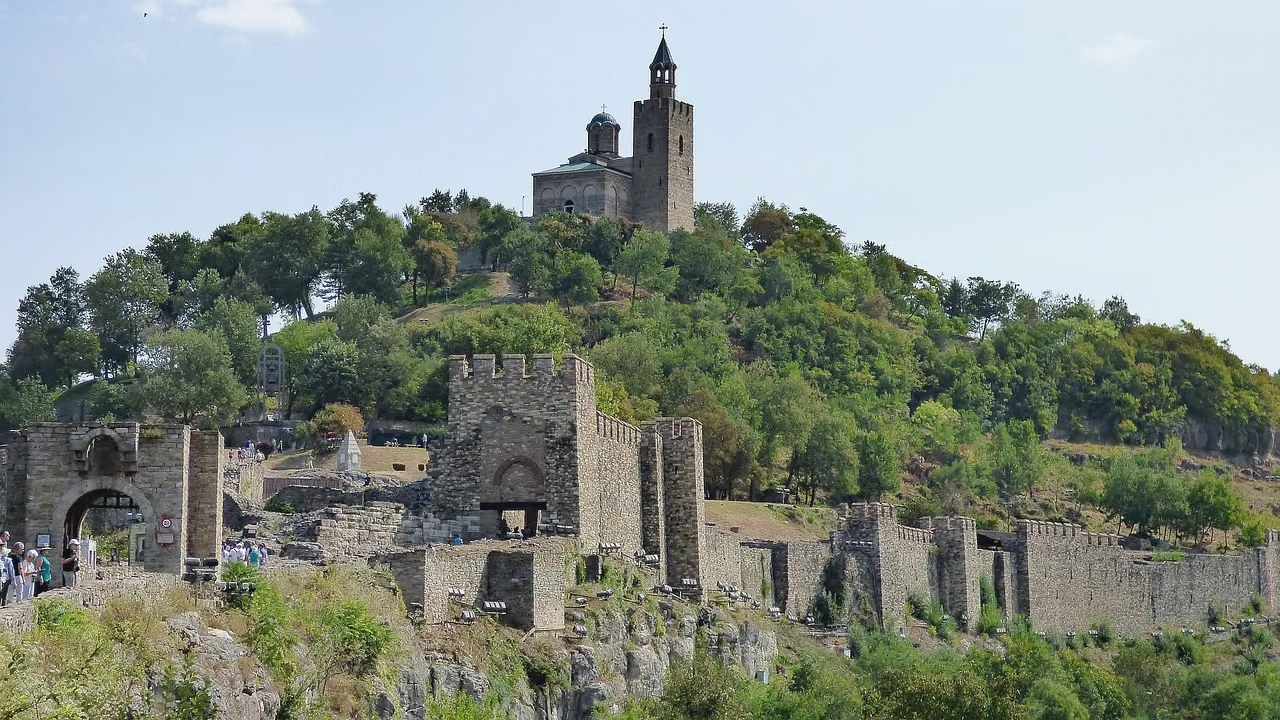
Tsarevets fortress, Veliko Tarnovo
Tsarevets Hill was chosen as the seat of the state's supreme power, the regional museum notes, for its dominance and natural inaccessibility. The reserve stays open until 20:00 from April to September, and the museum's Tsarevgrad Tarnov visitor centre nearby covers the Second Bulgarian Kingdom.
Tsarevets Architectural Reserve is run by the Regional Historical Museum of Veliko Tarnovo, which also runs the Holy Forty Martyrs church and the Tsarevgrad Tarnov multimedia visitor centre near the hill.[1] Price: Standard ticket 7.67 euro (about USD 8.5); family ticket (parents with up to 3 children aged 7 to 18) 10.23 euro (about USD 11). Guided tour in another language 25.56 euro (about USD 28).[1] Hours: April to September 08:00 to 20:00; October 09:00 to 18:00, last entry 17:00; November to March 09:00 to 17:00, last entry 16:00.[1] Booking: Tickets online through the museum's ticket site or at the gate; student discounts only at the ticket office.[1] Find guided visits on Viator (opens Viator in a new tab) paid linkSome links earn us a commission. How we work
USD figures are approximate, converted at the ECB euro reference rates of 13 Nov 2026.
- JanHigh 36°F 2°CLow 23°F -5°C
- FebHigh 41°F 5°CLow 27°F -3°C
- MarHigh 50°F 10°CLow 33°F 0°C
- AprHigh 60°F 16°CLow 41°F 5°C
- MayHigh 69°F 20°CLow 48°F 9°C
- JunHigh 74°F 24°CLow 54°F 12°C
- JulHigh 79°F 26°CLow 57°F 14°C
- AugHigh 79°F 26°CLow 56°F 13°C
- SepHigh 73°F 23°CLow 51°F 10°C
- OctHigh 62°F 17°CLow 42°F 6°C
- NovHigh 49°F 10°CLow 34°F 1°C
- DecHigh 39°F 4°CLow 27°F -3°C
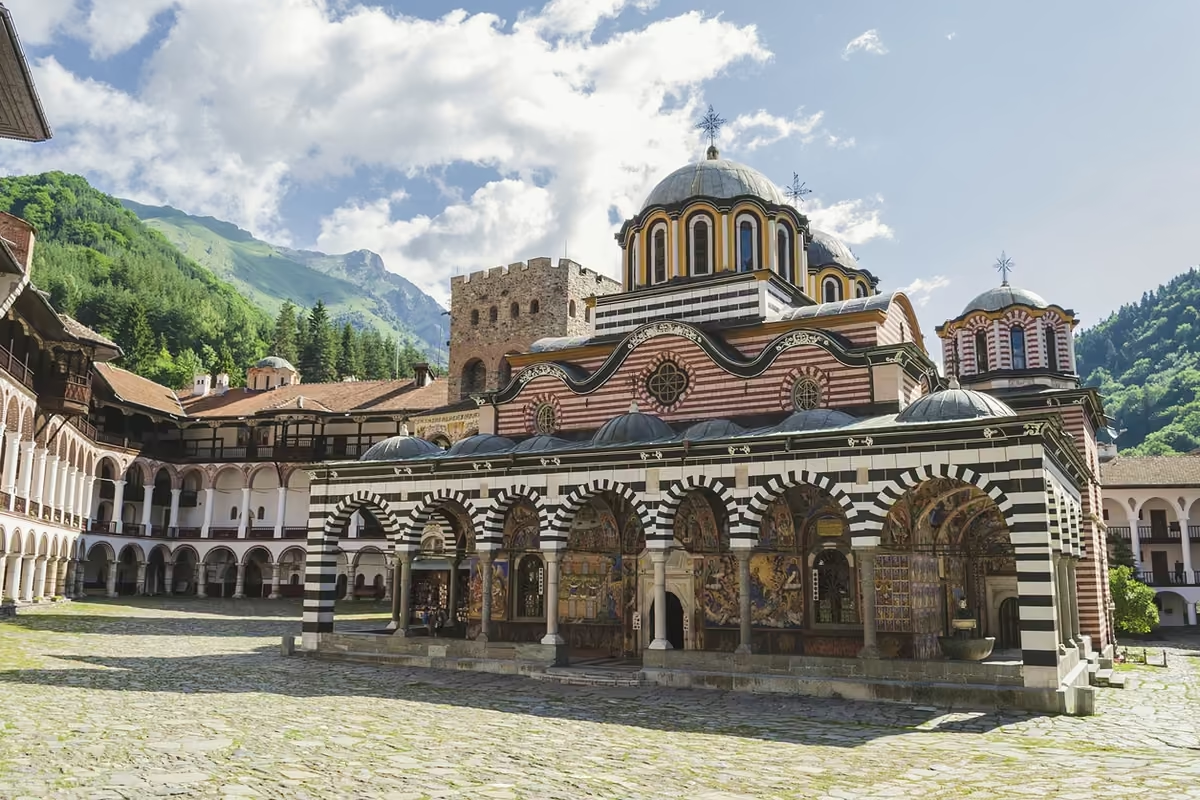
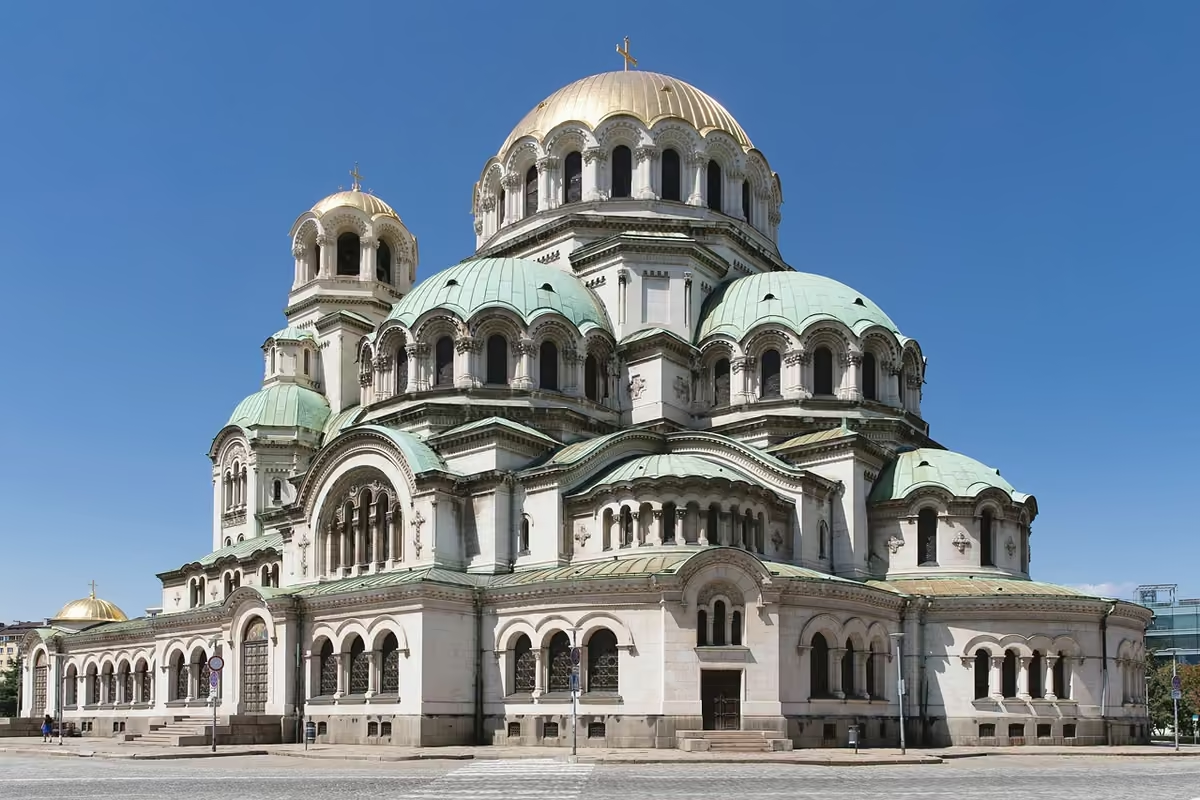
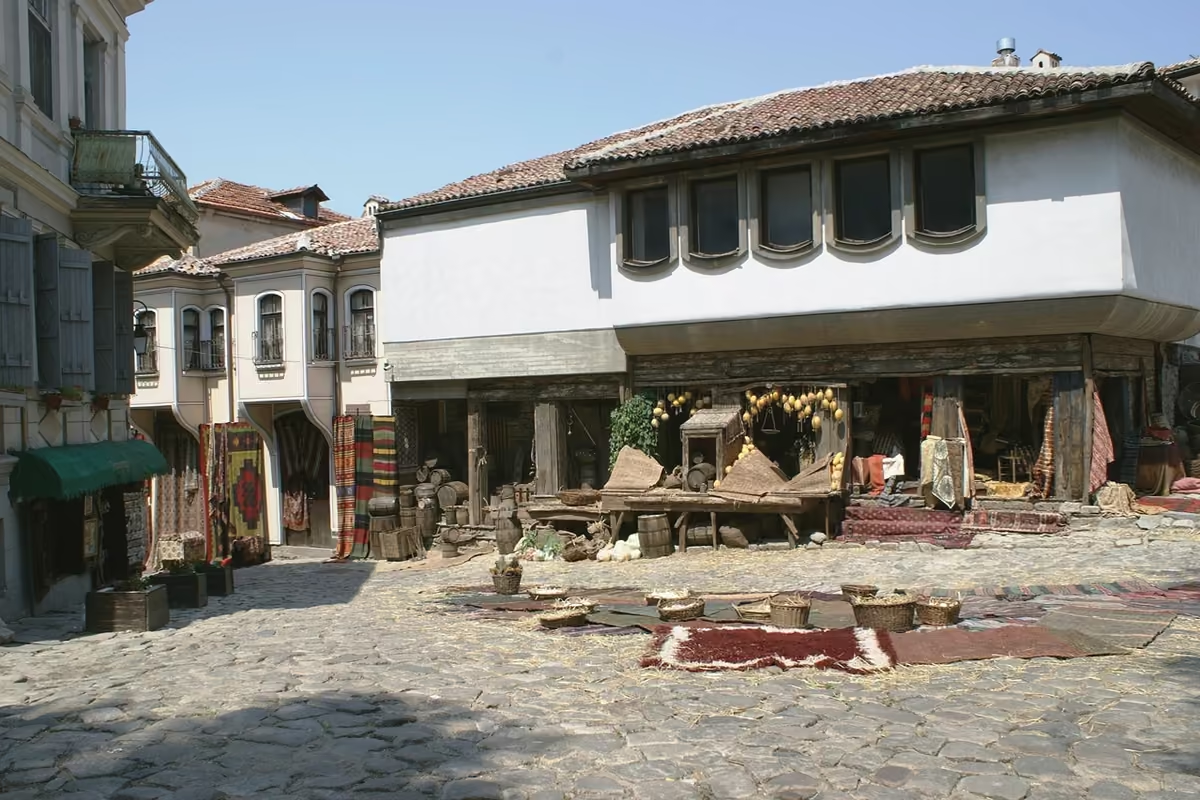
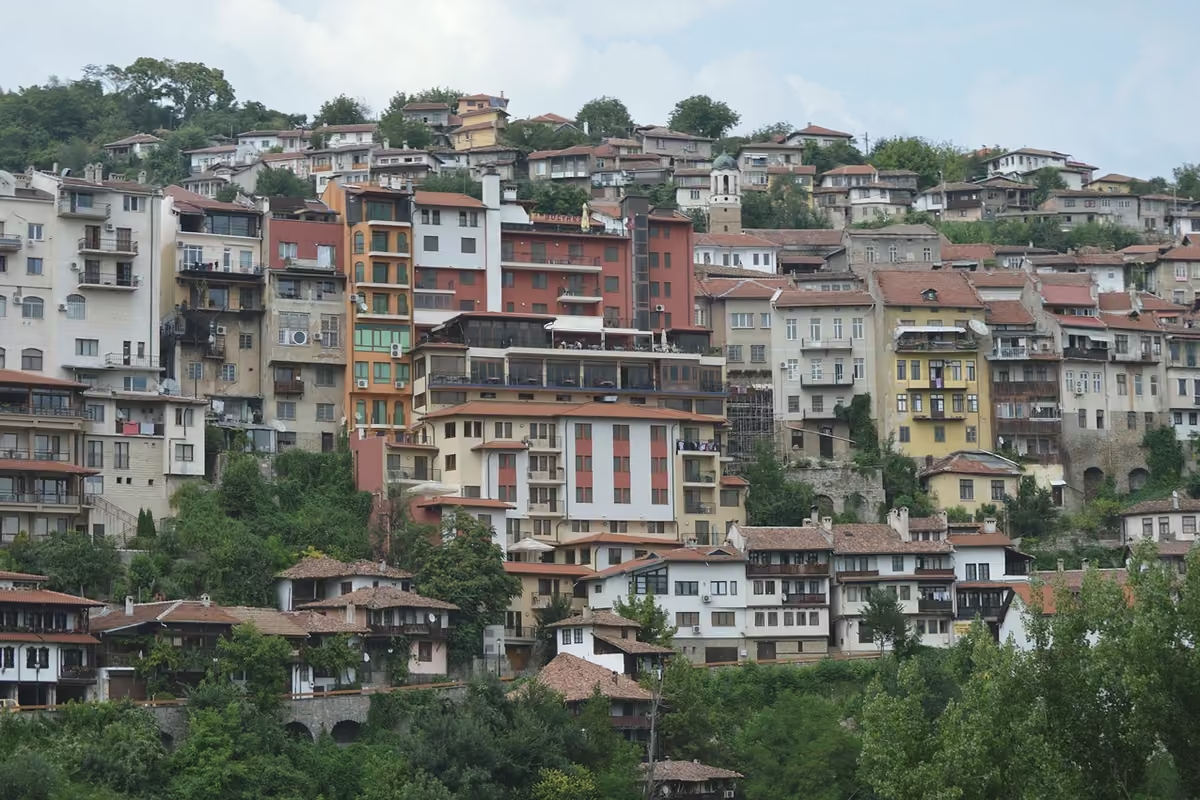
Bulgaria in pictures
4 photographs, each with its photographer and licence.
Jump to
Where to go
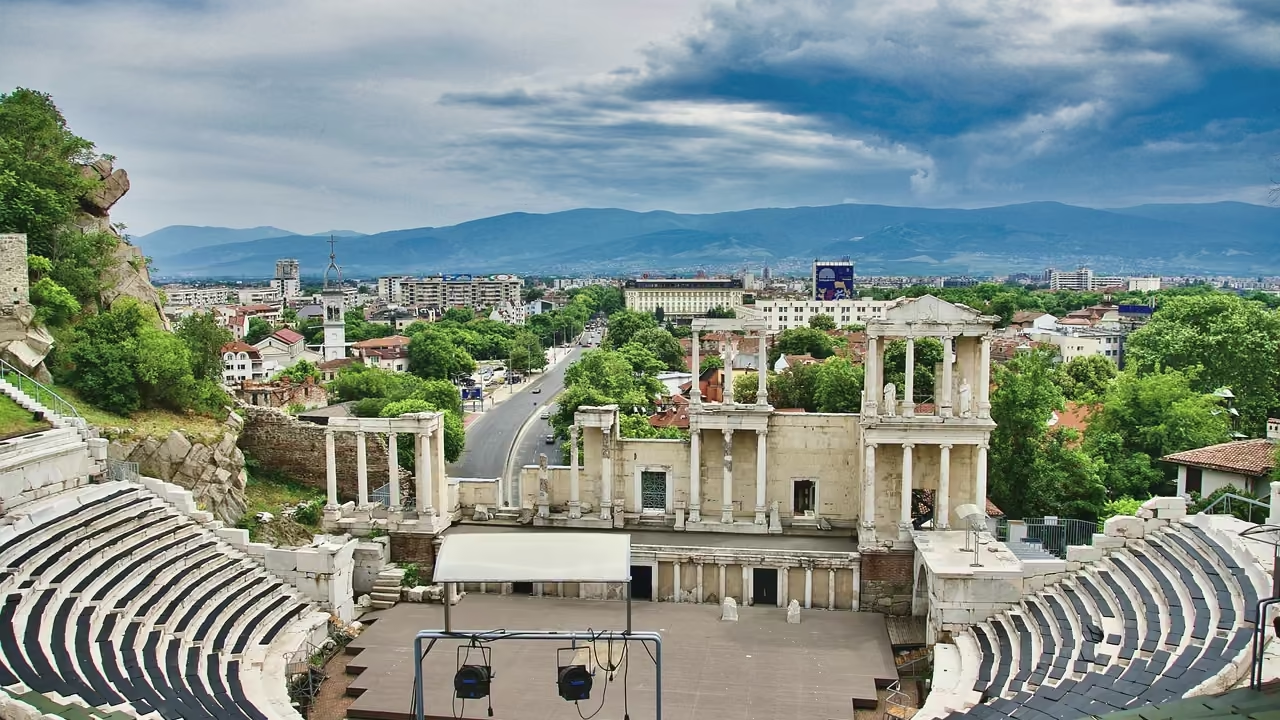 PlovdivPDV
i
Photo: MemoryCatcher on Pixabay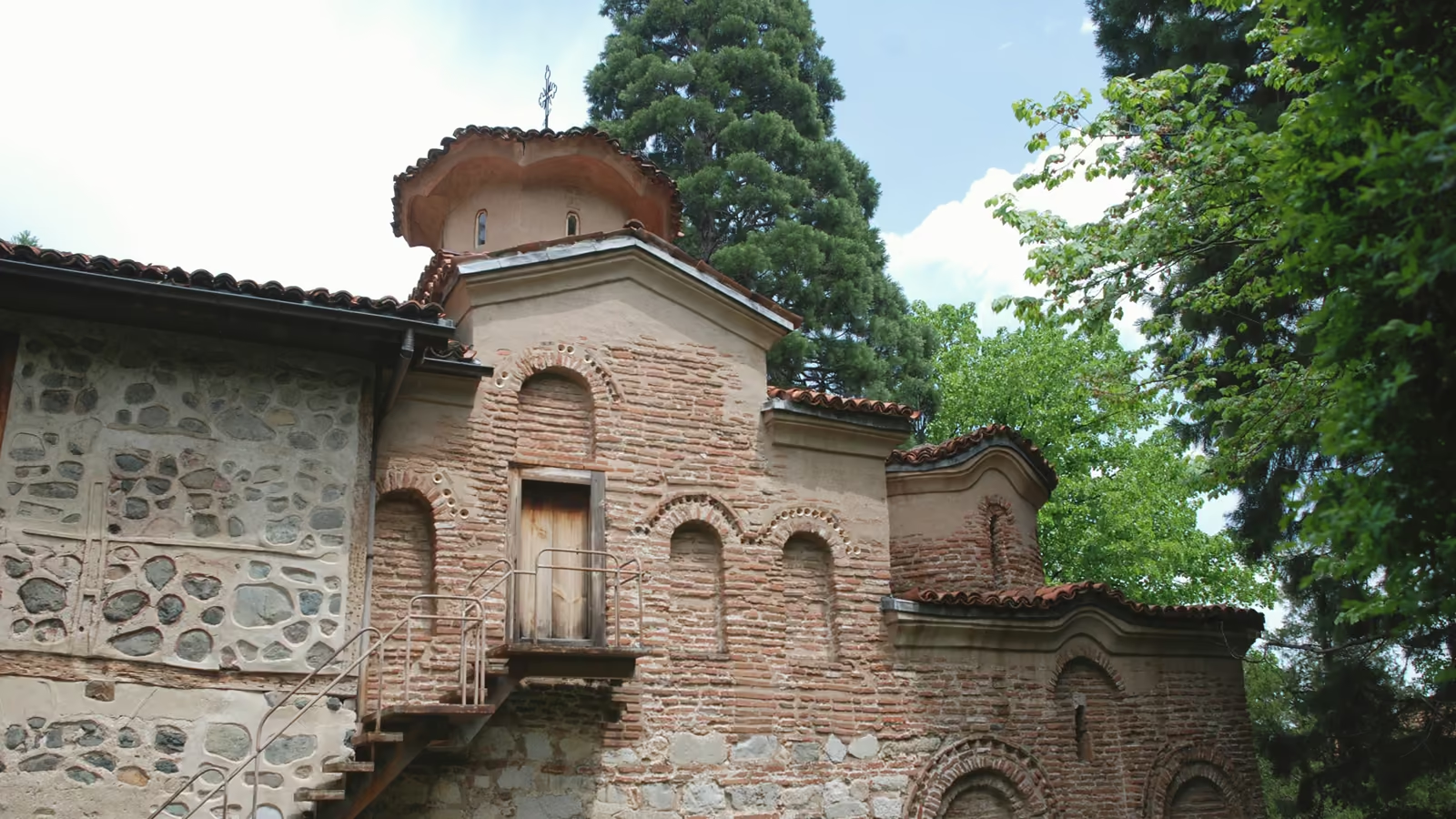 SofiaSOF
i
Photo: xiquinhosilva from Cacau, Wikimedia Commons (CC BY 2.0)

Highlights
Sofia
Boyana Church (Sofia)
The church museum at Boyansko Ezero 3, Sofia, run by the National History Museum.
Adults 10 euro (about USD 11); pupils and students 3 euro (about USD 3.5).[19]Every day; November to March 09:00 to 17:30 (ticket desk to 17:20), April to October 09:30 to 18:00.[19]At the site or by email to reservation@boyanachurch.info, paid by bank transfer; at most 9 visitors at a time for 10 minutes.[19]Official site
National History Museum (Sofia)
The national history museum, in Sofia.
Adults 9 euro (about USD 10); pupils and students 2 euro (about USD 2); pensioners and over-65s 3 euro (about USD 3.5).[18]Every day; 1 October to 31 March 09:30 to 18:00 (ticket desk to 17:15), 1 April to 30 September 09:30 to 19:00. Closed 1 January, Easter Sunday, 24 and 25 December.[18]Tickets at the desk in cash or by card; guided tours in English and other languages booked at least two weeks ahead.[18]Official site
Sofia History Museum
The city history museum in the restored Central Mineral Bath at Banski Square 1.
1 November to 30 April: Tuesday to Sunday 10:00 to 18:00; 1 May to 31 October: every day 10:00 to 18:00. Last admission 17:30.[23]Official site
Plovdiv
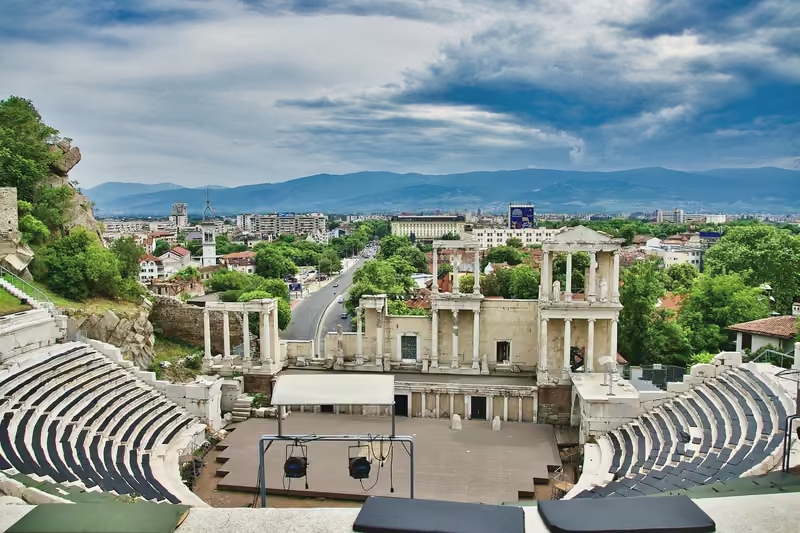
Photo: MemoryCatcher on Pixabay Ancient Theatre of Philippopolis (Plovdiv)
The Roman theatre in Old Plovdiv, at Tsar Ivaylo 4, run by the Old Plovdiv institute.
Adults 3.58 euro (about USD 4) per site; pupils and students 1.53 euro (about USD 1.5); combined ticket for up to 5 Old Plovdiv sites 10.74 euro (about USD 12).[20]November to March every day 09:00 to 17:30; April to October 09:30 to 18:00; lunch break 12:30 to 13:00.[20]Online through Old Plovdiv's ticket shop or at the site.[20]Official site
Roman Stadium of Philippopolis (Plovdiv)
The Roman stadium remains on Stadium Square, Plovdiv, with a 3D film hall.
Free to visit; the 3D film hall costs 3.68 euro (about USD 4) for adults.[20]Official site
Balabanov House (Plovdiv)
A historic house of Old Plovdiv at Konstantin Stoilov 57, run by the Old Plovdiv institute.
Adults 3.58 euro (about USD 4); part of the 5-site combined ticket.[20]November to March Tuesday to Sunday 09:00 to 17:30; April to October 09:30 to 18:00; lunch break 13:00 to 13:30.[20]Official site
More in Bulgaria
Holy Forty Martyrs Church (Veliko Tarnovo)
The church built by Tsar Ivan Asen II after his victory of 1230, with the Great Lavra monastic complex.
Standard 5.11 euro (about USD 5.5); family 7.67 euro (about USD 8.5).[1]November to March 09:00 to 17:00, last entry 16:30.[1]Online through the museum's ticket site or at the door; student discounts only at the ticket office.[1]Official site
Tsarevgrad Tarnov visitor centre (Veliko Tarnovo)
The regional museum's multimedia centre near Tsarevets hill, on the Second Bulgarian Kingdom.
Standard 7.67 euro (about USD 8.5); family (an adult and up to 3 children) 15.34 euro (about USD 17).[1]November to March 09:00 to 17:30, first entry 09:30, last 17:00; April to September 09:00 to 19:00.[1]Online through the museum's ticket site or at the door.[1]Official site
Tours across Bulgaria
Tours, day trips and tickets across Bulgaria, booked on Viator.
See Bulgaria tours on Viator (opens Viator in a new tab) paid link
Things to book in Sofia.
Before you go
Checklist
- Visa or travel authorisation for your passport
- Money: cards, cash and ATMs
- A SIM or eSIM for data on arrival
- Government travel advisories
| Passport | Rule |
|---|---|
| United States | US citizens are visa-exempt under the EU list (Regulation (EU) 2018/1806, Annex II) for short stays of up to 90 days in any 180-day period.[6] |
| United Kingdom | Bulgaria is in the Schengen area, so the EU short-stay rule applies: up to 90 days in any 180-day period across all Schengen states.[7][2] |
| Canada | Bulgaria is in the Schengen area, so the EU short-stay rule applies: up to 90 days in any 180-day period across all Schengen states.[5][2] |
| Australia | Australia is on the EU visa-exempt list (Regulation (EU) 2018/1806, Annex II), and Bulgaria is in the Schengen area, so the EU short-stay rule applies: up to 90 days in any 180-day period across all Schengen states.[6][2] |
The EU's country profile lists Bulgaria as an EU member since 1 January 2007 and a Schengen member since 31 March 2024.[2][8]
Entry/Exit System: fully operational since 10 April 2026 and replacing passport stamps. It records name, travel document data, fingerprints, a facial image and the date and place of each entry and exit.[9]
ETIAS is planned for the Schengen area and is not yet open for applications. Check the official ETIAS site (europa.eu/etias) before travel; only europa.eu sites are official.[10][5]
Entry rules for every destination, by passport Check one passport and destination Passport planner for a trip with several stops
Money
| Item | What to know |
|---|---|
| Currency | The euro, since 1 January 2026, at the fixed rate of 1 euro (about USD 1) to 1.95583 levs. Lev cash stopped being legal tender after one month of dual circulation.[2][11] |
| Cards | Sofia's buses, trams and metro take contactless Visa, Mastercard or Bcard cards, physical or in a phone wallet, tapped at the validator or the metro barrier; the day's fares are capped at the price of a day pass.[12][13] |
| Cash | The Bulgarian National Bank exchanges levs for euro at its counters free of charge, with no time limit. Commercial banks' free exchange ended on 30 June 2026, and they may now charge a fee.[14][11] |
SIM and data
- Yettel prepaid tourist eSIM, data only and valid only in Bulgaria on Yettel's network: 25 GB plan 10.23 euro (about USD 11) for 30 days (unlimited for the first 5 days); 100 GB plan 40.90 euro (about USD 45) for 60 days (unlimited for the first 20 days). Bought online; the QR code arrives by email.[15]
Airport to city
Sofia Airport, the terminus of metro line M4 (Obelya to Sofia Airport)[16] SOF
| Option | Fare | Pay |
|---|---|---|
| Metro line M4 from Sofia Airport station towards Obelya, sharing 13 of its 20 stations with M1.[16]metro | 0.80 euro (about USD 0.88) for the 30 plus ticket (transfers within 30 minutes) or a single metro ticket; 1.10 euro (about USD 1) for 60 plus.[13][17] | Tap a contactless bank card at the metro entry barrier, or buy at the cashier or the ticket machine at the station.[13] |
First 48 hours
- Arrival, passport control
Non-EU visitors are registered in the Entry/Exit System: fingerprints and a photo, no stamp. The 90 days in any 180 count across all Schengen states.
- Arrival, Sofia Airport
Take metro line M4 from the airport station; tap a contactless bank card at the barrier for the 0.80 euro, 30-minute fare, which also covers transfers to buses and trams within that time if you tap again in each vehicle.
- First day
Leftover lev notes no longer pay for anything; the Bulgarian National Bank changes them to euro free of charge at its counters.
- Day two in Sofia
Boyana Church admits at most 9 people at a time for 10 minutes; the National History Museum (9 euro) is open every day from 09:30.
- Onward to Veliko Tarnovo
Tsarevets opens 09:00 to 17:00 from November to March, last entry 16:00; buy the 7.67 euro ticket online or at the gate.
Luggage storage by the hour sits near most main stations. Bounce
Safety and advisories
| Government | Advice | Updated | Checked |
|---|---|---|---|
| US State Department | Level 1: Exercise Normal Precautions | ||
| UK Foreign Office (FCDO) | FCDO does not advise against travel to any part of Bulgaria; the page still carries dated safety, entry and health notes. | ||
| Government of Canada | Level 1 of 4 Take normal security precautions |
UK advice: The FCDO does not advise against travel to any part of Bulgaria (updated 11 August 2026).[4]
Canada: Exercise normal security precautions (13 October 2026), with no regional advisories.[5]
Travel medical cover is sold by the week for trips like this one. SafetyWing
What things cost
| Item | What it costs |
|---|---|
| Sofia public transport, 30 minutes with transfers | 0.80 euro (about USD 0.88)[17] |
| Sofia public transport, 24 hours including night lines | 3.00 euro (about USD 3.5) (72 hours 7.60 euro (about USD 8.5))[17] |
| Tsarevets fortress, standard ticket | 7.67 euro (about USD 8.5)[1] |
| National History Museum, Sofia, adult | 9.00 euro (about USD 10)[18] |
| Boyana Church, adult | 10.00 euro (about USD 11)[19] |
| Old Plovdiv site such as the Ancient Theatre, adult | 3.58 euro (about USD 4) (5 sites combined 10.74 euro (about USD 12))[20] |
| Yettel tourist eSIM, 25 GB, 30 days | 10.23 euro (about USD 11)[15] |
When to go
| Month | Weather | Closures |
|---|---|---|
| January | Sofia normals (NIMH via WMO, 1961 to 1990): highs around 2.2 C (36 F), lows -4.9 C (23 F), 28 mm of rain over about 10 days. Varna: highs 5.5 C (42 F), lows -1.1 C (30 F).[21][22] | The National History Museum is closed on 1 January.[18] |
| February | Sofia normals: highs around 4.9 C (41 F), lows -2.9 C (27 F), 31 mm over about 10 days. Varna: highs 6.5 C (44 F), lows 0.0 C (32 F).[21][22] | |
| March | Sofia normals: highs around 9.8 C (50 F), lows 0.3 C (33 F), 38 mm over about 10 days. Varna: highs 9.6 C (49 F), lows 2.4 C (36 F).[21][22] | |
| April | Sofia normals: highs around 15.7 C (60 F), lows 4.8 C (41 F), 51 mm over about 12 days. Varna: highs 14.8 C (59 F), lows 7.1 C (45 F).[21][22] | Tsarevets moves to summer hours, 08:00 to 20:00, from April to September. The National History Museum is closed on Easter Sunday.[1][18] |
| May | Sofia normals: highs around 20.3 C (69 F), lows 9.0 C (48 F), 73 mm over about 14 days. Varna: highs 20.1 C (68 F), lows 11.8 C (53 F).[21][22] | Entry to the National History Museum and Boyana Church is free on 18 May, International Museum Day.[18][19] |
| June | Sofia normals: highs around 23.5 C (74 F), lows 12.1 C (54 F), 75 mm over about 13 days, the wettest month. Varna: highs 24.8 C (77 F), lows 15.7 C (60 F).[21][22] | |
| July | Sofia normals: highs around 25.9 C (79 F), lows 13.8 C (57 F), 63 mm over about 10 days. Varna: highs 27.1 C (81 F), lows 17.8 C (64 F).[21][22] | |
| August | Sofia normals: highs around 26.0 C (79 F), lows 13.4 C (56 F), 51 mm over about 8 days. Varna: highs 27.3 C (81 F), lows 17.6 C (64 F).[21][22] | |
| September | Sofia normals: highs around 22.6 C (73 F), lows 10.4 C (51 F), 38 mm over about 7 days. Varna: highs 23.8 C (75 F), lows 14.4 C (58 F).[21][22] | On 17 September, Sofia Day, Boyana Church is free and the National History Museum is free for children and students and 2 euro (about USD 2) for others.[19][18] |
| October | Sofia normals: highs around 16.6 C (62 F), lows 5.7 C (42 F), 35 mm over about 7 days. Varna: highs 18.4 C (65 F), lows 9.8 C (50 F).[21][22] | Tsarevets closes at 18:00 in October and at 17:00 from November. The National History Museum's winter hours, to 18:00, start on 1 October.[1][18] |
| November | Sofia normals: highs around 9.6 C (49 F), lows 1.2 C (34 F), 48 mm over about 9 days. Varna: highs 13.1 C (56 F), lows 5.5 C (42 F).[21][22] | On 1 November, the Day of the National Awakeners, Boyana Church is free. Boyana's winter hours, 09:00 to 17:30, run from November to March.[19] |
| December | Sofia normals: highs around 4.1 C (39 F), lows -2.7 C (27 F), 40 mm over about 11 days. Varna: highs 8.1 C (47 F), lows 1.6 C (35 F).[21][22] | The National History Museum is closed on 24 and 25 December.[18] |
Common mistakes
Myth: Bulgaria still uses the lev, so bring levs.
Actually: Bulgaria has been in the euro area since 1 January 2026, and lev cash stopped being legal tender after a one-month dual circulation. The Bulgarian National Bank still changes levs to euro free of charge with no deadline.[2][11][14]
Myth: Any bank will change old levs for free.
Actually: The six-month free exchange at commercial banks ended on 30 June 2026, and banks may now set and charge fees; only the BNB's own counters remain free.[14]
Myth: A single metro ticket lets you change to a bus.
Actually: The single metro ticket is for one trip without transfer, valid 60 minutes from issue and only at the station where it was bought. The 30 plus ticket (also 0.80 euro (about USD 0.88)) allows transfers within 30 minutes, but must be validated in every vehicle.[13]
Myth: You can linger inside Boyana Church.
Actually: At most 9 people are admitted at once and the stay is limited to 10 minutes; group slots need a confirmed booking.[19]
Myth: The Yettel tourist eSIM works across Europe.
Actually: It is data only and valid only in Bulgaria on Yettel's network, with no calls or texts.[15]
Sources
Show all sources (24)
- Prices and tickets, sites, Regional Historical Museum, Veliko Tarnovo.
- Bulgaria, EU country profile, European Union.
- Bulgaria Travel Advisory, US Department of State (as captured in this site's advisory index).
- Bulgaria travel advice, UK Foreign, Commonwealth and Development Office (as captured in this site's advisory index).
- Travel advice and advisories for Bulgaria, Global Affairs Canada (as captured in this site's advisory index).
- Regulation (EU) 2018/1806: third countries whose nationals are exempt from the visa requirement (Annex II), European Parliament and Council of the European Union (EUR-Lex).
- Bulgaria travel advice: entry requirements, UK Foreign, Commonwealth and Development Office.
- Schengen area, European Commission, Migration and Home Affairs.
- Entry/Exit System (EES), European Commission, Migration and Home Affairs.
- ETIAS, European Travel Information and Authorisation System, European External Action Service.
- Frequently asked questions, citizens, Official website for the adoption of the euro in Bulgaria (Ministry of Finance and Bulgarian National Bank).
- Sofia City Card and Pay-As-You-Go, Sofia Urban Mobility Centre.
- Trip tickets of the Sofia Metro, Metropoliten JSC, Sofia.
- Press release, 1 July 2026: exchange of levs for euro, Bulgarian National Bank.
- Prepaid eSIM, Yettel Bulgaria.
- Scheme of the metro sections in operation, Metropoliten JSC, Sofia.
- Travel products, Sofia Urban Mobility Centre.
- Цени и работно време (prices and opening hours), National History Museum, Sofia.
- Боянска църква (Boyana Church), National History Museum, Sofia.
- Tickets information, Old Plovdiv institute.
- Sofia, Bulgaria: climatological information (WMO station normal), World Meteorological Organization, World Weather Information Service (data from Bulgaria's National Institute of Meteorology and Hydrology).
- Varna, Bulgaria: climatological information (WMO station normal), World Meteorological Organization, World Weather Information Service (data from Bulgaria's National Institute of Meteorology and Hydrology).
- Main Building, Sofia History Museum.
- What is ETIAS, European Union, ETIAS.