

Jeonju
For: Visitors spending a day or two in Jeonju, arriving by KTX from Seoul or by airport bus from Incheon, who want the Hanok Village shrine, the Confucian school and the city museums with their hours and prices. Gyeonggijeon Shrine costs 3,000 won and is free on the last Wednesday of the month. The Confucian school, the National Museum and the Historical Museum are free. Jeonju has no airport of its own: the nearest is Gunsan Airport, and Incheon has direct buses. Hours, prices and closing days are below.
Entry rules depend on your passport. The rules for US, UK, Canadian and Australian passports are under Before you go on the South Korea page.
- Currency
- The won (KRW)[8]Shop prices include value added tax and individual consumption tax, part of which visitors can reclaim at tax refund stores.
- Time zone
- UTC+9, all year
- Advisories
- US: Level 1UK: FCDO does not advise against travel to any part of South KoreaCanada: Level 1US advice checked Each government's advice
Quick answers
- Is it safe?
- Advice from each government for South Korea:
- US: Level 1. Checked .
- UK: FCDO does not advise against travel to any part of South Korea. Checked .
- Canada: Level 1. Checked .
- Do I need a visa?
That depends on your passport. The rules for US, UK, Canadian and Australian passports are in the South Korea guide.
i

The one thing
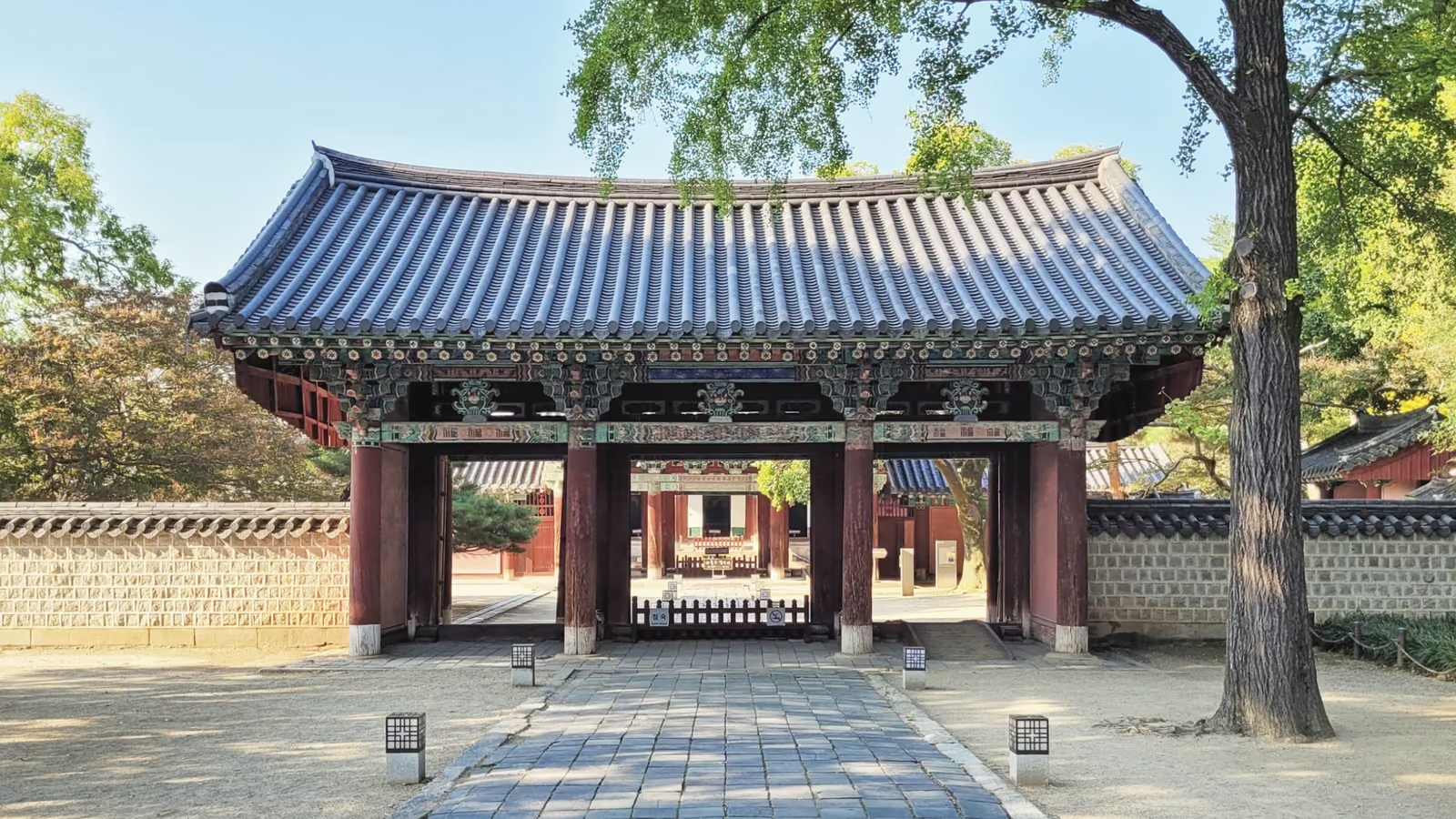
Gyeonggijeon Shrine, the founder's portrait hall
Founded in 1410 to hold the portrait of King Taejo, who founded the Joseon dynasty, and rebuilt in 1614. The Royal Portrait Museum on the grounds shows his portrait and six other royal portraits, on the same ticket.
Buy a ticket at the gate; entry is free on the last Wednesday of the month and for visitors 65 and over. Last entry is an hour before closing.[1] Price: Adults 3,000 won (about USD 2), ages 13 to 24 2,000 won (about USD 1.5), ages 7 to 12 1,000 won (about USD 0.75); the Royal Portrait Museum is included.[1][2] Hours: 09:00 to 18:00 from November to February, 09:00 to 19:00 from March to May and in September and October, 09:00 to 20:00 from June to August; last entry an hour before closing. Open all year.[1]
USD figures are approximate, converted at the ECB euro reference rates of 13 Nov 2026.
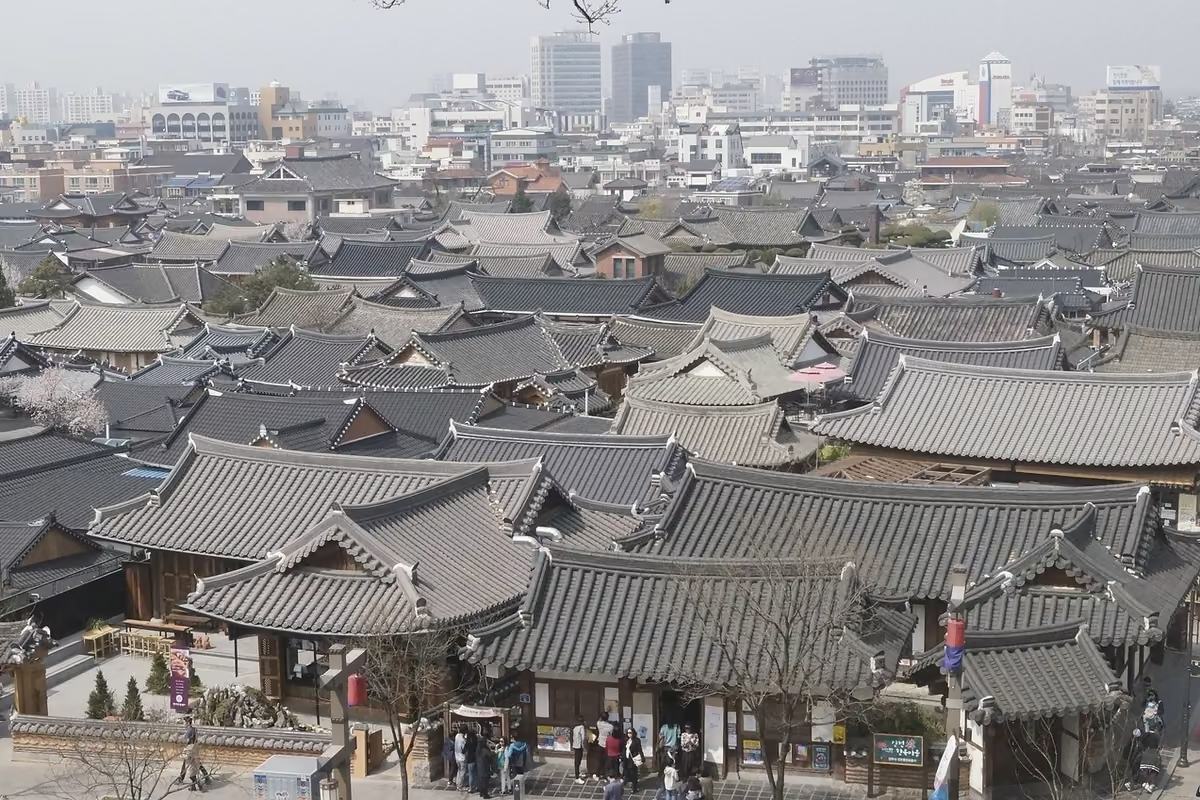
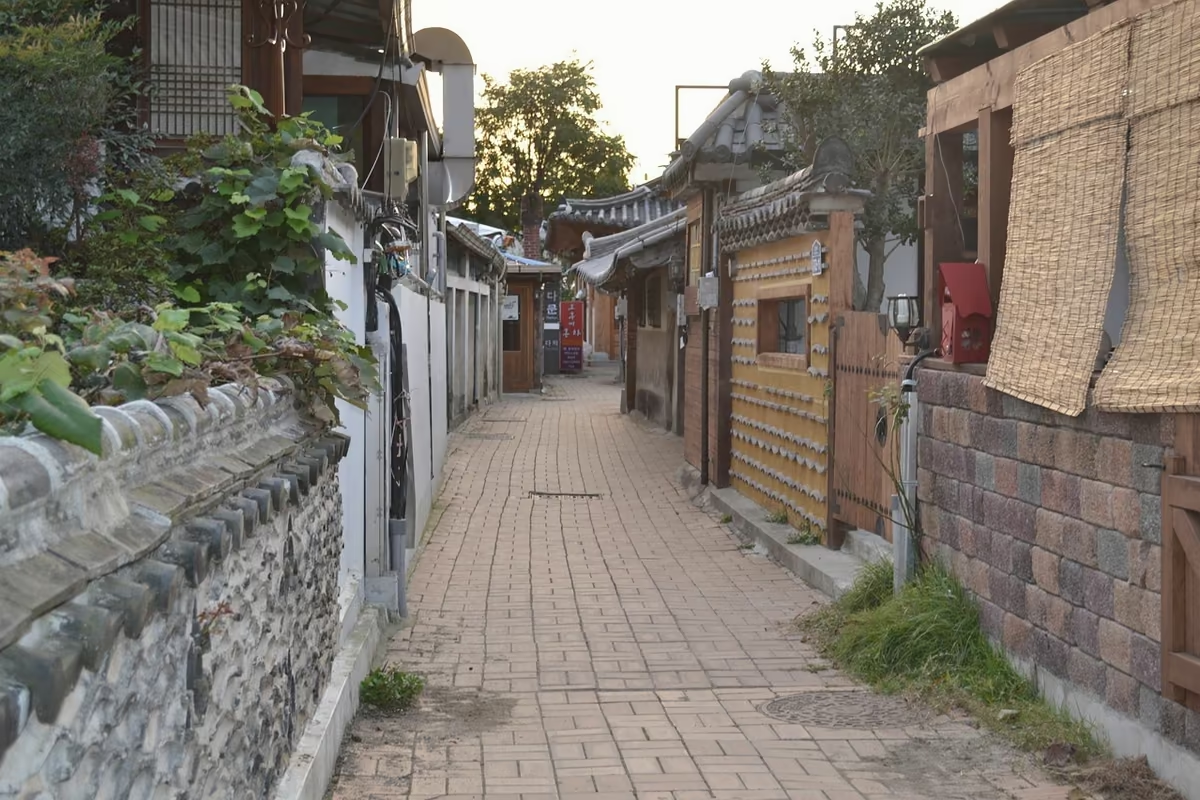
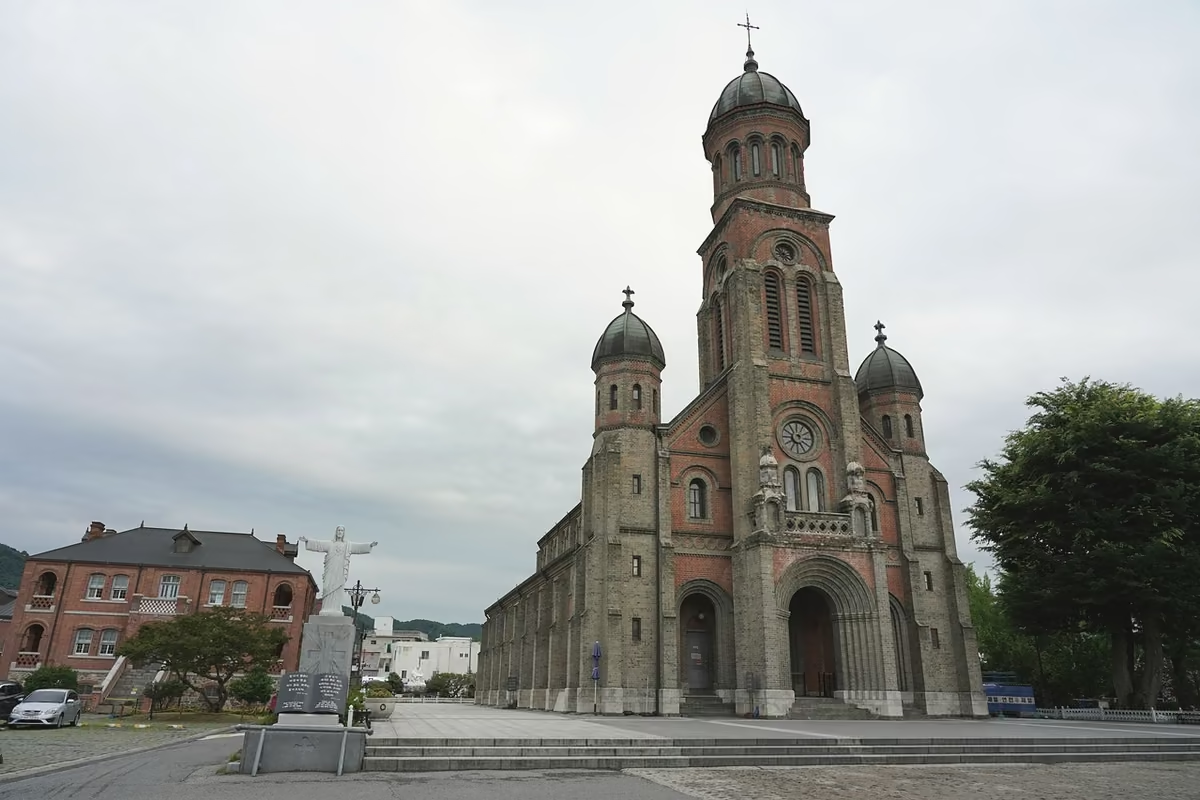
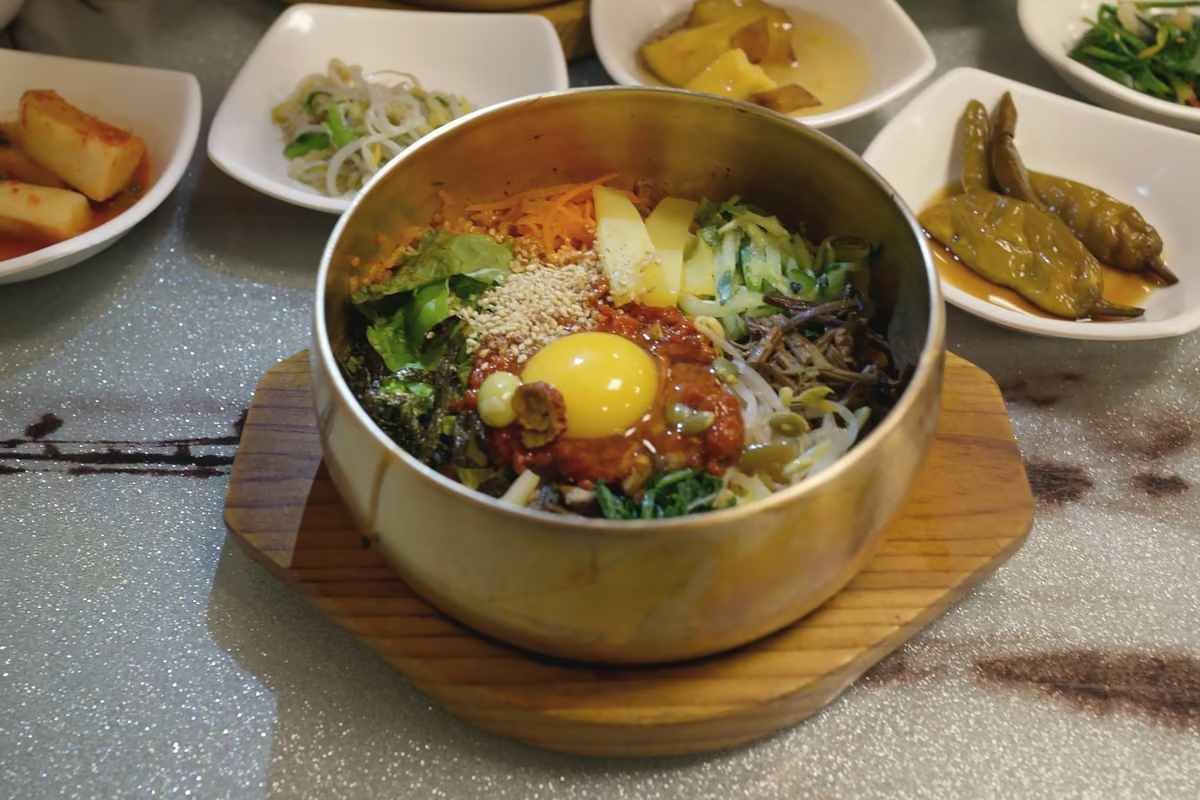
Jeonju in pictures
4 photographs, each with its photographer and licence.
Jump to
Highlights
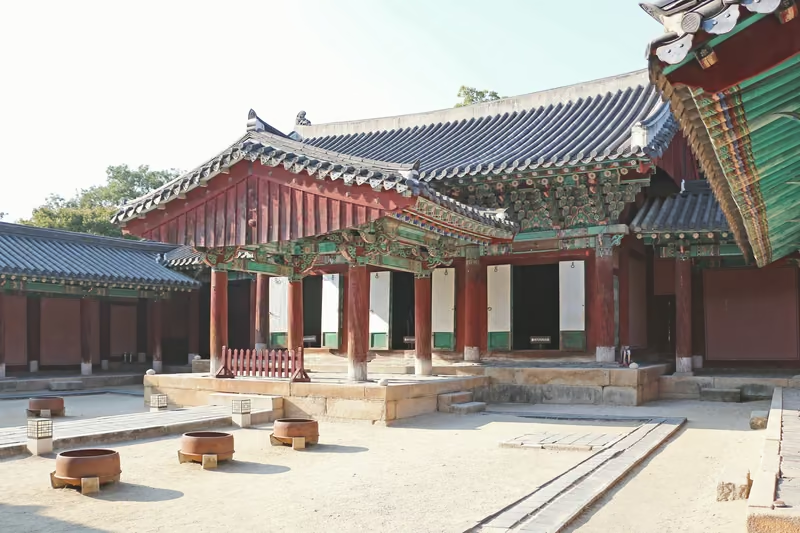
Photo: Bernard Gagnon, Wikimedia Commons (CC0) Gyeonggijeon Shrine and the Royal Portrait Museum
Founded in 1410 to hold the portrait of King Taejo, founder of the Joseon dynasty; rebuilt in 1614 after the Imjin War. The Royal Portrait Museum inside shows his portrait and six other royal portraits.
Adults (25 to 64) 3,000 won (about USD 2), ages 13 to 24 2,000 won (about USD 1.5), ages 7 to 12 1,000 won (about USD 0.75); free for 6 and under, 65 and over, and on the last Wednesday of the month. The portrait museum is included.[1][2]09:00 to 18:00 from November to February, 09:00 to 19:00 from March to May and in September and October, 09:00 to 20:00 from June to August; last entry an hour before closing. Open all year.[1]Official site
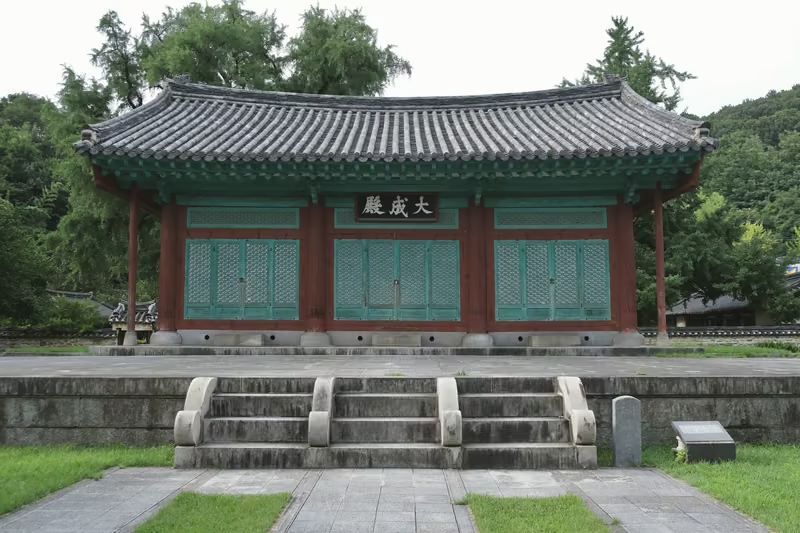
Photo: Motoko C. K., Wikimedia Commons (CC BY 4.0) Jeonjuhyanggyo Local Confucian School
A Joseon-dynasty Confucian school, moved here in 1603, with Daeseongjeon Hall and a ginkgo tree of about 400 years in the front yard.
Free.[20]Winter 10:00 to 17:00, summer 09:00 to 18:00. Closed on Mondays, or the next working day when Monday is a public holiday.[20]Official site
Jeonju National Museum
Founded in 1990, it holds over 40,000 artefacts, most excavated in Jeollabuk-do, with about 2,000 on show in four indoor halls and an outdoor hall.
Free; special exhibitions may charge separately.[17]Permanent exhibition 10:00 to 18:00, last entry 17:30; children's museum 10:00 to 17:30. Closed on 1 January and on the day of Seollal and of Chuseok.[17]Official site
Jeonju Historical Museum
The city-run museum of Jeonju's history, next to the National Museum on Ssukgogae-ro, with permanent and special exhibitions.
Free.[18]09:00 to 18:00, last entry 17:30. Closed on Mondays and New Year's Day.[18]Official site
Jeonju Hanji Museum
A museum of hanji, traditional Korean paper, a Jeonju craft, on Palbok-ro in Deokjin-gu.
Free.[19]09:00 to 17:00. Closed on Sundays, Mondays, New Year's Day and the Seollal and Chuseok holidays.[19]Official site
Jeonju Traditional Liquor Museum
A museum of traditional Korean liquor in the Hanok Village, with the tools of home brewing on show and brewing classes.
Classes: home-made wine or moju (unrefined rice wine) 20,000 won (about USD 15); rice wine 60,000 won (about USD 45).[22]09:00 to 18:00. Closed on Mondays.[22]Brewing classes need a reservation.[22]Official site
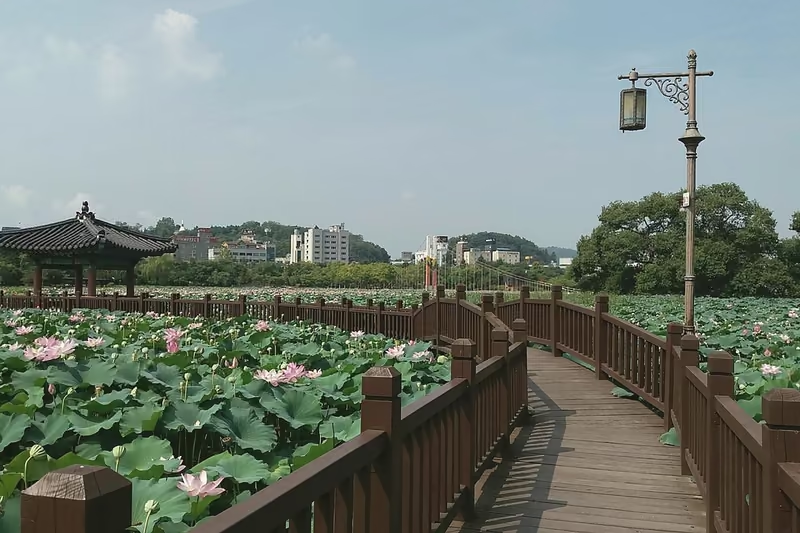
Photo: rumbeing on Pixabay Deokjin Park
Jeonju's main city park, built around a natural pond known for its lotus flowers, with a suspension bridge across the water.
Free.[27]Open 24 hours, all year.[27]Official site
Jeonju Zoo
Opened in 1978, about 1 km from Deokjin Park, with around 670 animals of 106 species.
Adults 3,000 won (about USD 2), teenagers 2,000 won (about USD 1.5), children 1,000 won (about USD 0.75).[21]March to October 09:00 to 19:00; November to February 09:00 to 18:00; last entry an hour before closing. Open all year.[21]Official site
Korea Expressway Corporation Arboretum
An arboretum in Deokjin-gu run by the national expressway company, set up to offset the damage of road building, with collections of native plants.
Free.[26]09:00 to 18:00, last entry 17:00. Closed on Mondays and the Seollal and Chuseok holidays.[26]Official site


First 48 hours
- Before you fly
Check the K-ETA exemption for your passport and submit the free e-Arrival card within the three days before arrival.
- Arrival
From Incheon, take a limousine bus leaving 1.5 to 2 hours after landing; from Seoul, the KTX to Jeonju Station takes about 1 hour 40 minutes.
- Day 1
Gyeonggijeon opens at 09:00 and closes at 18:00 in winter; the Confucian school is a short walk away and closes on Mondays.
- Day 2
The National Museum opens at 10:00 and stays open on Mondays; the Historical Museum next door closes on Mondays. Deokjin Park is open around the clock.
Luggage storage by the hour sits near most main stations. Bounce
Where to stay
Jeonju Hanok Village
About 700 hanok buildings, with Gyeonggijeon, the Confucian school and the Traditional Liquor Museum within walking distance.
Jeonju Station, the limousine terminal and the express and intercity bus terminals are all in different places; the two bus terminals are side by side, 3 minutes apart on foot.[11][12]
Deokjin-gu, near Deokjin Park
Deokjin Park, the zoo, the Hanji Museum and the arboretum are on this side of the city.
KTX from Seoul to Jeonju Station takes about 1 hour 40 minutes.[11]
Stays in these areas can be compared on one site. Expedia
Airport to city
Jeonju has no airport. The nearest is Gunsan Airport, a domestic airport in Okseo-myeon, Gunsan, opened in 1992 beside the US military base.[10]
Incheon International Airport, the international gateway, with direct limousine buses to Jeonju[11] ICN
| Option | Time | Fare |
|---|---|---|
| Limousine bus to Jeonju: Terminal 1 from platforms 12 and 13 outside the first-floor arrivals hall, Terminal 2 from platform 8 in the B1 transportation centre. Tickets at the provincial bus counters or kiosks.[11]bus | Pick a bus leaving 1 hour 30 minutes to 2 hours after landing, to allow for immigration and baggage. Late-night buses run.[11] | Varies by bus class; most airport buses are premium class.[11] |
Jeonju Station, on the KTX line from Seoul[11]
| Option | Time |
|---|---|
| KTX from Seoul to Jeonju Station.[11]rail | About 1 hour 40 minutes.[11] |
A pre-booked transfer meets late arrivals at a fixed price. Welcome Pickups
When to go
All 12 months
| Month | Crowds | Holidays | Closures |
|---|---|---|---|
| January | 1 January New Year's Day (a Friday in 2027).[24][25] | Jeonju National Museum closes on 1 January and the Historical and Hanji museums on New Year's Day. Gyeonggijeon keeps winter hours to February, 09:00 to 18:00.[17][18][19][1] | |
| February | Seollal, the Lunar New Year holiday, runs 6 to 9 February 2027 (with a substitute day).[24][25] | Seollal 6 to 8 February 2027, substitute holiday 9 February.[24][25] | Jeonju National Museum closes on the day of Seollal; the Hanji Museum and the arboretum close for the Seollal holidays.[17][19][26] |
| March | 1 March Independence Movement Day.[24] | Gyeonggijeon moves to 09:00 to 19:00 and Jeonju Zoo to 09:00 to 19:00 from March.[1][21] | |
| May | 5 May Children's Day; Buddha's Birthday 13 May 2027; 1 May 2027 Labour Day with a substitute on 3 May.[24][25] | ||
| June | 6 June Memorial Day.[24] | Gyeonggijeon keeps summer hours from June to August, 09:00 to 20:00.[1] | |
| July | 17 July Constitution Day; substitute holiday 19 July 2027.[24][25] | ||
| August | 15 August Liberation Day; substitute holiday 16 August 2027.[24][25] | ||
| September | Chuseok, the harvest holiday, runs 14 to 16 September 2027.[24][25] | Chuseok 14 to 16 September 2027.[24][25] | Jeonju National Museum closes on the day of Chuseok; the Hanji Museum and the arboretum close for the Chuseok holidays.[17][19][26] |
| October | 3 October National Foundation Day and 9 October Hangul Day; substitute holidays 4 and 11 October 2027.[24][25] | ||
| November | Gyeonggijeon and Jeonju Zoo go to winter hours, 09:00 to 18:00, from November.[1][21] | ||
| December | 25 December Christmas Day.[24][25] |
What things cost
| Item | What it costs |
|---|---|
| Gyeonggijeon Shrine, adult | 3,000 won (about USD 2); free on the last Wednesday of the month[1] |
| Jeonju National Museum, Historical Museum, Hanji Museum and Jeonjuhyanggyo | Free[17][18][19][20] |
| Jeonju Zoo, adult | 3,000 won (about USD 2)[21] |
| Rice wine or moju class, Traditional Liquor Museum | 20,000 won (about USD 15)[22] |
| Taxi, Gunsan Airport to downtown Gunsan | About 10,000 won (about USD 7.5)[23] |
Safety
Emergency: The 1330 Korea Travel Hotline (+82-2-1330) answers in English.[16]
Scams to watch for
Common mistakes
Myth: Jeonju has its own airport.
Actually: It has none. The nearest is Gunsan Airport, a domestic airport in Gunsan; international arrivals usually come by bus from Incheon.[10][11]
Myth: The airport bus stops at Jeonju Station.
Actually: Jeonju Station, the limousine terminal and the express and intercity bus terminals are all in different places.[11]
Myth: Gyeonggijeon is free.
Actually: Adults pay 3,000 won (about USD 2); entry is free on the last Wednesday of the month and for visitors 65 and over.[1]
Myth: Every Jeonju museum closes on Mondays.
Actually: The National Museum opens on Mondays and closes on 1 January, Seollal and Chuseok. The Hanji Museum closes on both Sundays and Mondays.[17][19]
Sources
Show all sources (27)
- Gyeonggijeon Shrine, Korea Tourism Organization.
- Royal Portrait Museum, Korea Tourism Organization.
- Notice: K-ETA temporary exemption period extended by one year, Ministry of Justice, Republic of Korea (K-ETA portal).
- Extension of the temporary K-ETA exemption to 31 December 2026, Ministry of Foreign Affairs, Republic of Korea (Embassy in Switzerland).
- K-ETA temporary exemption period extended to 31 December 2026 (notice of 20 March 2026), Ministry of Justice, Republic of Korea.
- K-ETA application guide, Ministry of Justice, Republic of Korea.
- e-Arrival Card, Ministry of Justice, Republic of Korea.
- Tax refund for foreign tourists, Korea Tourism Organization.
- Tmoney for foreign travellers, Tmoney Co..
- Gunsan Airport: airport overview, Gunsan Airport, Korea Airports Corporation.
- Transportation guide: getting to Jeonju, Jeonju City (Jeonju Tourism).
- Jeonju Hanok Village [Slow City], Korea Tourism Organization.
- South Korea travel advisory, US Department of State.
- South Korea travel advice: safety and security, UK Foreign, Commonwealth and Development Office.
- Travel advice and advisories for South Korea, Global Affairs Canada.
- Getting from Incheon Airport to Seoul (updated 22 May 2026), Korea Tourism Organization.
- Jeonju National Museum, Korea Tourism Organization.
- Jeonju Historical Museum, Korea Tourism Organization.
- Jeonju Hanji Museum, Korea Tourism Organization.
- Jeonjuhyanggyo Local Confucian School, Korea Tourism Organization.
- Jeonju Zoo, Korea Tourism Organization.
- Jeonju Traditional Liquor Museum, Korea Tourism Organization.
- Gunsan Airport: public transportation, taxi, Gunsan Airport, Korea Airports Corporation.
- Calendar data 2026: public holidays, Korea Astronomy and Space Science Institute.
- Calendar data 2027: public holidays, Korea Astronomy and Space Science Institute.
- Korea Expressway Corporation Arboretum, Korea Tourism Organization.
- Deokjin Park, Korea Tourism Organization.