
Capitol Reef, Utah
For: First-time visitors to Capitol Reef who want the Fruita orchards, the Gifford Homestead and the Scenic Drive, and who need to know the park fee, the fruit-picking rules and the weather limits on the spur roads. Capitol Reef is open year-round; entry is USD 20 a private vehicle, and an America the Beautiful annual pass costs USD 250 for non-US residents. Fruita has orchards open to wander at any time, and the Gifford House sells locally baked fruit pies from 14 March to late November.
Entry rules depend on your passport. The rules for UK, Canadian and Australian passports are under Before you go on the United States page.
- Currency
- US dollar[11]Notes of 1, 2, 5, 10, 20, 50 and 100 dollars are issued by the Federal Reserve; it is government policy that all designs remain legal tender whenever they were issued.
- Time zone
- UTC-7 (MST) / UTC-6 (MDT)
- Advisories
- UK: FCDO does not advise against travel to any part of USACanada: Level 1Each government's advice
Quick answers
- How do I get from the airport?
- SLC: Taxi: No shuttle, taxi or public transport to the park is described by the Park Service or the Utah Office of Tourism; the routes they give are by road, so most visitors hire a car. Checked .
- Every option is under Airport to city.
- Is it safe?
- Advice from each government for United States:
- UK: FCDO does not advise against travel to any part of USA. Checked .
- Canada: Level 1. Checked .
- Do I need a visa?
That depends on your passport. The rules for US, UK, Canadian and Australian passports are in the United States guide.
i
The one thing
Fruita and the Gifford Homestead
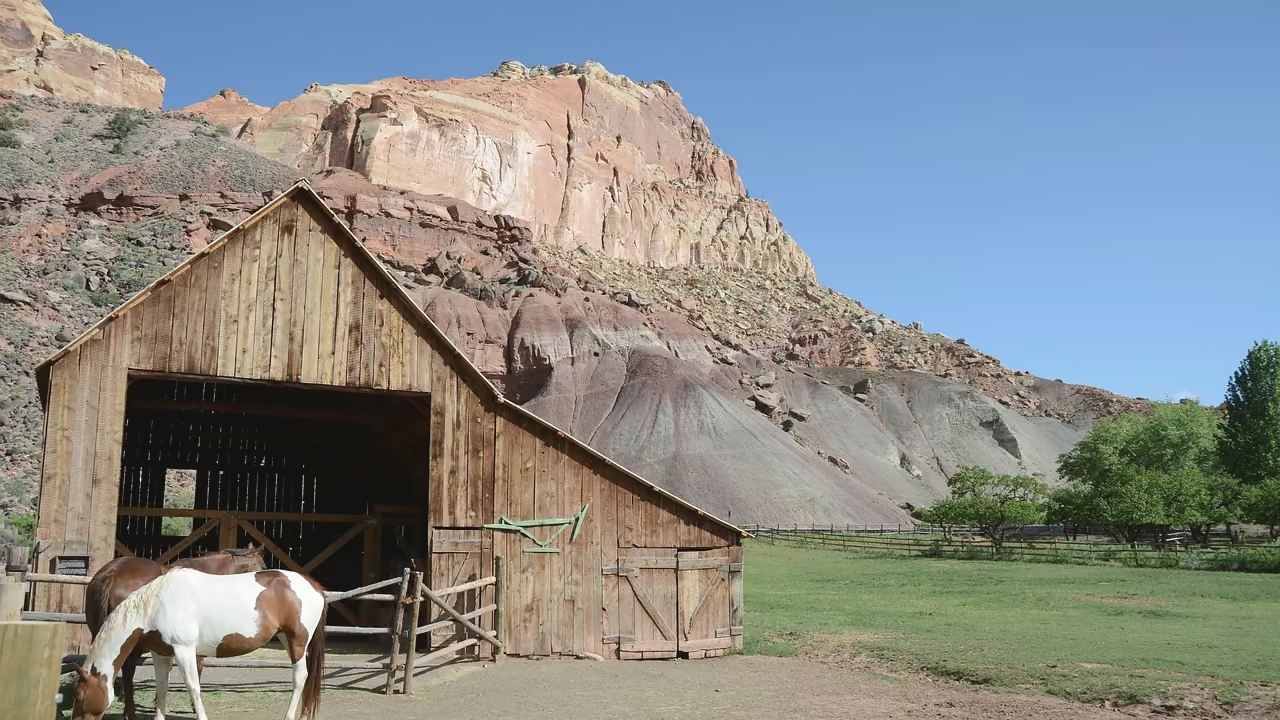
The Fruita valley holds a 200-acre historic district of orchards and pioneer farmland. At the Gifford Homestead, a restored farmhouse, the Capitol Reef Natural History Association sells locally baked fruit pies, homemade ice cream, jams and crafts.
Drive the Scenic Drive 1 mile south of the visitor center to the Gifford Homestead; a small lot sits beside the yard, and oversized vehicles can park at the picnic area. The house is a cultural demonstration site with a store.[1][2] Price: The Park Service page names locally baked fruit pies and homemade ice cream among the items sold and gives no pie prices and no admission charge. Park entry applies: USD 20 per private vehicle, USD 15 per motorcycle (valid seven days) or USD 10 per person on foot or bicycle.[1][3] Hours: The house is typically open from 14 March (Pi Day) to late November, daily from 9:00 to 16:30. Closing dates and hours may vary, so the Park Service refers visitors to its hours page.[2][1] Current conditions Booking: No reservation or ticket is stated. The store is run by the Capitol Reef Natural History Association in cooperation with the National Park Service.[1] Find guided visits on Viator (opens Viator in a new tab) paid linkSome links earn us a commission. How we work
- JanHigh 41°F 5°CLow 21°F -6°C
- FebHigh 47°F 8°CLow 26°F -3°C
- MarHigh 57°F 14°CLow 34°F 1°C
- AprHigh 65°F 18°CLow 39°F 4°C
- MayHigh 74°F 24°CLow 48°F 9°C
- JunHigh 86°F 30°CLow 58°F 15°C
- JulHigh 91°F 33°CLow 65°F 18°C
- AugHigh 88°F 31°CLow 63°F 17°C
- SepHigh 80°F 27°CLow 55°F 13°C
- OctHigh 66°F 19°CLow 43°F 6°C
- NovHigh 51°F 11°CLow 30°F -1°C
- DecHigh 40°F 5°CLow 21°F -6°C
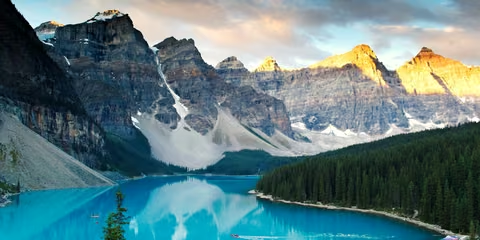
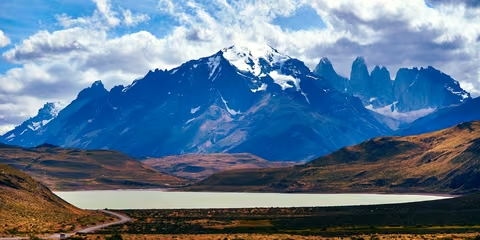
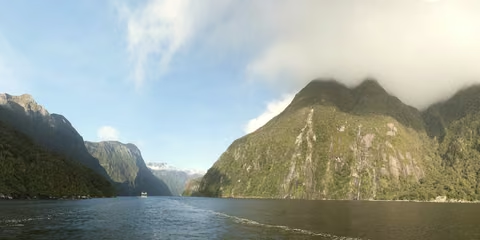
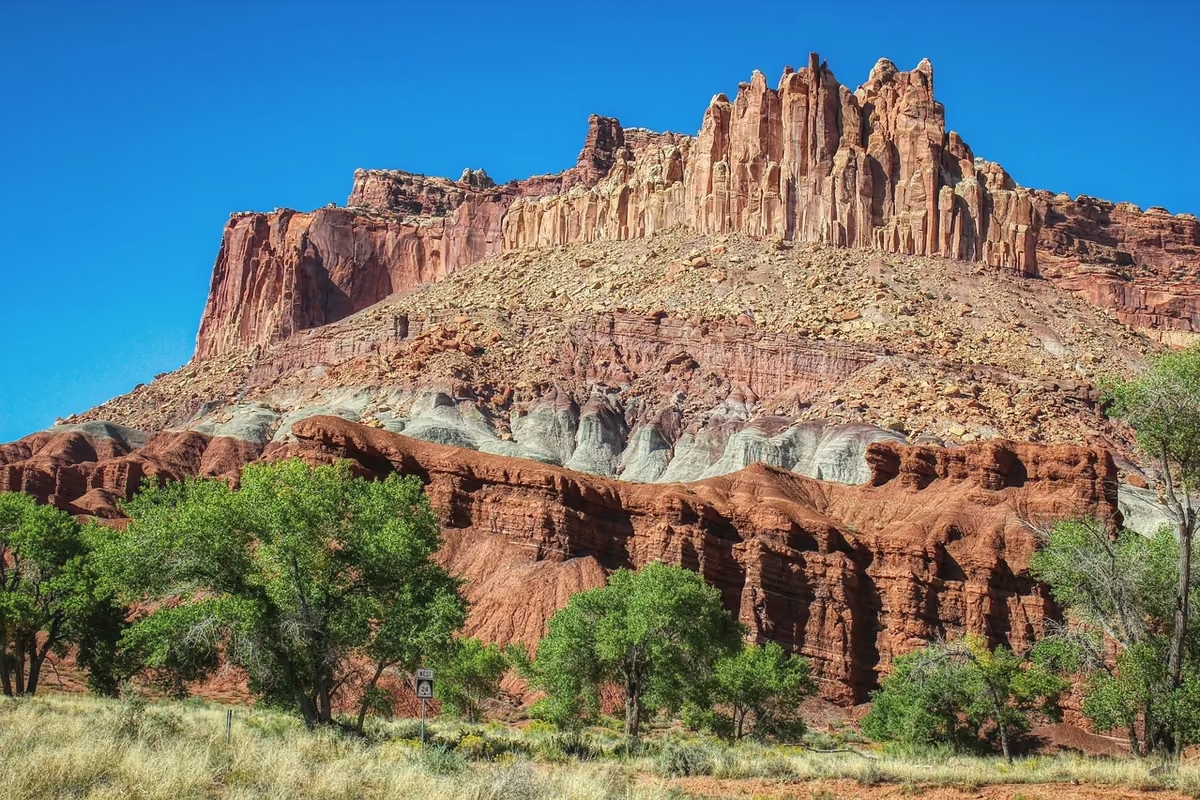
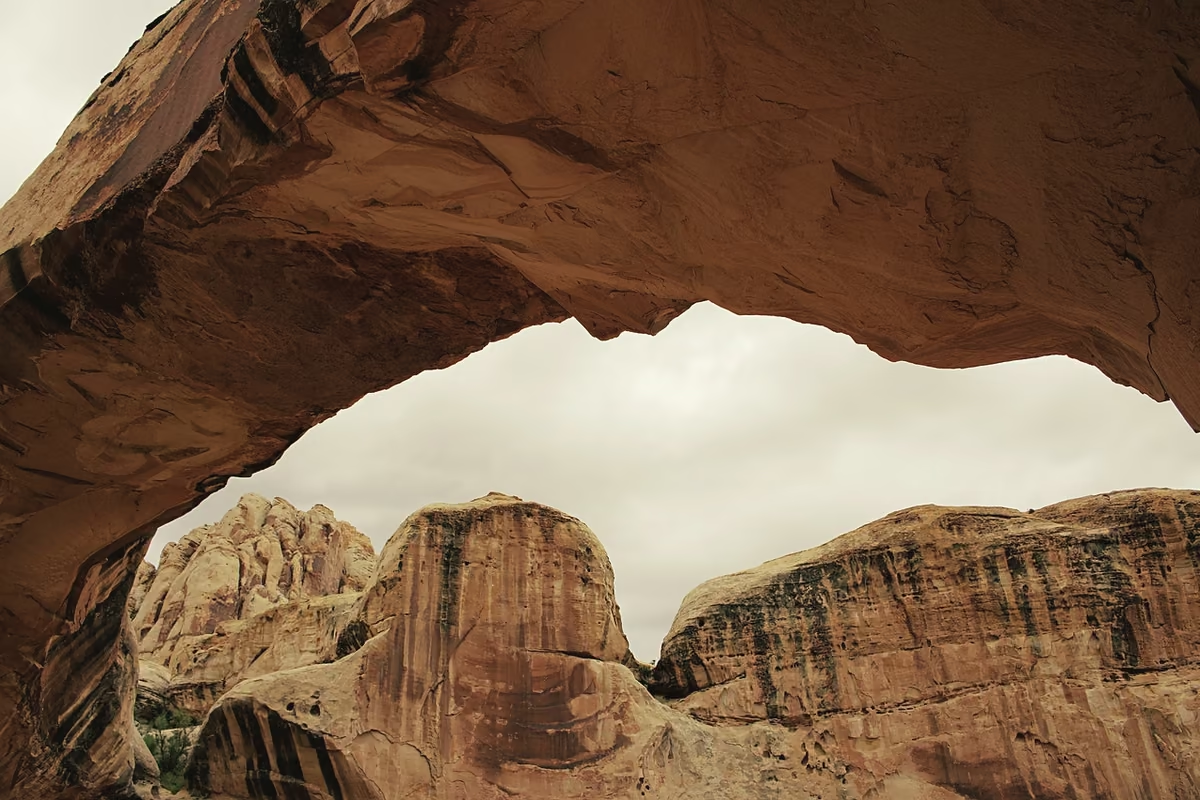
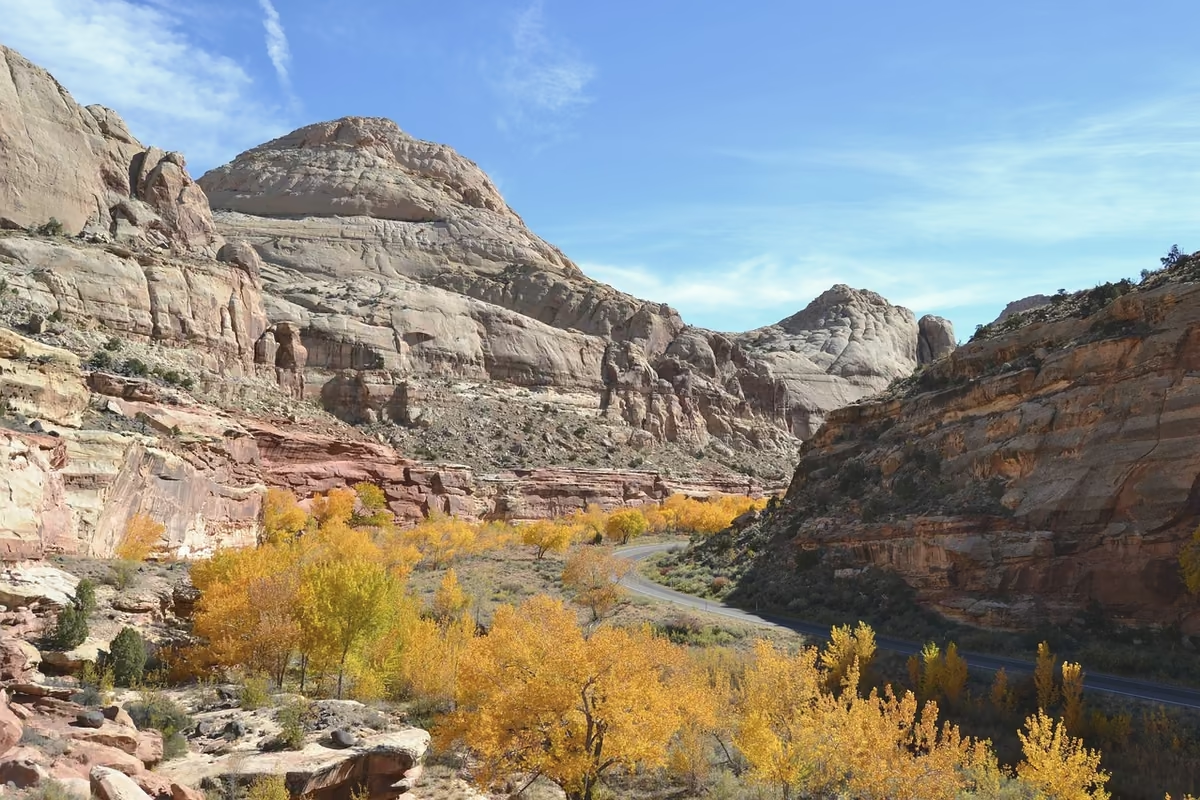
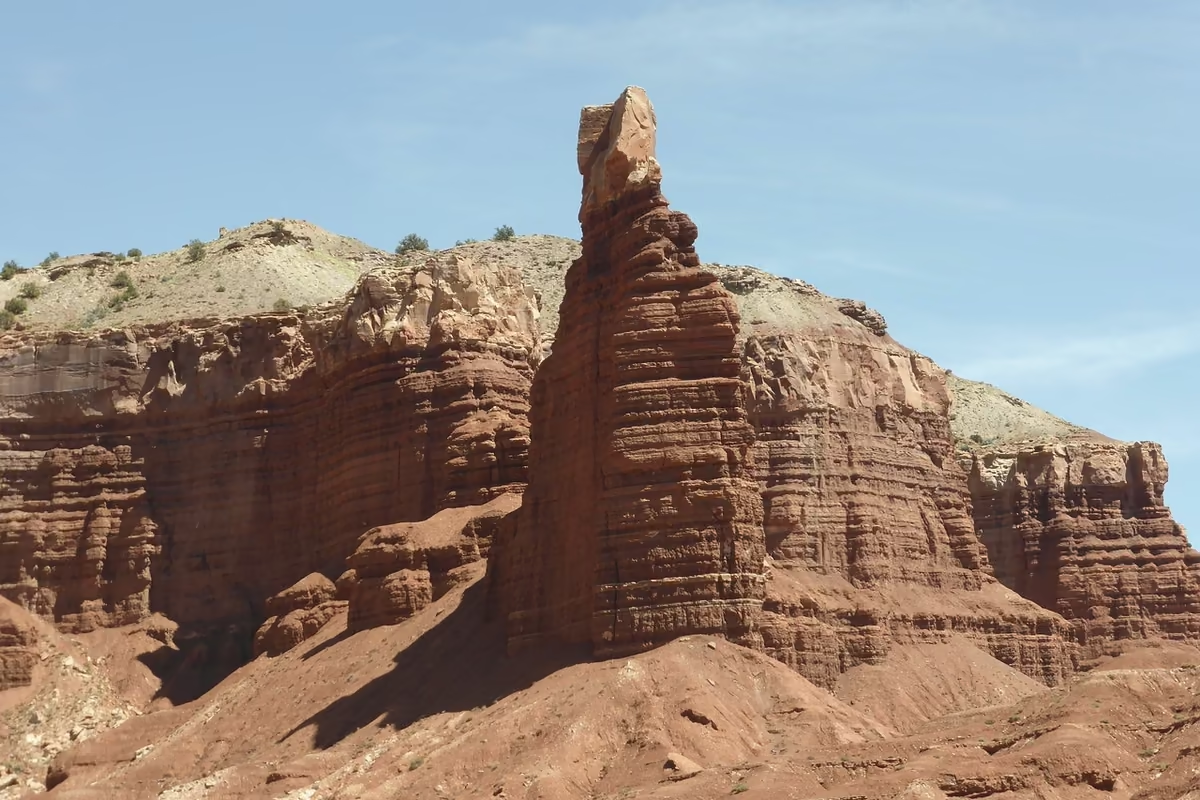
Capitol Reef in pictures
4 photographs, each with its photographer and licence.
Jump to
Highlights
Fruita orchards
About 1,900 fruit trees planted by Fruita settlers, open to wander through at any time of year. In season, ripe fruit can be picked in orchards marked with U-Pick Fruit signs, with hand pickers and ladders provided.
Wandering in the orchards has no separate charge stated. Fruit taken from the orchards must be paid for at the self-pay station, where the price sign is posted, and the Park Service gives no per-pound prices. Park entry applies: USD 20 per private vehicle, USD 15 per motorcycle or USD 10 per person.[3][3]Fenced orchards are open 9:00 to 17:00 and unfenced orchards from dawn to dusk. The Park Service gives approximate harvest windows: apricots late June to mid-July, peaches late July to early September, pears early August to early September, apples mid-August to mid-October; they can run a few weeks early or late.[23] Current conditionsNo reservation. Pay at the self-pay station near the entrance of an orchard open for harvest; non-payment may bring a citation and fine. The fruit hotline is 435 425 3791, then press 1 and 5.[23]Official site
Scenic Drive
A 7.9-mile paved road from the visitor center to the Grand Wash and Capitol Gorge spurs. The Park Service allows about 1.5 hours for the round trip including both spurs.
The Scenic Drive page cites the entrance fee of USD 20, and the fees page lists no separate Scenic Drive charge: USD 20 per private vehicle, USD 15 per motorcycle or USD 10 per person.[3][3]No hours are stated for the road. The Scenic Drive, Grand Wash and Capitol Gorge can be closed by snow, ice, mud and flash floods; the Park Service suggests asking at the visitor center or calling 435 425 3791 for road conditions.[22][2] Current conditionsNo ticket. The two dirt spur roads are usually suitable for passenger cars and RVs up to 27 feet (8.2 metres) long.[22]Official site
Hickman Bridge
A moderate hike to a natural bridge: 0.9 miles one way with 400 feet (122 m) of elevation change.
Park entry applies: USD 20 per private vehicle, USD 15 per motorcycle (valid seven days) or USD 10 per person on foot or bicycle.[3][26]Open with the park, which the Park Service says is open year-round, although some roads could be closed by snow or other bad weather. The Park Service trail guide lists distances one way, and lists none for hiking times.[2][26] Current conditionsOfficial site
Grand Wash
An easy walk between steep canyon walls, 2.2 miles (3.6 km) one way with 200 feet of elevation change, from the end of the Grand Wash spur road. Trails from the canyon lead on to Cassidy Arch.
Park entry applies: USD 20 per private vehicle, USD 15 per motorcycle (valid seven days) or USD 10 per person on foot or bicycle.[3][26]Open with the park. The Park Service advises staying out of canyons and washes when storms threaten, because of flash floods, and warns that the spur road can be closed.[22][26][2] Current conditionsOfficial site
Capitol Gorge
A narrow, winding gorge that served as a through road from 1884 to 1962, reached by a dirt spur road. The trail is easy: 1.0 mile (1.6 km) one way with 80 feet of elevation change.
Park entry applies: USD 20 per private vehicle, USD 15 per motorcycle (valid seven days) or USD 10 per person on foot or bicycle.[3][26]Open with the park. The dirt spur is longer and more winding than Grand Wash and can be closed by snow, ice, mud and flash floods; the Park Service advises considering the weather before entering.[22][26][2] Current conditionsOfficial site
Cohab Canyon
A moderate climb from the Fruita area into a side canyon, 1.7 miles (2.7 km) one way with 440 feet (134 m) of elevation change.
Park entry applies: USD 20 per private vehicle, USD 15 per motorcycle (valid seven days) or USD 10 per person on foot or bicycle.[3][26]Open with the park, which the Park Service says is open year-round, although some roads could be closed by snow or other bad weather. The Park Service trail guide lists distances one way, and lists none for hiking times.[2][26] Current conditionsOfficial site
Cassidy Arch
A strenuous hike to an arch above Grand Wash, 1.7 miles (2.7 km) one way with 670 feet (204 m) of elevation change.
Park entry applies: USD 20 per private vehicle, USD 15 per motorcycle (valid seven days) or USD 10 per person on foot or bicycle.[3][26]Open with the park, which the Park Service says is open year-round, although some roads could be closed by snow or other bad weather. The Park Service trail guide lists distances one way, and lists none for hiking times.[2][26][22] Current conditionsOfficial site
Goosenecks and Sunset Point
Two short viewpoints with little climbing: Goosenecks is 0.1 miles (0.2 km) one way and Sunset Point 0.4 miles (0.6 km) one way, each with under 50 feet of elevation change and rated easy.
Park entry applies: USD 20 per private vehicle, USD 15 per motorcycle (valid seven days) or USD 10 per person on foot or bicycle.[3][26]Open with the park, which the Park Service says is open year-round, although some roads could be closed by snow or other bad weather. The Park Service trail guide lists distances one way, and lists none for hiking times.[2][26] Current conditionsOfficial site
Capitol Reef Visitor Center
The starting point of the Scenic Drive, where backcountry permits are issued, and where annual passes can be bought in person for cash or credit and debit cards.
Park entry applies: USD 20 per private vehicle, USD 15 per motorcycle (valid seven days) or USD 10 per person on foot or bicycle.[3][18]8:00 to 16:30 daily from spring through fall and 9:00 to 16:30 daily in winter, open daily except some major holidays. Backcountry permits are issued during open hours.[18][2][3] Current conditionsOfficial site
First 48 hours
- Before you fly
Apply for the ESTA only at esta.cbp.dhs.gov (USD 40.62). Reserve a Fruita campsite on recreation.gov if camping, and plan to hire a car, since the Park Service describes no public transport to the park.
- Arrival day
Reach Torrey or Hanksville by road, pay the USD 20 vehicle fee, and walk the Fruita orchards, which are open to wander at any time of year.
- First afternoon
Visit the Gifford Homestead, 1 mile south of the visitor center, between 14 March and late November, when it is typically open 9:00 to 16:30.
- Day two, morning
Ask about road conditions, then drive the 7.9-mile Scenic Drive to the Grand Wash spur and walk the canyon; stay out of it if storms threaten.
- Day two, afternoon
Hike to Hickman Bridge, 0.9 miles one way, or to Cassidy Arch, 1.7 miles one way, and carry water.
If you want a guide for the first day, see guided tours and day trips in Capitol Reef on Viator (opens Viator in a new tab) paid link
Travel medical cover is sold by the week. SafetyWing
Things to book in Capitol Reef
Tours and day trips for Capitol Reef, listed under Capitol Reef National Park on Viator.
See Capitol Reef National Park tours on Viator (opens Viator in a new tab) paid link
Where to stay
Fruita Campground
The campground in the Fruita valley, among the orchards, at USD 25 a night (USD 12.50 for Senior and Access pass holders).
The campground is reservable year-round through recreation.gov, including the group site. The park and its campgrounds are open year-round.[18][3][2]
Torrey
The town in the park's mailing address, where SR-12 meets SR-24 on the way in from Bryce Canyon.
SR-12 connects US-89 to Torrey, where it meets SR-24, and the drive from Bryce Canyon to Capitol Reef takes about three hours on SR-12. The Utah Office of Tourism puts Torrey about 15 minutes west of the visitor center, with the closest lodging, gas and dining.[17][16][19]
Hanksville
The junction town for visitors driving in from I-70, east of the park on SR-24.
From I-70 exit 149 toward Hanksville, drive 43.8 miles, then continue west on SR-24 for 37.3 miles; the visitor center is on the left.[17]
Stays in these areas can be compared on one site. Expedia
Airport to city
Salt Lake City International Airport (SLC) is the main gateway for Capitol Reef: the Utah Office of Tourism puts the drive at about 3.5 to 4 hours, by I-15 south to US-50 east, then UT-24 east SLC
No closer airport is named by the Park Service.[16][17]
If the page says a car helps, compare hire prices before you land. Discover Cars
When to go
Warmest month July, average high 91°F (33°C). Coolest month January, average low 21°F (-6°C).[24]
All 12 months
| Month | Weather | Holidays | Closures |
|---|---|---|---|
| January | Highs 40.6 F (4.8 C), lows 20.5 F (-6.4 C), 0.56 in (14 mm) of precipitation, about 1 day with 0.1 in or more.[24] | 1 January New Year's Day; 18 January 2027 Martin Luther King Jr. Day.[25] | The visitor center keeps winter hours of 9:00 to 16:30 daily. The Scenic Drive, Grand Wash and Capitol Gorge can be closed by snow, ice, mud and flash floods.[18][22] Current conditions |
| February | Highs 46.8 F (8.2 C), lows 25.7 F (-3.5 C), 0.50 in (13 mm) of precipitation, about 1 day with 0.1 in or more.[24] | 15 February 2027 Washington's Birthday.[25] | The visitor center keeps winter hours of 9:00 to 16:30 daily. The Scenic Drive, Grand Wash and Capitol Gorge can be closed by snow, ice, mud and flash floods.[18][22] Current conditions |
| March | Highs 57.3 F (14.1 C), lows 33.6 F (0.9 C), 0.46 in (12 mm) of precipitation, about 2 days with 0.1 in or more.[24] | The Gifford House Store and Museum is typically open from 14 March (Pi Day) to late November, 9:00 to 16:30 daily; closing dates and hours can vary.[2][1] Current conditions | |
| April | Highs 64.7 F (18.2 C), lows 39.2 F (4.0 C), 0.52 in (13 mm) of precipitation, about 2 days with 0.1 in or more.[24] | ||
| May | Highs 74.3 F (23.5 C), lows 48.3 F (9.1 C), 0.65 in (17 mm) of precipitation, about 2 days with 0.1 in or more.[24] | 31 May 2027 Memorial Day.[25] | |
| June | Highs 86.4 F (30.2 C), lows 58.2 F (14.6 C), 0.35 in (9 mm) of precipitation, about 1 day with 0.1 in or more.[24] | 18 June 2027 Juneteenth (observed).[25] | Apricots ripen from late June, according to the Park Service harvest windows for the Fruita orchards; harvest can run a few weeks early or late. Ripe fruit may be picked only in orchards with U-Pick Fruit signs, and it must be paid for at the self-pay station.[23] Current conditions |
| July | Highs 91.2 F (32.9 C), lows 65.2 F (18.4 C), 1.03 in (26 mm) of precipitation, about 3 days with 0.1 in or more.[24] | 5 July 2027 Independence Day (observed; 4 July falls on a Sunday).[25] | Apricots ripen to mid-July, and peaches from late July, according to the Park Service harvest windows for the Fruita orchards; harvest can run a few weeks early or late. Ripe fruit may be picked only in orchards with U-Pick Fruit signs, and it must be paid for at the self-pay station.[23] Current conditions |
| August | Highs 87.8 F (31.0 C), lows 62.8 F (17.1 C), 1.12 in (28 mm) of precipitation, about 4 days with 0.1 in or more.[24] | Peaches ripen to early September, pears from early August and apples from mid-August, according to the Park Service harvest windows for the Fruita orchards; harvest can run a few weeks early or late. Ripe fruit may be picked only in orchards with U-Pick Fruit signs, and it must be paid for at the self-pay station.[23] Current conditions | |
| September | Highs 79.7 F (26.5 C), lows 54.7 F (12.6 C), 0.95 in (24 mm) of precipitation, about 2 days with 0.1 in or more.[24] | 6 September 2027 Labor Day.[25] | Peaches and pears ripen to early September, and apples ripen, according to the Park Service harvest windows for the Fruita orchards; harvest can run a few weeks early or late. Ripe fruit may be picked only in orchards with U-Pick Fruit signs, and it must be paid for at the self-pay station.[23] Current conditions |
| October | Highs 65.9 F (18.8 C), lows 43.1 F (6.2 C), 0.87 in (22 mm) of precipitation, about 2 days with 0.1 in or more.[24] | 11 October 2027 Columbus Day.[25] | Apples ripen to mid-October, according to the Park Service harvest windows for the Fruita orchards; harvest can run a few weeks early or late. Ripe fruit may be picked only in orchards with U-Pick Fruit signs, and it must be paid for at the self-pay station.[23] Current conditions |
| November | Highs 51.0 F (10.6 C), lows 30.4 F (-0.9 C), 0.50 in (13 mm) of precipitation, about 1 day with 0.1 in or more.[24] | 26 November 2026 Thanksgiving; in 2027, 11 November Veterans Day and 25 November Thanksgiving.[25] | The Gifford House Store and Museum is typically open from 14 March (Pi Day) to late November, 9:00 to 16:30 daily; closing dates and hours can vary.[2][1] Current conditions |
| December | Highs 40.2 F (4.6 C), lows 20.6 F (-6.3 C), 0.37 in (9 mm) of precipitation, about 1 day with 0.1 in or more.[24] | 25 December 2026 Christmas Day.[25] | The visitor center keeps winter hours of 9:00 to 16:30 daily. The Scenic Drive, Grand Wash and Capitol Gorge can be closed by snow, ice, mud and flash floods.[18][22] Current conditions |
What things cost
| Item | What it costs |
|---|---|
| Park entrance, private vehicle | USD 20[3] |
| Park entrance, motorcycle (7 days) | USD 15[3] |
| Park entrance on foot or by bicycle, per person | USD 10[3] |
| Capitol Reef annual park pass | USD 35[3] |
| America the Beautiful annual pass, non-resident | USD 250[3] |
| Fruita Campground, per night | USD 25; USD 12.50 for Senior and Access pass holders[3] |
Safety
Avoid canyons and washes when storms threaten. Grand Wash is a narrow, steep-walled canyon with flash-flood risk, and the Scenic Drive and both spur roads can be closed by snow, ice, mud and flash floods.[22][18] Current conditions
Ask at the visitor center or call 435 425 3791 for road and weather conditions; the Park Service says the phone line has the most current road information.[18][22] Current conditions
Never climb the orchard trees. Use the provided hand pickers and ladders and return the pickers to the weigh station.[23]
Scams to watch for
Common mistakes
Myth: Orchard fruit is free to pick and take home.
Actually: Ripe fruit may be harvested only in orchards with U-Pick Fruit signs, and fruit taken from the orchards must be paid for at the self-pay station. Non-payment may result in a citation and fine.[23]
Myth: The Scenic Drive has its own ticket.
Actually: The fees page lists park entry at USD 20 per private vehicle and no separate Scenic Drive charge, and the Scenic Drive page cites the USD 20 entrance fee.[3][22]
Myth: The spur roads suit any vehicle in any weather.
Actually: The dirt spur roads are usually suitable for passenger cars and RVs up to 27 feet long, and the Scenic Drive, Grand Wash and Capitol Gorge can be closed by snow, ice, mud and flash floods.[22]
Myth: The Gifford Homestead is open all year.
Actually: The house is typically open from 14 March (Pi Day) to late November, and closing dates and hours may vary.[1][2]
Myth: Capitol Reef closes for the winter.
Actually: The park and its campgrounds are open year-round, although some roads could be closed by snow or other bad weather.[2]
Sources
Show all sources (26)
- Gifford Homestead, National Park Service.
- Capitol Reef National Park: operating hours and seasons, National Park Service.
- Capitol Reef National Park: fees and passes, National Park Service.
- Visa Waiver Program, US Customs and Border Protection.
- Electronic System for Travel Authorization (ESTA), US Customs and Border Protection.
- Western Hemisphere Travel Initiative (WHTI) frequently asked questions, US Customs and Border Protection.
- Certain DHS immigration-related fees required by HR-1: fiscal year 2027 adjustments for inflation (Federal Register, 1 October 2026), US Government Publishing Office (Federal Register).
- Visa Waiver Program, US Department of Homeland Security.
- Travel advice and advisories for United States, Global Affairs Canada.
- Bringing agricultural products into the United States, US Customs and Border Protection.
- Denominations, US Currency Education Program (Federal Reserve Board).
- Prepaid, Verizon.
- AT&T Prepaid plans, AT&T.
- United States eSIM, Airalo.
- eSIM USA, Holafly.
- Capitol Reef National Park (getting there), Utah Office of Tourism.
- Capitol Reef National Park: directions and transportation, National Park Service.
- Capitol Reef National Park: alerts and conditions, National Park Service.
- Capitol Reef National Park: basic information, National Park Service.
- USA travel advice, UK Foreign, Commonwealth and Development Office.
- CBP warns against third-party site use for ESTA applications, US Customs and Border Protection.
- Capitol Reef National Park: guide to the Scenic Drive, National Park Service.
- Capitol Reef National Park: orchards, National Park Service.
- US climate normals 1991 to 2020, monthly: Capitol Reef NP, UT (USC00421171), NOAA National Centers for Environmental Information.
- Federal holidays, US Office of Personnel Management.
- Capitol Reef National Park: Fruita trail guide, National Park Service.