
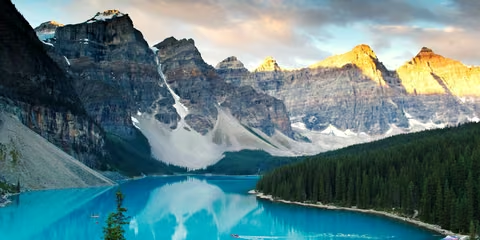
Glacier, Montana
For: First-time visitors who want Going-to-the-Sun Road, Lake McDonald and the Many Glacier valley, and who need to know when the high road opens and what the Park Service says about reservations. Entry is USD 35 a car for seven days, with lower rates from 1 November to 30 April, and the park accepts no cash. Going-to-the-Sun Road does not usually open fully until late June at the earliest and usually stays open until the third Monday in October.
Entry rules depend on your passport. The rules for UK, Canadian and Australian passports are under Before you go on the United States page.
- Currency
- US dollar[13]Notes of 1, 2, 5, 10, 20, 50 and 100 dollars are issued by the Federal Reserve; it is government policy that all designs remain legal tender whenever they were issued.
- Time zone
- UTC-7 (MST) / UTC-6 (MDT)
- Advisories
- UK: FCDO does not advise against travel to any part of USACanada: Level 1Each government's advice
Quick answers
- How do I get from the airport?
- FCA: Taxi: The Park Service gives the drive from Kalispell as Highway 2 east to West Glacier, about 33 miles from Kalispell; the Park Service lists no airport shuttle. Checked .
- Every option is under Airport to city.
- Is it safe?
- Advice from each government for United States:
- UK: FCDO does not advise against travel to any part of USA. Checked .
- Canada: Level 1. Checked .
- Do I need a visa?
That depends on your passport. The rules for US, UK, Canadian and Australian passports are in the United States guide.
i
The one thing
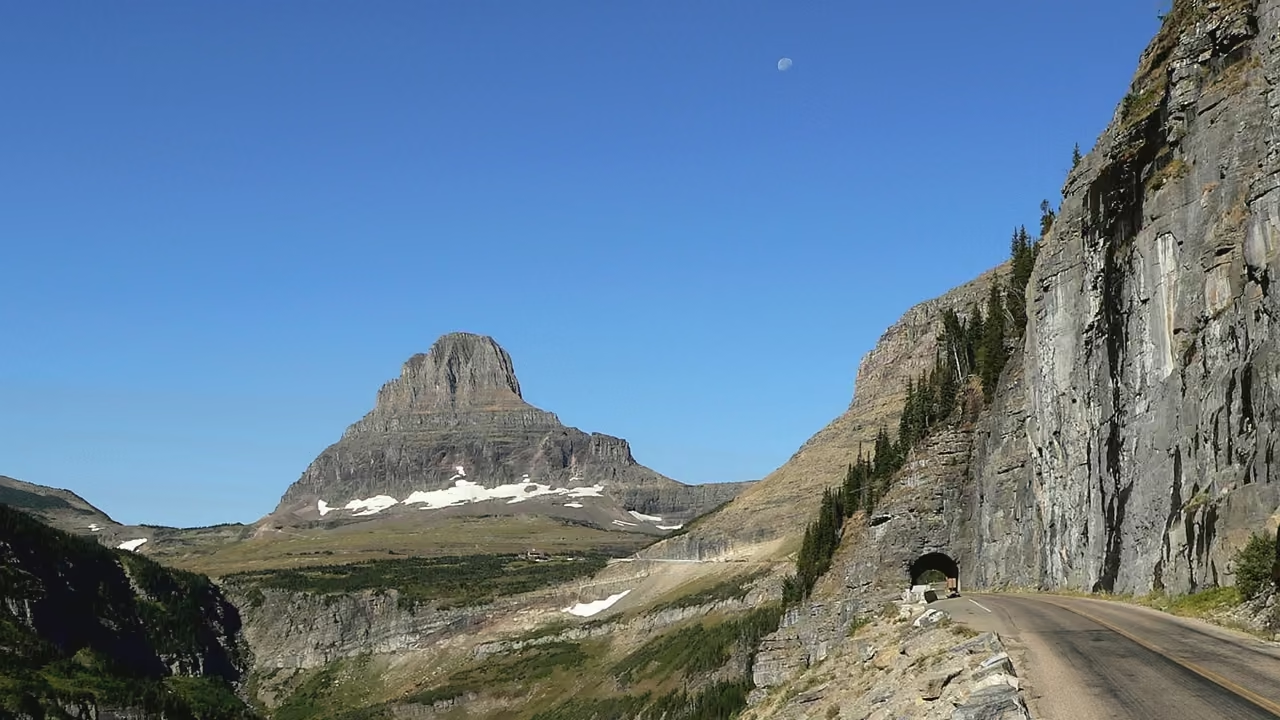
Driving Going-to-the-Sun Road over Logan Pass
The road crosses the Continental Divide at Logan Pass, with Lake McDonald at one end and St. Mary at the other. The road is closed over the pass for much of the year, so its season decides the whole trip.
Enter at West Glacier, follow the road along Lake McDonald and up the alpine section to Logan Pass, then descend to St. Mary. Between Avalanche Creek and Rising Sun, vehicles longer than 21 feet or wider than 8 feet, including mirrors, are prohibited, and vehicles over 10 feet tall may struggle west of Logan Pass.[1] Price: Park entry applies: USD 35 per private vehicle, USD 30 per motorcycle or USD 20 per person on foot or bicycle (age 16 and over), valid seven days, with lower winter rates from 1 November to 30 April; non-US residents aged 16 and over pay a further USD 100 each unless they hold an annual or America the Beautiful pass.[2] Hours: The road is open year-round near the West Entrance, but the entire road does not usually open until late June at the earliest. It usually stays fully open until the third Monday in October, conditions permitting, and the alpine sections can close earlier in winter weather.[1][3] Booking: The Park Service states that no vehicle reservations are required in any area of the park in 2026, and its pages give nothing yet for 2027. Summer access rules for Logan Pass have changed from year to year, so read the vehicle reservation page before a summer visit.[4][5] Booking details on the official site
- JanHigh 30°F -1°CLow 19°F -7°C
- FebHigh 34°F 1°CLow 19°F -7°C
- MarHigh 43°F 6°CLow 25°F -4°C
- AprHigh 53°F 11°CLow 31°F 0°C
- MayHigh 64°F 18°CLow 39°F 4°C
- JunHigh 70°F 21°CLow 45°F 7°C
- JulHigh 80°F 27°CLow 50°F 10°C
- AugHigh 79°F 26°CLow 48°F 9°C
- SepHigh 68°F 20°CLow 41°F 5°C
- OctHigh 52°F 11°CLow 33°F 1°C
- NovHigh 37°F 3°CLow 26°F -3°C
- DecHigh 29°F -2°CLow 20°F -7°C
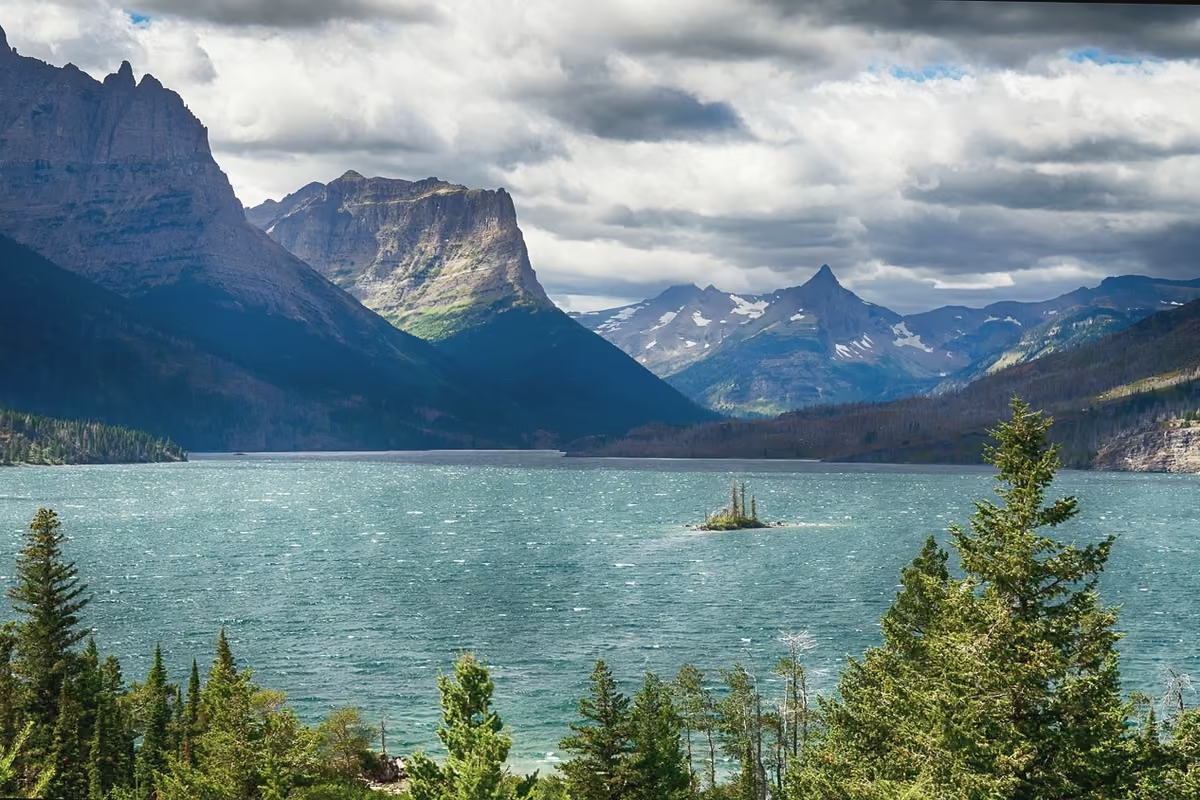
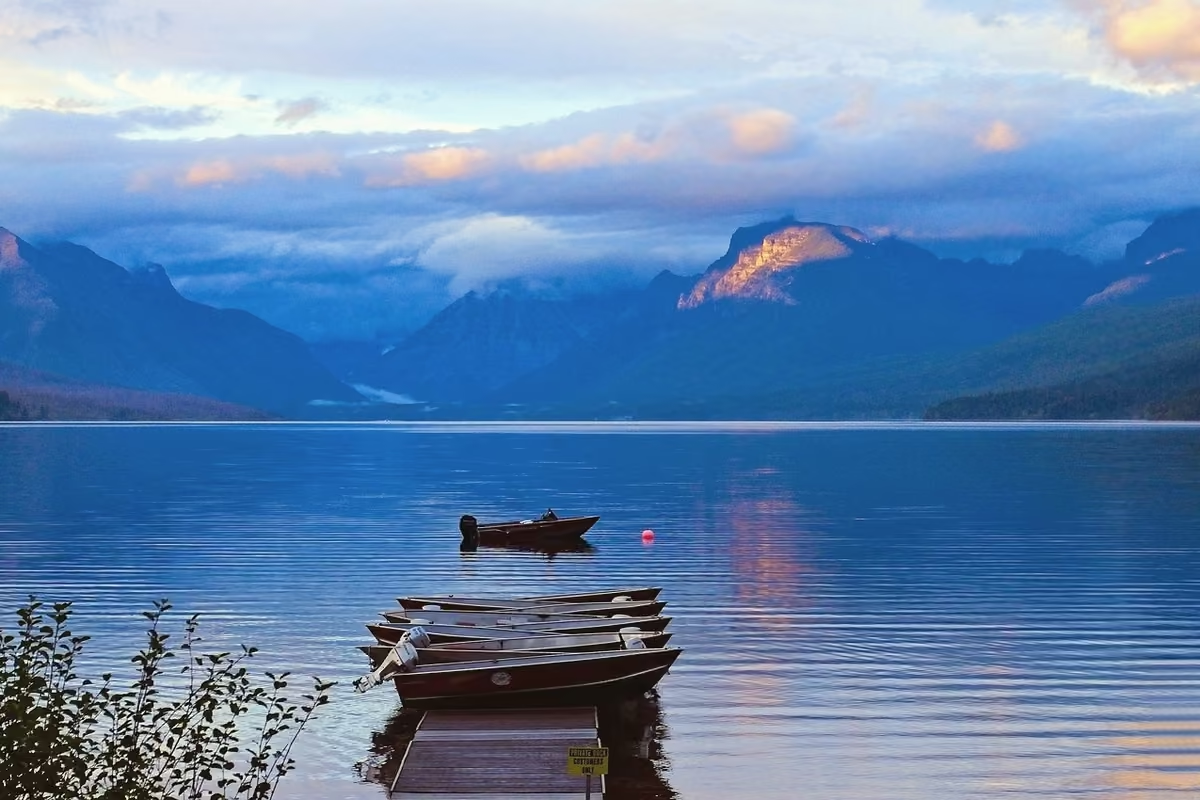
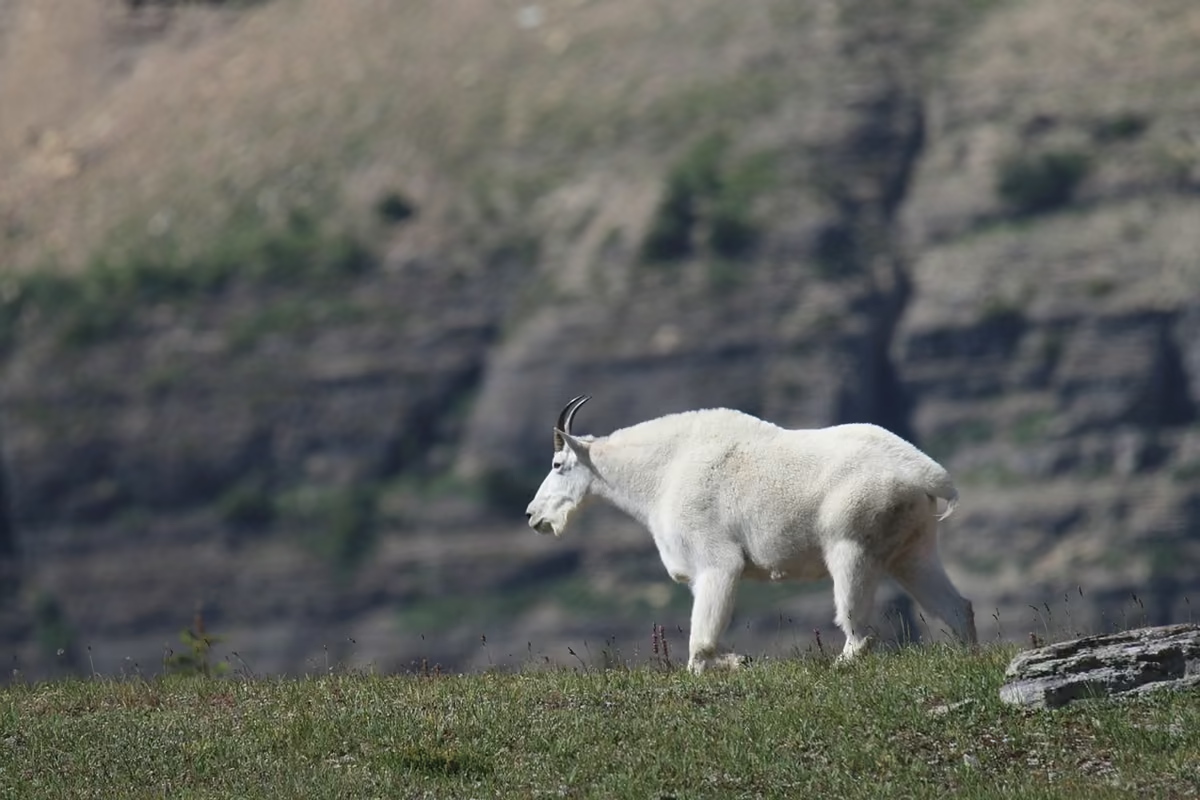
Glacier in pictures
4 photographs, each with its photographer and licence.
Jump to
Highlights
Going-to-the-Sun Road
The road across the park from West Glacier past Lake McDonald and over Logan Pass to St. Mary, with turnouts and trailheads along the alpine section.
Park entry applies: USD 35 per private vehicle, USD 30 per motorcycle or USD 20 per person on foot or bicycle (age 16 and over), valid seven days, with lower winter rates from 1 November to 30 April; non-US residents aged 16 and over pay a further USD 100 each unless they hold an annual or America the Beautiful pass.[2]The road is open year-round near the West Entrance, but the entire road does not usually open until late June at the earliest. It usually stays fully open until the third Monday in October, conditions permitting, and the alpine sections can close earlier for winter weather. Vehicles are limited to 21 feet long, 8 feet wide and 10 feet tall.[1][3]The Park Service states that no vehicle reservations are required in any area of the park in 2026; it sells no ticket for the drive. Read its road status page for the day you travel.[4]Official site
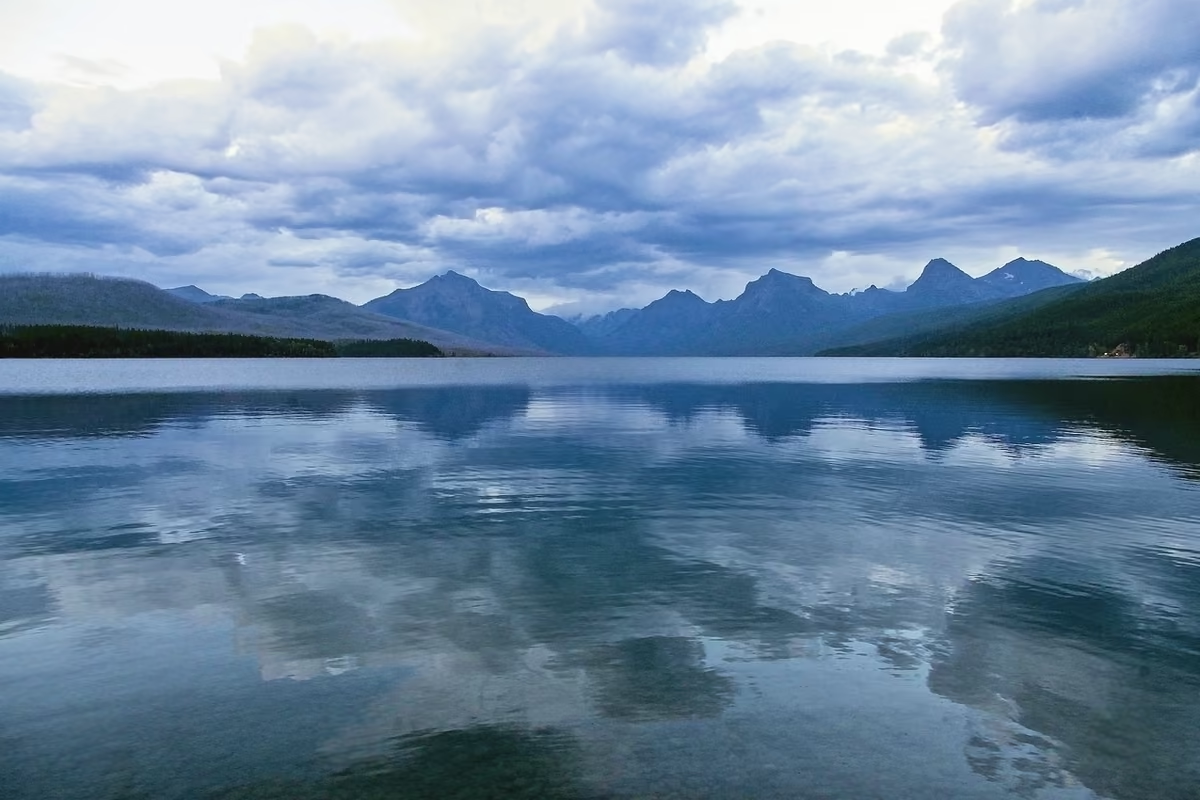
Lake McDonald and Apgar
The lake at the west end of Going-to-the-Sun Road, with Apgar Village, a paved path from the visitor center, boat rentals, scenic boat tours on the historic DeSmet and Lake McDonald Lodge, built in 1913 and 1914.
Park entry applies: USD 35 per private vehicle, USD 30 per motorcycle or USD 20 per person on foot or bicycle (age 16 and over), valid seven days, with lower winter rates from 1 November to 30 April; non-US residents aged 16 and over pay a further USD 100 each unless they hold an annual or America the Beautiful pass.[2]The park is open year-round, though accessible areas vary greatly by season. Apgar Visitor Center is open daily from mid-May to mid-October and on weekends in autumn, spring and winter as staffing allows; its restrooms stay open year-round. Most services run from late May through September.[18][3][29]No ticket for the shore; boat tours and rentals are paid to the operators.[30]Official site
Trail of the Cedars and Avalanche Lake
Two walks from the Avalanche Picnic Area: the Trail of the Cedars is 0.7 miles (1.1 km) one way and accessible, and Avalanche Lake is 2.3 miles (3.7 km) one way with 500 feet (152 m) of climb.
Park entry applies: USD 35 per private vehicle, USD 30 per motorcycle or USD 20 per person on foot or bicycle (age 16 and over), valid seven days, with lower winter rates from 1 November to 30 April; non-US residents aged 16 and over pay a further USD 100 each unless they hold an annual or America the Beautiful pass.[2]The park is open year-round, though accessible areas vary greatly by season. Lower-elevation trails are usually snow-free early in the summer. Going-to-the-Sun Road is closed past Avalanche in winter and the entire road does not usually open until late June at the earliest.[27][1]No vehicle reservation is required in any area of the park in 2026, and no ticket for the walk itself.[4]Official site
St. Mary Falls, Baring Falls and Sun Point
Short walks on the east side near St. Mary: Sun Point Nature Trail is 0.8 miles (1.3 km) one way, Baring Falls 0.3 miles (0.5 km) from the Sunrift Gorge pullout and St. Mary Falls 0.8 to 1.2 miles (1.3 to 1.9 km) depending on the trailhead.
Park entry applies: USD 35 per private vehicle, USD 30 per motorcycle or USD 20 per person on foot or bicycle (age 16 and over), valid seven days, with lower winter rates from 1 November to 30 April; non-US residents aged 16 and over pay a further USD 100 each unless they hold an annual or America the Beautiful pass.[2]St. Mary Visitor Center is open daily from late May through early October. The east side depends on the alpine section of Going-to-the-Sun Road, which does not usually open until late June at the earliest.[18][1]No vehicle reservation is required in any area of the park in 2026, and no ticket for the walk itself.[4]Official site
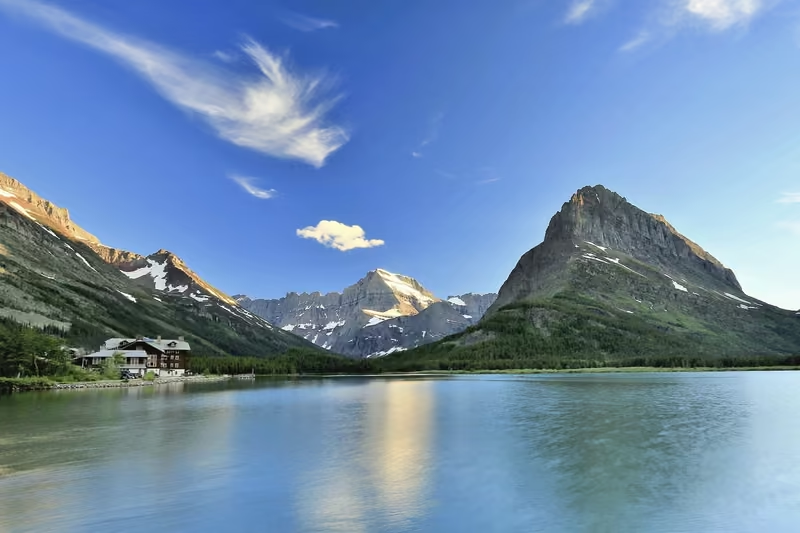
Photo: ducken99 on Pixabay Many Glacier
A valley on the east side with a hotel, Grinnell Lake (3.4 miles, 5.5 km one way, or 1.1 miles by concession boat), Grinnell Glacier Viewpoint (5.3 miles, 8.5 km) and Iceberg Lake (4.8 miles, 7.7 km with 1,200 feet of climb).
Park entry applies: USD 35 per private vehicle, USD 30 per motorcycle or USD 20 per person on foot or bicycle (age 16 and over), valid seven days, with lower winter rates from 1 November to 30 April; non-US residents aged 16 and over pay a further USD 100 each unless they hold an annual or America the Beautiful pass.[2]Many Glacier Road closes the third weekend in November, weather permitting, and most businesses in and near the park are closed from early October through late May. Concession boat tours carry tour fees and the Park Service recommends reservations.[3][32]No ticket for the trails; boat fares are set by the operator.[30]Official site
Apgar Lookout
A climb above the west entrance of 3.6 miles (5.8 km) one way with 1,850 feet (564 m) of gain; the trailhead is 0.5 miles north of the West Entrance, then 1.5 miles beyond Quarter Circle Bridge.
Park entry applies: USD 35 per private vehicle, USD 30 per motorcycle or USD 20 per person on foot or bicycle (age 16 and over), valid seven days, with lower winter rates from 1 November to 30 April; non-US residents aged 16 and over pay a further USD 100 each unless they hold an annual or America the Beautiful pass.[2]The park is open year-round, though accessible areas vary greatly by season. Lower-elevation trails and trails near the park boundary are usually snow-free early in the summer; check the trail status report, which is updated each morning.[27][31]No vehicle reservation is required in any area of the park in 2026, and no ticket for the walk itself.[4]Official site
Boat tours on the park lakes
Narrated boat tours at Many Glacier, Two Medicine, Rising Sun and Lake McDonald, with optional guided hikes on some cruises and small boat rentals at Apgar, Lake McDonald, Two Medicine and Many Glacier.
Park entry applies: USD 35 per private vehicle, USD 30 per motorcycle or USD 20 per person on foot or bicycle (age 16 and over), valid seven days, with lower winter rates from 1 November to 30 April; non-US residents aged 16 and over pay a further USD 100 each unless they hold an annual or America the Beautiful pass.[2]Most services in the park run from late May through September. Operators set their own sailing times and fares: Glacier Park Boat Co. at the park lakes and the Waterton Inter-Nation Shoreline Cruise Co. on Waterton Lake.[3][30]Tickets and rentals are bought from the operators; contact them directly for booking details.[30]Official site
First 48 hours
- Before you fly
Apply for the ESTA only at esta.cbp.dhs.gov (USD 40.62), then read the Park Service pages on vehicle reservations and Logan Pass for your dates and book lodging early through the concessioners.
- Arrival day
Fly to Glacier Park International Airport near Kalispell and collect a rental car, then drive about 33 miles to West Glacier; the Amtrak Empire Builder is the alternative to West Glacier.
- Day one
Enter at West Glacier, walk the Trail of the Cedars and on to Avalanche Lake, and stop at Apgar and Lake McDonald. Check the road status page before driving the alpine section.
- Day two, when the high road is open
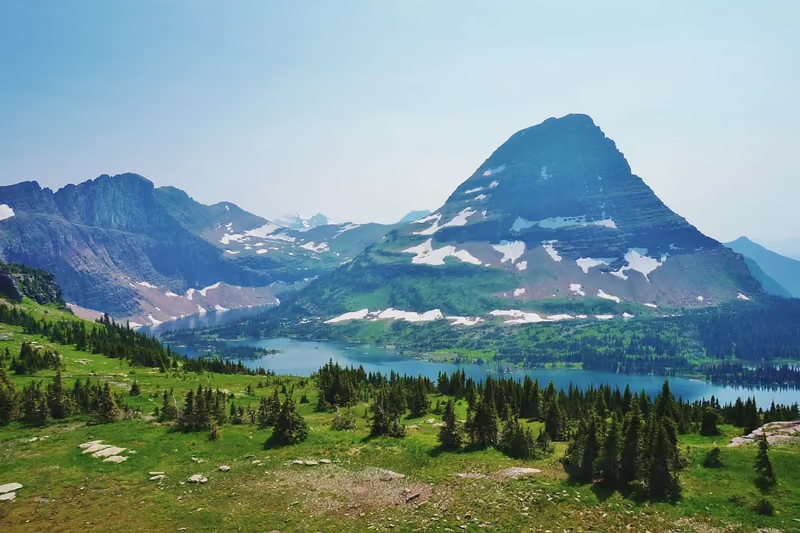
Drive Going-to-the-Sun Road over Logan Pass early, walk to Hidden Lake Overlook and finish with Sun Point and the St. Mary side.
- Day three
Cross to Many Glacier for the Grinnell Lake or Iceberg Lake walk; Many Glacier Road closes the third weekend in November, weather permitting.
Travel medical cover is sold by the week. SafetyWing
Where to stay
Apgar and West Glacier
Village Inn Motel, run by Glacier National Park Lodges, and Apgar Village Lodge and Motel Lake McDonald, run by Glacier Park Collection, at the lake end of the road.
Apgar Visitor Center is open daily from mid-May to mid-October, and the Amtrak Empire Builder stops year-round at West Glacier.[18][19][1]
Lake McDonald Lodge
Lake McDonald Lodge, run by Glacier National Park Lodges; rooms are booked through the concessioner.
The entire road does not usually open until late June at the earliest.[1][19]
Many Glacier
Many Glacier Hotel and Swiftcurrent Motor Inn on the east side, below the Grinnell Lake and Iceberg Lake trails.
Many Glacier Road closes the third weekend in November, weather permitting, and most businesses in and near the park are closed from early October through late May.[3][19]
Rising Sun and St. Mary
Rising Sun Motor Inn on the east side, run by Glacier National Park Lodges.
St. Mary Visitor Center is open daily from late May through early October.[18][19]
Stays in these areas can be compared on one site. Expedia
Airport to city
Glacier Park International Airport (FCA), near Kalispell, Montana, about 30 miles west of the park's West Entrance, according to the Park Service[1] FCA
If the page says a car helps, compare hire prices before you land. Discover Cars
When to go
Warmest month July, average high 80°F (27°C). Coolest month January, average low 19°F (-7°C).[25]
All 12 months
| Month | Weather | Crowds | Holidays | Closures |
|---|---|---|---|---|
| January | Highs 29.9 F (-1.2 C), lows 19.3 F (-7.1 C), 3.54 in (90 mm) of precipitation, about 10 days with 0.1 in or more.[25] | 1 January New Year's Day; 18 January 2027 Martin Luther King Jr. Day.[26] | Most businesses and services in and near the park are closed from early October through late May. Going-to-the-Sun Road is open near the West Entrance only, the alpine sections are closed, and Many Glacier Road closes the third weekend in November, weather permitting.[3][1] | |
| February | Highs 33.6 F (0.9 C), lows 19.4 F (-7.0 C), 2.17 in (55 mm) of precipitation, about 7 days with 0.1 in or more.[25] | 15 February 2027 Washington's Birthday.[26] | Most businesses and services in and near the park are closed from early October through late May. Going-to-the-Sun Road is open near the West Entrance only, the alpine sections are closed, and Many Glacier Road closes the third weekend in November, weather permitting.[3][1] | |
| March | Highs 42.5 F (5.8 C), lows 25.1 F (-3.8 C), 2.58 in (66 mm) of precipitation, about 9 days with 0.1 in or more.[25] | Most businesses and services in and near the park are closed from early October through late May. Going-to-the-Sun Road is open near the West Entrance only, the alpine sections are closed, and Many Glacier Road closes the third weekend in November, weather permitting.[3][1] | ||
| April | Highs 52.6 F (11.4 C), lows 31.4 F (-0.3 C), 2.15 in (55 mm) of precipitation, about 7 days with 0.1 in or more.[25] | Most businesses and services in and near the park are closed from early October through late May. Going-to-the-Sun Road is open near the West Entrance only, the alpine sections are closed, and Many Glacier Road closes the third weekend in November, weather permitting.[3][1] | ||
| May | Highs 64.1 F (17.8 C), lows 39.0 F (3.9 C), 2.62 in (67 mm) of precipitation, about 7 days with 0.1 in or more.[25] | 31 May 2027 Memorial Day.[26] | Most businesses and services are still closed in early May, and most services reopen in late May or early June. Apgar Visitor Center opens in mid-May. In May and June the higher trails still carry snow.[3][18] | |
| June | Highs 70.4 F (21.3 C), lows 45.1 F (7.3 C), 3.80 in (97 mm) of precipitation, about 9 days with 0.1 in or more.[25] | 18 June 2027 Juneteenth (observed).[26] | Most services reopen in late May or early June. The entire Going-to-the-Sun Road does not usually open until late June at the earliest; construction work usually runs from May through October, so check the project page before you travel.[1][3][24] | |
| July | Highs 80.2 F (26.8 C), lows 49.6 F (9.8 C), 1.39 in (35 mm) of precipitation, about 4 days with 0.1 in or more.[25] | The Park Service says May through September is the busiest time in the park, with July and August the busiest of all.[24] | 5 July 2027 Independence Day (observed; 4 July falls on a Sunday).[26] | Going-to-the-Sun Road is typically fully open. Higher trails, including those over mountain passes and on the Continental Divide, are typically snow-free by late July.[1][27] |
| August | Highs 79.4 F (26.3 C), lows 47.9 F (8.8 C), 1.17 in (30 mm) of precipitation, about 3 days with 0.1 in or more.[25] | The Park Service says May through September is the busiest time in the park, with July and August the busiest of all.[24] | Services generally run from late May through September and the full road is usually open. Parking at Logan Pass fills early.[3][18] | |
| September | Highs 68.0 F (20.0 C), lows 40.8 F (4.9 C), 1.96 in (50 mm) of precipitation, about 5 days with 0.1 in or more.[25] | The Park Service says May through September is the busiest time in the park, with July and August the busiest of all.[24] | 6 September 2027 Labor Day.[26] | Services generally run through September; visitor centers close in late September and early October. Snow can fall at lower elevations as early as mid-September.[3][23] |
| October | Highs 51.7 F (10.9 C), lows 32.9 F (0.5 C), 3.05 in (77 mm) of precipitation, about 8 days with 0.1 in or more.[25] | 11 October 2027 Columbus Day.[26] | Going-to-the-Sun Road usually stays fully open until the third Monday in October, conditions permitting; the alpine sections can close earlier for winter weather. Most businesses close from early October.[3][1] | |
| November | Highs 37.0 F (2.8 C), lows 26.4 F (-3.1 C), 3.23 in (82 mm) of precipitation, about 9 days with 0.1 in or more.[25] | 26 November 2026 Thanksgiving; in 2027, 11 November Veterans Day and 25 November Thanksgiving.[26] | The alpine sections of Going-to-the-Sun Road are closed for winter and Many Glacier Road closes the third weekend in November, weather permitting. Most businesses and services are closed.[3][1] | |
| December | Highs 29.2 F (-1.6 C), lows 19.9 F (-6.7 C), 3.21 in (82 mm) of precipitation, about 10 days with 0.1 in or more.[25] | 25 December 2026 Christmas Day.[26] | Most businesses and services in and near the park are closed from early October through late May. Going-to-the-Sun Road is open near the West Entrance only, the alpine sections are closed, and Many Glacier Road closes the third weekend in November, weather permitting.[3][1] |
What things cost
| Item | What it costs |
|---|---|
| Park entrance, private vehicle (7 days) | USD 35 (USD 25 from 1 November to 30 April)[2] |
| Park entrance, motorcycle (7 days) | USD 30 (USD 20 from 1 November to 30 April)[2] |
| Park entrance on foot or bicycle, age 16 and over (7 days) | USD 20 (USD 15 from 1 November to 30 April)[2] |
| Non-US resident fee, age 16 and over | USD 100 a person on top of the entrance pass, unless entering with an annual or America the Beautiful pass[2] |
| Glacier annual pass (US citizens and residents) | USD 70[2] |
| America the Beautiful annual pass | USD 80 for residents, USD 250 for non-residents[2] |
| Vehicle reservation to enter the park | Not required in any area of the park in 2026[2] |
Safety
Bears and wolves must not be approached within 100 yards (91 m), and other wildlife needs 25 yards (23 m). Bear spray is an effective deterrent for an aggressive bear but is not a repellent; report bear and mountain lion sightings to a ranger.[22]
Cold lake and river water below 80 F (27 C) can trigger the mammalian diving reflex and hypothermia can occur even above freezing; wear a personal flotation device. Weather changes rapidly, especially at higher elevations, and conditions can differ from the Flathead Valley.[22][23]
Road construction and infrastructure work usually runs from May through October and can affect travel times, so check the project page before you arrive.[24]
Scams to watch for
Common mistakes
Myth: Going-to-the-Sun Road is open all year.
Actually: The road is open year-round only near the West Entrance; the entire road does not usually open until late June at the earliest and it usually stays fully open until the third Monday in October, conditions permitting.[1][3]
Myth: You can pay at the gate in cash.
Actually: The Park Service states that the park does not accept cash for entrance fees.[2]
Myth: A vehicle reservation is always needed.
Actually: The Park Service states that no vehicle reservations are required in any area of the park in 2026, after pilots from 2021 to 2025. Its pages give nothing yet for 2027, so check the page for your travel dates.[4][5][2]
Myth: Any vehicle can take the road between Avalanche Creek and Rising Sun.
Actually: Vehicles longer than 21 feet, including bumpers, or wider than 8 feet, including mirrors, are prohibited between Avalanche Creek and Rising Sun.[1]
Myth: Bear spray works as a repellent on gear or camp.
Actually: Bear spray is meant for the face of an oncoming bear; pre-sprayed objects may attract bears.[22]
Sources
Show all sources (33)
- Road, snow plow and hiker/biker status, National Park Service, Glacier National Park.
- Fees and passes, National Park Service, Glacier National Park.
- Operating hours and seasons, National Park Service, Glacier National Park.
- Vehicle reservations, National Park Service, Glacier National Park.
- Visiting Logan Pass, National Park Service, Glacier National Park.
- Visa Waiver Program, US Customs and Border Protection.
- Electronic System for Travel Authorization (ESTA), US Customs and Border Protection.
- Western Hemisphere Travel Initiative (WHTI) frequently asked questions, US Customs and Border Protection.
- Certain DHS immigration-related fees required by HR-1: fiscal year 2027 adjustments for inflation (Federal Register, 1 October 2026), US Government Publishing Office (Federal Register).
- Visa Waiver Program, US Department of Homeland Security.
- Travel advice and advisories for United States, Global Affairs Canada.
- Bringing agricultural products into the United States, US Customs and Border Protection.
- Denominations, US Currency Education Program (Federal Reserve Board).
- Prepaid, Verizon.
- AT&T Prepaid plans, AT&T.
- United States eSIM, Airalo.
- eSIM USA, Holafly.
- Visitor centers, National Park Service, Glacier National Park.
- Lodging, restaurants and services, National Park Service, Glacier National Park.
- USA travel advice, UK Foreign, Commonwealth and Development Office.
- CBP warns against third-party site use for ESTA applications, US Customs and Border Protection.
- Safety, National Park Service, Glacier National Park.
- Weather, National Park Service, Glacier National Park.
- Current conditions, National Park Service, Glacier National Park.
- US climate normals 1991 to 2020, monthly: West Glacier (USC00248809), NOAA National Centers for Environmental Information.
- Federal holidays, US Office of Personnel Management.
- Hiking the trails, National Park Service, Glacier National Park.
- St. Mary and Logan Pass trails, National Park Service, Glacier National Park.
- Lake McDonald Valley, National Park Service, Glacier National Park.
- Boat trips and rentals, National Park Service, Glacier National Park.
- Lake McDonald trails, National Park Service, Glacier National Park.
- Many Glacier trails, National Park Service, Glacier National Park.
- Bus tours, National Park Service, Glacier National Park.