
Kamakura
For: First-time visitors coming from Haneda, Tokyo or Yokohama for a day or two of temples, with the Great Buddha, Hasedera, the Zen temples of Kita-Kamakura and Enoshima, and their hours and prices from official pages. Kamakura has no airport: it is about an hour from Tokyo and 30 minutes from Yokohama by train. The Great Buddha costs 300 yen, Hasedera 400 and Engakuji 500, and the Enoshima Sea Candle 800.
Entry rules depend on your passport. The rules for UK and Canadian passports are under Before you go on the Japan page.
- Currency
- JPY
- Time zone
- UTC+9, all year
- Advisories
- US: Level 1UK: FCDO does not advise against travel to any part of JapanCanada: Level 1US advice checked Each government's advice
Quick answers
- How do I get from the airport?
- HND: Train: By rail through Yokohama or central Tokyo to Kamakura. Checked .
- Time: About 30 minutes from Yokohama and about an hour from Tokyo, on top of the ride from Haneda into either. Checked .
- Every option is under Airport to city.
- Is it safe?
- Advice from each government for Japan:
- US: Level 1. Checked .
- UK: FCDO does not advise against travel to any part of Japan. Checked .
- Canada: Level 1. Checked .
- Do I need a visa?
That depends on your passport. The rules for US, UK, Canadian and Australian passports are in the Japan guide.
i
The one thing
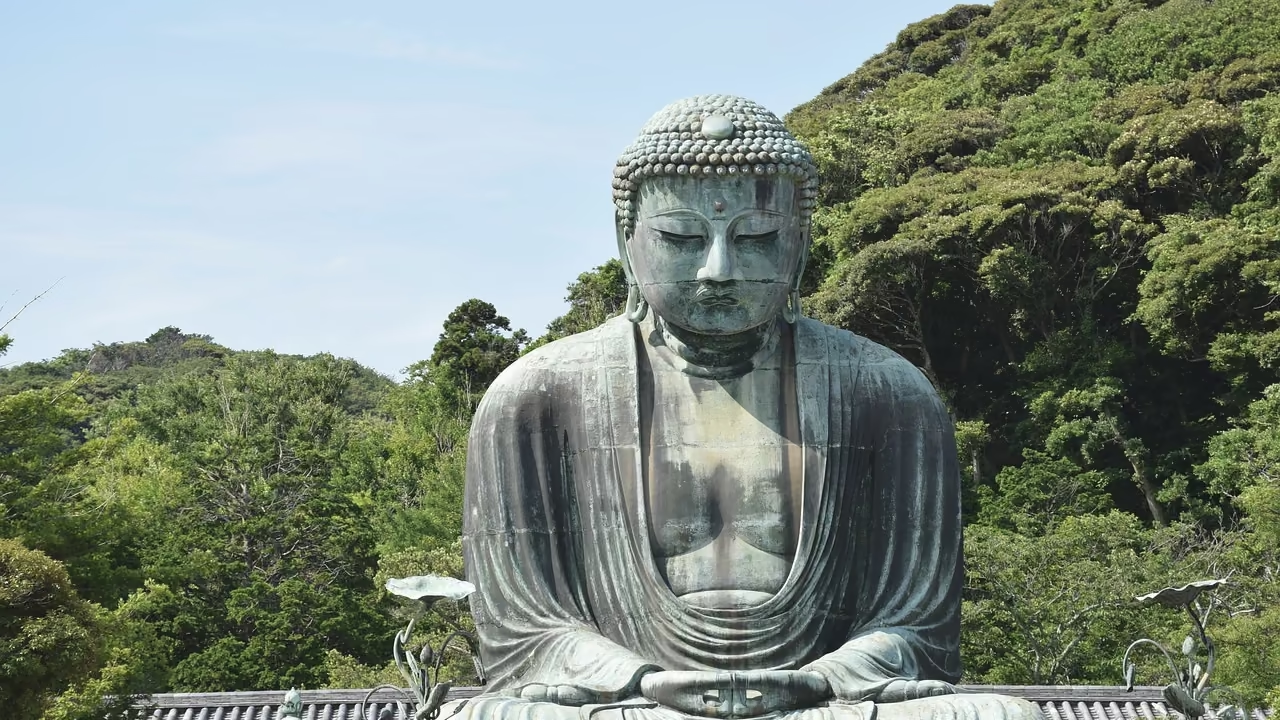
The Great Buddha of Kamakura at Kotoku-in
The copper Amida Buddha sits in the open air at Kotoku-in, which makes it unusual among the large Buddha statues of Japan. For an extra 50 yen you can step inside the hollow statue. Go early: the temple closes at 17:00 or 17:30.
Enoden from Kamakura station to Hase, the third stop (about 7 minutes), then a 7-minute walk; or a bus from the east exit of Kamakura station (stop 1 or 6) to Daibutsu-mae, about 10 minutes. No parking at the temple.[1] Price: Adults 300 yen (about USD 2), children 6 to 12 150 yen (about USD 0.94), under six free. Entering the statue costs an extra 50 yen (about USD 0.31).[1] Hours: April to September 08:00 to 17:30, October to March 08:00 to 17:00, entry until 15 minutes before closing. Inside the statue 08:00 to 16:30, entry until 10 minutes before.[1] Booking: No reservation is needed.[1] Booking details on the official site
USD figures are approximate, converted at the ECB euro reference rates of 13 Nov 2026.
- JanHigh 50°F 10°CLow 37°F 3°C
- FebHigh 51°F 11°CLow 38°F 3°C
- MarHigh 57°F 14°CLow 43°F 6°C
- AprHigh 66°F 19°CLow 51°F 11°C
- MayHigh 74°F 23°CLow 60°F 16°C
- JunHigh 78°F 26°CLow 66°F 19°C
- JulHigh 85°F 29°CLow 73°F 23°C
- AugHigh 88°F 31°CLow 76°F 24°C
- SepHigh 81°F 27°CLow 70°F 21°C
- OctHigh 72°F 22°CLow 60°F 16°C
- NovHigh 63°F 17°CLow 50°F 10°C
- DecHigh 55°F 13°CLow 41°F 5°C
Kamakura in pictures
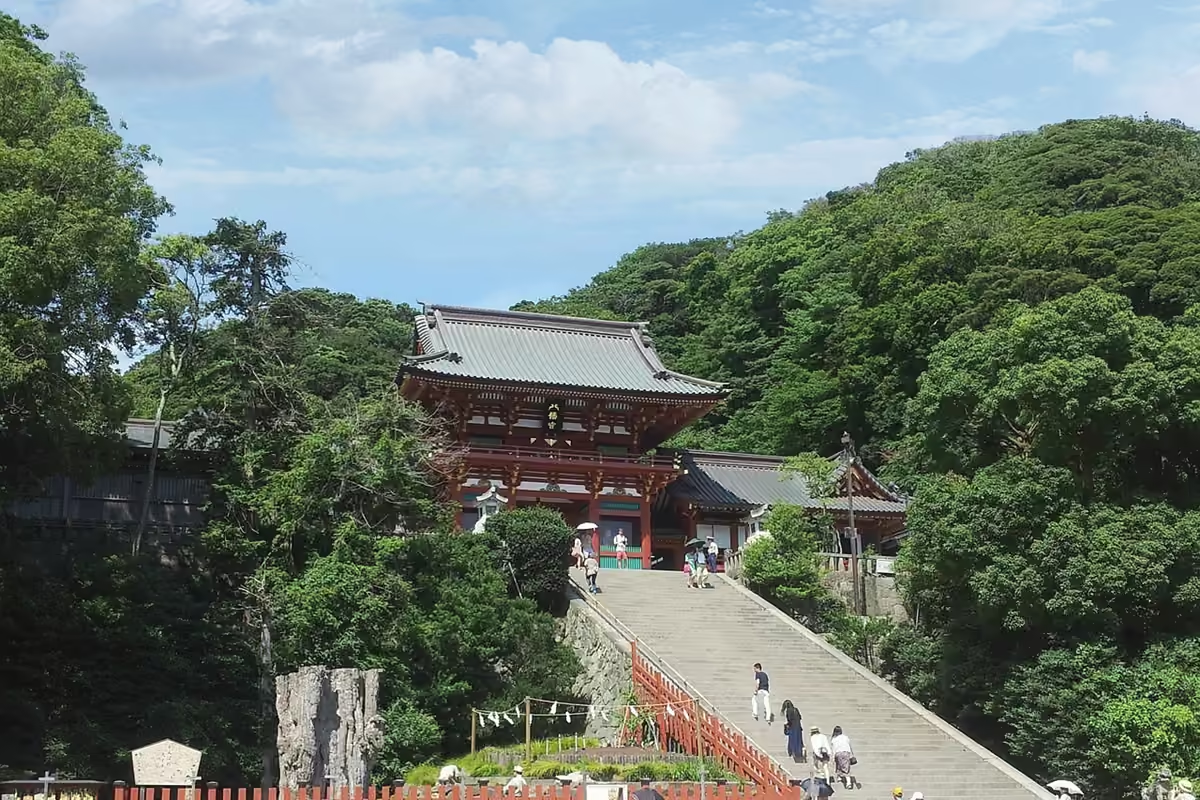
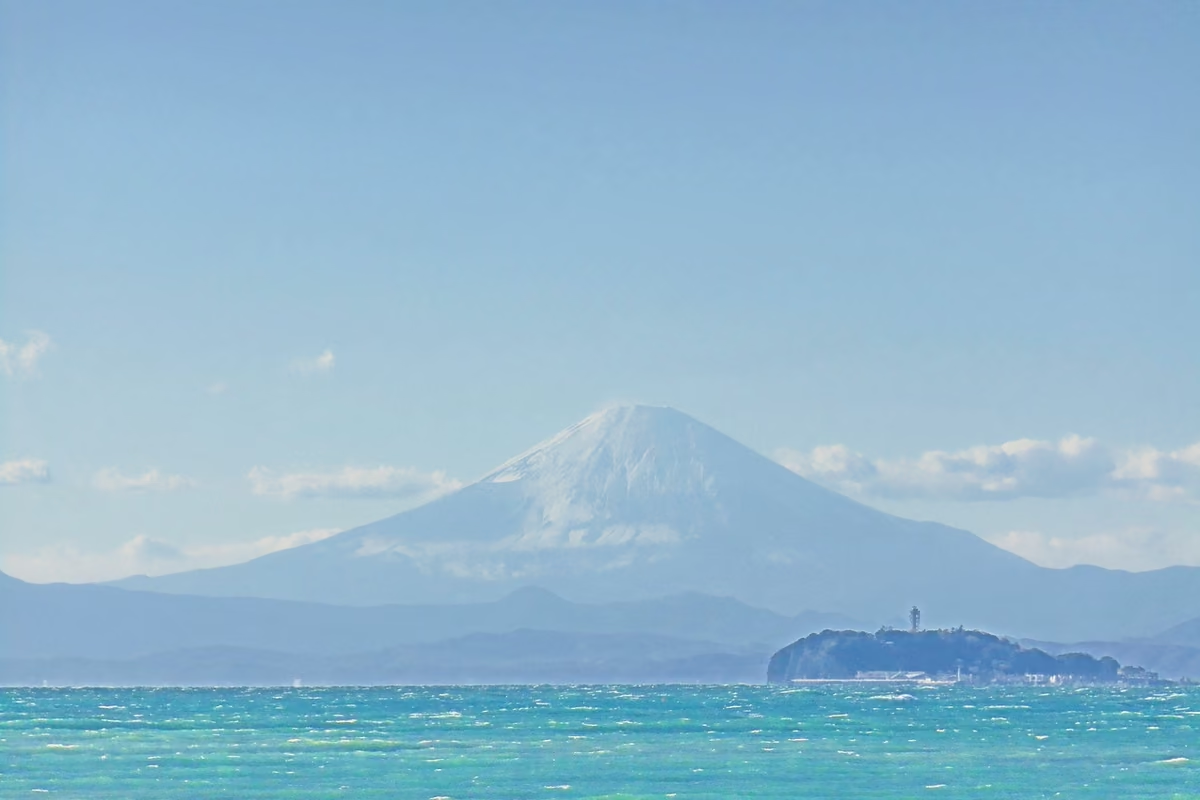
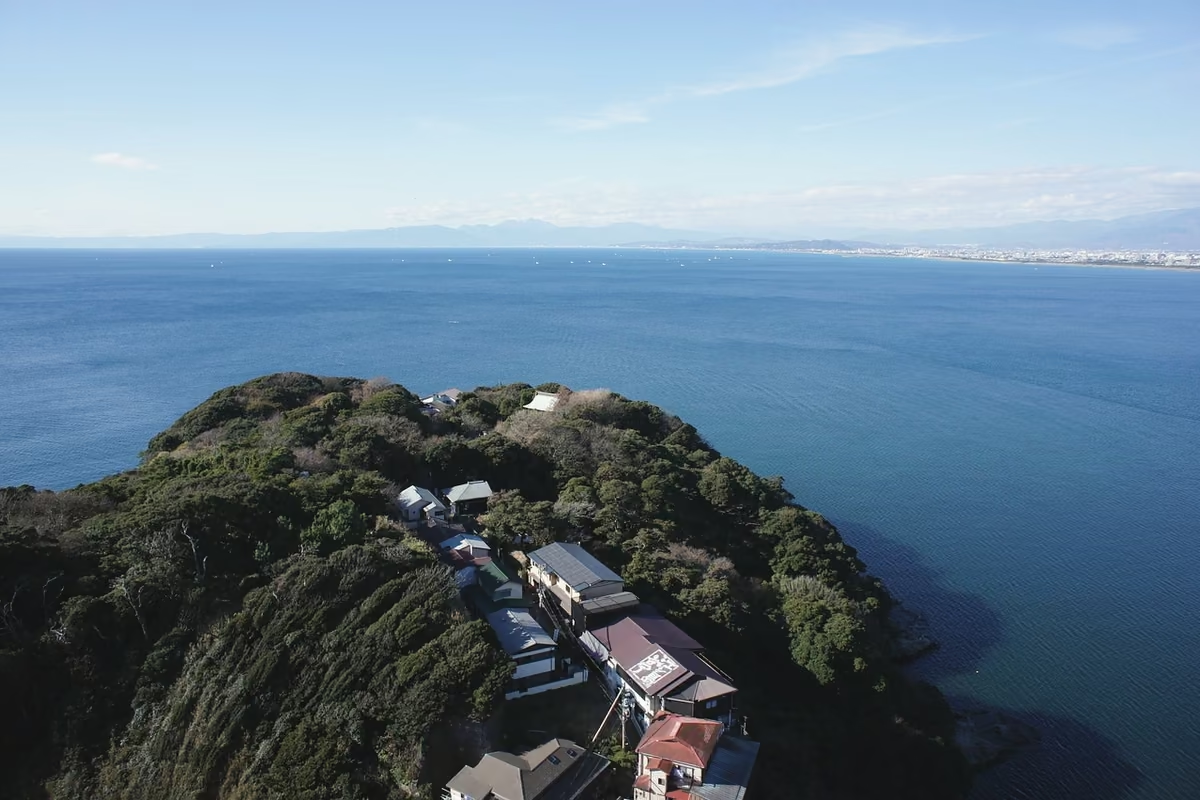
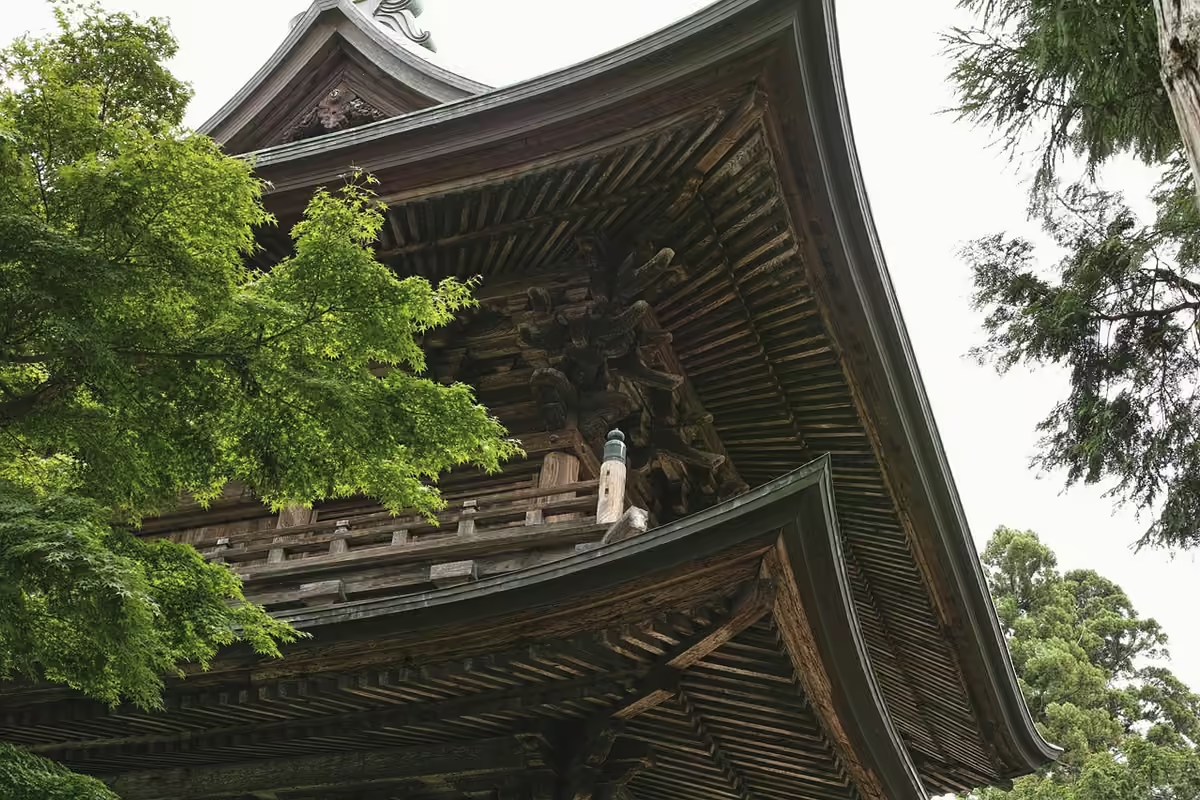
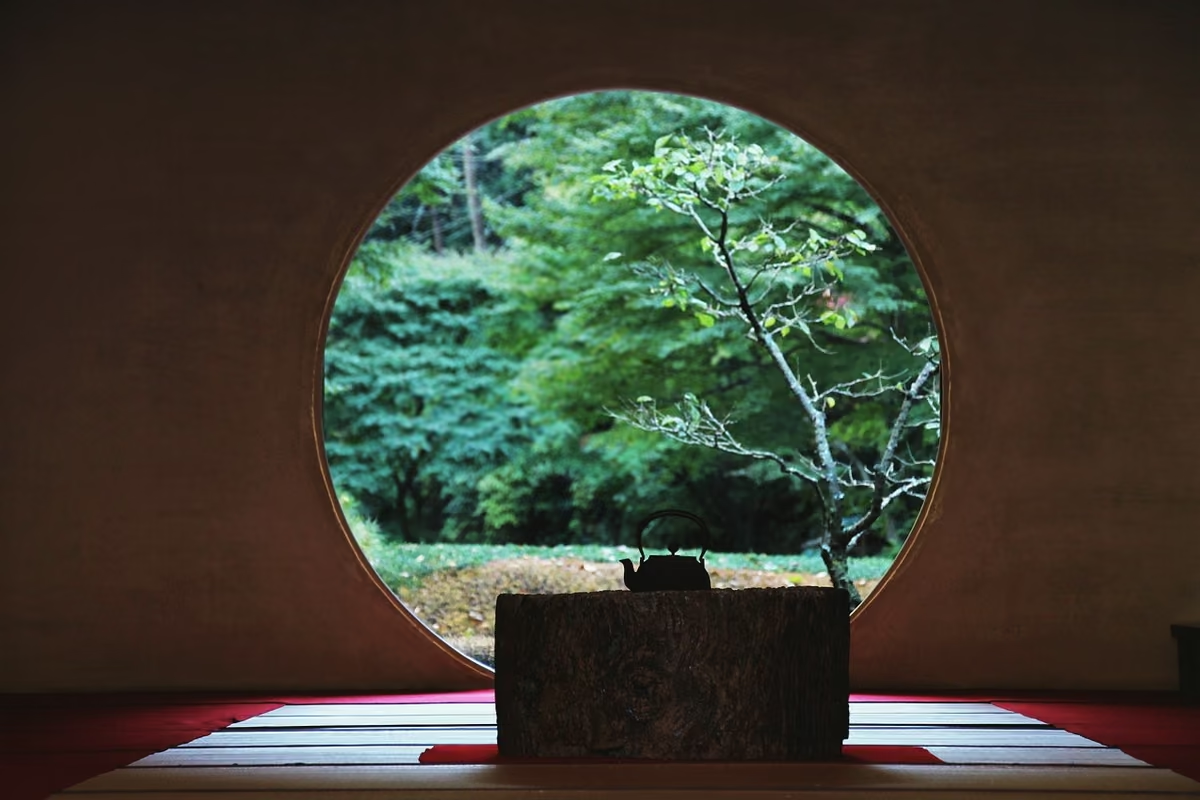
5 photographs, each with its photographer and licence.
Jump to
Highlights
Kotoku-in (the Great Buddha)
The open-air copper Amida Buddha of Kamakura, in Hase.
Adults 300 yen (about USD 2), children 6 to 12 150 yen (about USD 0.94), under six free; 50 yen (about USD 0.31) more to enter the statue.[1]April to September 08:00 to 17:30, October to March 08:00 to 17:00, entry until 15 minutes before closing. Inside the statue 08:00 to 16:30.[1]No reservation is needed.[1]Official site
Hasedera
A hillside temple of Kannon in Hase, five minutes on foot from the Great Buddha.
Adults 400 yen (about USD 2.5), elementary school children 200 yen (about USD 1.5).[14]July to March 08:00 to 17:00, last entry 16:30. April to June 08:00 to 17:30, last entry 17:00.[14]Official site
Engakuji
A large Zen temple of the Rinzai school, beside JR Kita-Kamakura station.
Adults (high school and over) 500 yen (about USD 3), children (elementary and junior high) 200 yen (about USD 1.5).[10]March to November 08:30 to 16:30, December to February 08:30 to 16:00.[10]Official site
Kenchoji
The first of the five great Zen temples of Kamakura, in Yamanouchi.
Adults (high school and over) 500 yen (about USD 3), children (elementary and junior high) 200 yen (about USD 1.5); cash only.[15]08:30 to 16:30.[15]Official site
Jochiji
The fourth of the five great Zen temples of Kamakura, in Yamanouchi.
Adults 300 yen (about USD 2), junior high and under 100 yen (about USD 0.63). A multilingual audio guide costs 500 yen (about USD 3).[22]09:00 to 16:30, every day; visits may stop in bad weather.[22]Official site
Tokeiji
A Rinzai Zen temple in Kita-Kamakura, 4 minutes on foot from the JR station.
No admission charge; visitors are asked to pray at the main hall and leave an offering.[11]09:00 to 16:00. The treasure house is closed on the 1st and 3rd Tuesday.[11]Official site
Hokokuji
A Zen temple in Jomyoji known for its garden of about 2,000 bamboo.
High school and over 400 yen (about USD 2.5), elementary and junior high 200 yen (about USD 1.5).[20]09:00 to 16:00. Closed 29 December to 3 January, and visits may stop in bad weather.[20]Official site
Enoshima Sea Candle and Samuel Cocking Garden
The lighthouse observation tower in the Samuel Cocking Garden at the top of Enoshima island, in Fujisawa next to Kamakura.
Sea Candle: adults (junior high and over) 800 yen (about USD 5), elementary 400 yen (about USD 2.5). The garden is free from 09:00 to 17:00; after 17:00 on event nights it costs 500 and 250 yen (about USD 1.5).[16]09:00 to 20:00, last entry 19:30.[16]Cash, credit cards, transit IC cards and PayPay are accepted.[16]Official site
Enoshima Aquarium
The aquarium on the Katase shore in Fujisawa, next to Kamakura.
Adults 2,800 yen (about USD 18), senior high 1,800 yen (about USD 11), junior high and elementary 1,300 yen (about USD 8), children 3 and over 900 yen (about USD 5.5); under 3 free.[17]March to November 09:00 to 17:00, December to February 10:00 to 17:00; entry and ticket sales close one hour before closing. Hours may change in Golden Week, the summer break and the New Year.[17]Official site
First 48 hours
- Before you fly
Register in Visit Japan Web. Plan on rail from Haneda through Yokohama or Tokyo; Kamakura has no airport of its own.
- Day 1, Hase
Take the Enoden to Hase for the Great Buddha (from 08:00, 300 yen) and Hasedera five minutes away (400 yen, last entry 16:30 most of the year).
- Day 2, Kita-Kamakura
Start at Engakuji by Kita-Kamakura station (from 08:30), then Tokeiji, Jochiji and Kenchoji on the walk south. Carry cash for Kenchoji.
- Day 2, evening
Ride to Enoshima for the Sea Candle, open to 20:00 with last entry at 19:30.
Luggage storage by the hour sits near most main stations. Bounce
Where to stay
Around Kamakura station
The hub for the Enoden line to Hase and for buses to the Great Buddha, Hasedera and Tsurugaoka Hachimangu.
Enoden to Hase in about 7 minutes, or the bus from the east exit to Daibutsu-mae in about 10.[1]
Kita-Kamakura
One stop up the JR line, beside the Zen temples of Engakuji, Tokeiji and Jochiji.
Engakuji is a minute on foot from JR Kita-Kamakura station; Tokeiji about 4 minutes.[10][11]
Ofuna
A larger station in the north of the city, with through trains to Yokohama, Shinagawa and Tokyo and the monorail to Enoshima.
The Shonan Monorail runs from Ofuna to Shonan-Enoshima in about 14 minutes with no change.[9]
Stays in these areas can be compared on one site. Expedia
Airport to city
Haneda Airport (Tokyo International) HND
Kamakura has no airport of its own. Haneda is the airport the Kamakura City Tourist Association recommends for visitors from afar.[9]
| Option | Time |
|---|---|
| By rail through Yokohama or central Tokyo to Kamakura. From Ofuna, on the edge of the city, trains run to Yokohama, Shinagawa and Tokyo without a change.[9]train | About 30 minutes from Yokohama and about an hour from Tokyo, on top of the ride from Haneda into either.[9] |
A pre-booked transfer meets late arrivals at a fixed price. Welcome Pickups
When to go
Warmest month August, average high 88°F (31°C). Coolest month January, average low 37°F (3°C).[18]
All 12 months
| Month | Weather | Crowds | Holidays | Closures |
|---|---|---|---|---|
| January | Highs 10.2 C (50 F), lows 2.7 C (37 F), 64.7 mm of precipitation (JMA normals 1991-2020).[18] | New Year's Day (1 Jan) and Coming of Age Day (11 Jan 2027) are national holidays.[19] | 1 January New Year's Day; 11 January 2027 Coming of Age Day.[19] | Hokokuji is closed to 3 January.[20] |
| February | Highs 10.8 C (51 F), lows 3.1 C (38 F), 64.7 mm of precipitation (JMA normals 1991-2020).[18] | National Foundation Day (11 Feb) and the Emperor's Birthday (23 Feb) are holidays.[19] | 11 February National Foundation Day; 23 February Emperor's Birthday.[19] | |
| March | Highs 14.0 C (57 F), lows 6.0 C (43 F), 139.5 mm of precipitation (JMA normals 1991-2020).[18] | Vernal Equinox Day (21 Mar 2027, with a substitute holiday on 22 Mar).[19] | 21 March 2027 Vernal Equinox Day; 22 March 2027 substitute holiday.[19] | |
| April | Highs 18.9 C (66 F), lows 10.7 C (51 F), 143.1 mm of precipitation (JMA normals 1991-2020).[18] | Showa Day (29 Apr) opens the Golden Week run of holidays.[19] | 29 April Showa Day.[19] | |
| May | Highs 23.1 C (74 F), lows 15.5 C (60 F), 152.6 mm of precipitation (JMA normals 1991-2020).[18] | Golden Week: Constitution Memorial Day (3 May), Greenery Day (4 May) and Children's Day (5 May).[19] | 3 May Constitution Memorial Day; 4 May Greenery Day; 5 May Children's Day.[19] | |
| June | Highs 25.5 C (78 F), lows 19.1 C (66 F), 188.8 mm of precipitation (JMA normals 1991-2020).[18] | No national holiday in June.[19] | ||
| July | Highs 29.4 C (85 F), lows 22.9 C (73 F), 182.5 mm of precipitation (JMA normals 1991-2020).[18] | Marine Day (19 Jul 2027).[19] | 19 July 2027 Marine Day.[19] | |
| August | Highs 31.0 C (88 F), lows 24.3 C (76 F), 139.0 mm of precipitation (JMA normals 1991-2020).[18] | Mountain Day (11 Aug) is a national holiday.[19] | 11 August Mountain Day.[19] | |
| September | Highs 27.3 C (81 F), lows 21.0 C (70 F), 241.5 mm of precipitation (JMA normals 1991-2020).[18] | Respect for the Aged Day (20 Sep 2027) and Autumnal Equinox Day (23 Sep).[19] | 20 September 2027 Respect for the Aged Day; 23 September Autumnal Equinox Day.[19] | |
| October | Highs 22.0 C (72 F), lows 15.7 C (60 F), 240.4 mm of precipitation (JMA normals 1991-2020).[18] | Sports Day (11 Oct 2027).[19] | 11 October 2027 Sports Day.[19] | |
| November | Highs 17.1 C (63 F), lows 10.1 C (50 F), 107.6 mm of precipitation (JMA normals 1991-2020).[18] | Culture Day (3 Nov) and Labour Thanksgiving Day (23 Nov).[19] | 3 November Culture Day; 23 November Labour Thanksgiving Day.[19] | |
| December | Highs 12.5 C (55 F), lows 5.2 C (41 F), 66.4 mm of precipitation (JMA normals 1991-2020).[18] | No national holiday in December.[19] | Hokokuji closes from 29 December over the New Year.[20] |
What things cost
| Item | What it costs |
|---|---|
| Kotoku-in, the Great Buddha (adult) | 300 yen (about USD 2); 50 yen (about USD 0.31) more to go inside the statue[1] |
| Hasedera (adult) | 400 yen (about USD 2.5)[14] |
| Engakuji or Kenchoji (adult) | 500 yen (about USD 3) each[10][15] |
| Enoshima Sea Candle (adult) | 800 yen (about USD 5)[16] |
| Enoshima Aquarium (adult) | 2,800 yen (about USD 18)[17] |
Safety
Japan Visitor Hotline 050-3816-2787, 24 hours, in English, Chinese, Korean and Japanese, for illness, disasters and other emergencies. In a large earthquake indoors, stay put and follow staff; near the coast, move to higher ground.[13]
Scams to watch for
- Touts who steer you to a bar: Smartraveller says this is illegal in Japan and is linked to drink spiking and overcharging.[12]
Common mistakes
Myth: There is a direct airport bus from Haneda to Kamakura.
Actually: Haneda's bus guide lists no Kamakura route, and shows its Keikyu bus to Ofuna and Fujisawa as suspended. Plan on rail through Yokohama or Tokyo.[21][9]
Myth: The Great Buddha stays open into the evening.
Actually: Kotoku-in closes at 17:30 from April to September and 17:00 from October to March; the inside of the statue closes at 16:30.[1]
Myth: Kenchoji takes cards.
Actually: Admission at Kenchoji is cash only: 500 yen (about USD 3) for adults, 200 for children. Hikers entering the grounds pay too.[15]
Myth: Enoshima Aquarium sells tickets until it closes.
Actually: Entry and ticket sales stop one hour before closing, so 16:00 on a 17:00 day.[17]
Myth: Tokeiji charges admission.
Actually: Tokeiji charges no admission and asks visitors to pray at the main hall and leave an offering. Its treasure house is closed on the 1st and 3rd Tuesday.[11]
Sources
Show all sources (22)
- Kotoku-in: guide to visiting, Kotoku-in.
- Visit Japan Web (policy page), Digital Agency, Government of Japan.
- Customs procedures for passengers, Japan Customs, Ministry of Finance.
- Credit cards, Japan National Tourism Organization.
- Tipping in Japan, Japan National Tourism Organization.
- Tax-free shopping: the refund method for travellers (Japanese), Japan Tourism Agency, MLIT.
- Prepaid SIM for Travel, SoftBank.
- Wi-Fi and connectivity, Japan National Tourism Organization.
- Access (Japanese), Kamakura City Tourist Association.
- Engakuji: visitor information, Engakuji.
- Tokeiji (Japanese), Tokeiji.
- Japan travel advice and safety, Australian Government, Smartraveller.
- Emergencies, Japan National Tourism Organization.
- Hasedera: admission and access, Hasedera.
- Kenchoji: visiting and access (Japanese), Kenchoji.
- Enoshima Sea Candle and Samuel Cocking Garden: fees and tickets (Japanese), Enoshima Electric Railway.
- Enoshima Aquarium: hours and fees, Enoshima Aquarium.
- Climate normals 1991-2020, Yokohama (monthly), Japan Meteorological Agency.
- National holidays (list for 2026 and 2027), Cabinet Office, Government of Japan.
- Hokokuji: visiting (Japanese), Hokokuji.
- Highway and local buses, Terminal 3 (Japanese), Haneda Airport passenger terminals.
- Jochiji (Japanese), Jochiji.