
Nikko
For: Visitors coming to Nikko from Tokyo or the Tokyo airports for a day or a night, who want the right train, the right pass and the hours of the shrines, the falls and the lake. Nikko is about two hours by Tobu limited express from Asakusa. Its World Heritage shrines and temples sit together a short bus ride from the two stations, and Kegon Falls and Lake Chuzenji are about 50 minutes further up the mountain by bus.
Entry rules depend on your passport. The rules for UK and Canadian passports are under Before you go on the Japan page.
- Currency
- JPY
- Time zone
- UTC+9, all year
- Advisories
- US: Level 1UK: FCDO does not advise against travel to any part of JapanCanada: Level 1US advice checked Each government's advice
Quick answers
- How do I get from the airport?
- NRT: Train: Keisei Sky Access (Access Express) direct to Asakusa, then a Tobu limited express to Tobu-Nikko. Checked .
- Time: About 50 minutes to Asakusa, then about 1 hour 50 minutes on SPACIA X (the 07:50 from Asakusa arrives at 09:39), plus the change. Checked .
- Every option is under Airport to city.
- Is it safe?
- Advice from each government for Japan:
- US: Level 1. Checked .
- UK: FCDO does not advise against travel to any part of Japan. Checked .
- Canada: Level 1. Checked .
- Do I need a visa?
That depends on your passport. The rules for US, UK, Canadian and Australian passports are in the Japan guide.
i

The one thing
Nikko Toshogu at opening time
Toshogu, the shrine of the first Tokugawa shogun, is the reason most people come to Nikko, and its carved and painted gates are best seen before the courtyards fill. In winter it opens at 09:00; the first SPACIA X from Asakusa does not reach Tobu-Nikko until 09:39.
Limited express from Asakusa to Tobu-Nikko in about 1 hour 50 minutes, then the World Heritage Tour bus towards the shrines (about 5 minutes to Shinkyo).[1][2] Price: 1,600 yen (about USD 10) (adult and high school), 550 yen (about USD 3.5) (elementary and junior high); with the Treasure House 2,400 and 870 yen (about USD 5.5).[3] Hours: 09:00 to 17:00 from 1 April to 31 October, 09:00 to 16:00 from 1 November to 31 March; tickets stop 30 minutes before closing. Festivals and repairs can close some areas.[3] Find guided visits on Viator (opens Viator in a new tab) paid linkSome links earn us a commission. How we work
USD figures are approximate, converted at the ECB euro reference rates of 13 Nov 2026.
- JanHigh 31°F 0°CLow 18°F -8°C
- FebHigh 33°F 1°CLow 18°F -8°C
- MarHigh 40°F 4°CLow 24°F -5°C
- AprHigh 50°F 10°CLow 32°F 0°C
- MayHigh 60°F 15°CLow 42°F 6°C
- JunHigh 64°F 18°CLow 51°F 10°C
- JulHigh 72°F 22°CLow 59°F 15°C
- AugHigh 73°F 23°CLow 60°F 16°C
- SepHigh 66°F 19°CLow 53°F 12°C
- OctHigh 57°F 14°CLow 42°F 6°C
- NovHigh 47°F 9°CLow 32°F 0°C
- DecHigh 37°F 3°CLow 23°F -5°C
Nikko in pictures
5 photographs, each with its photographer and licence.


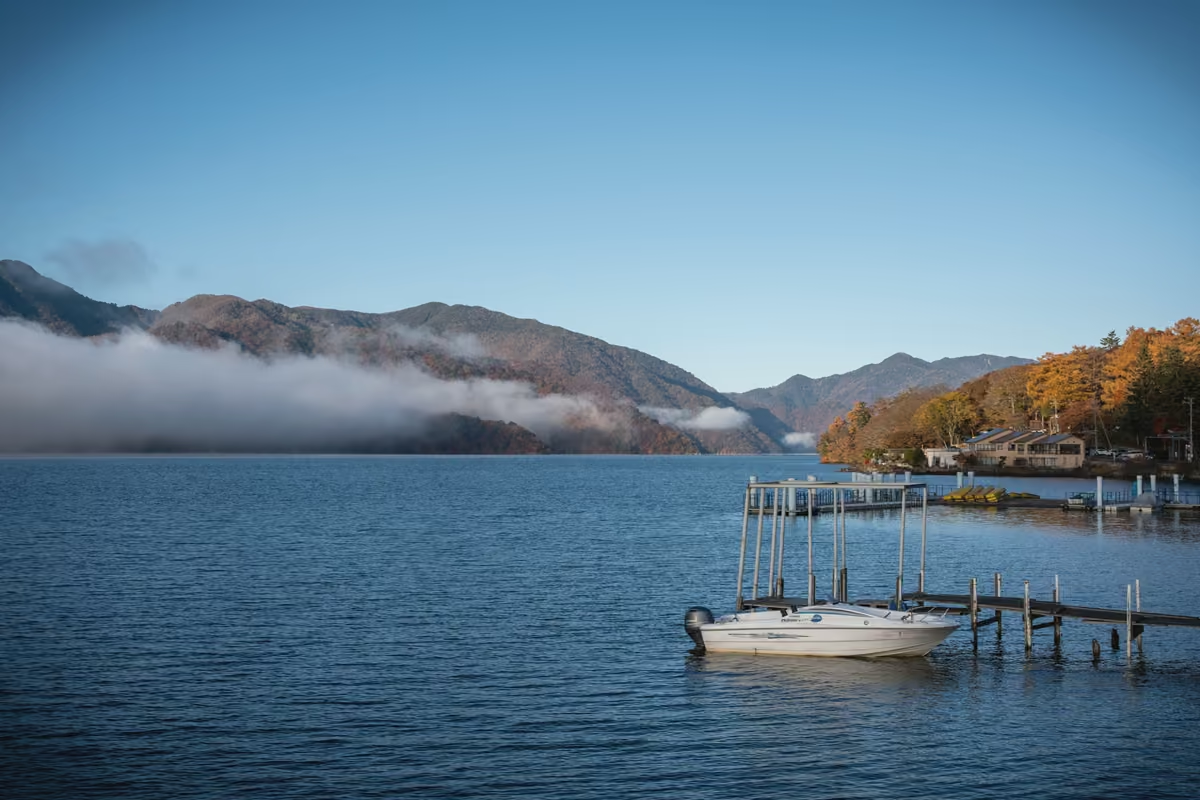

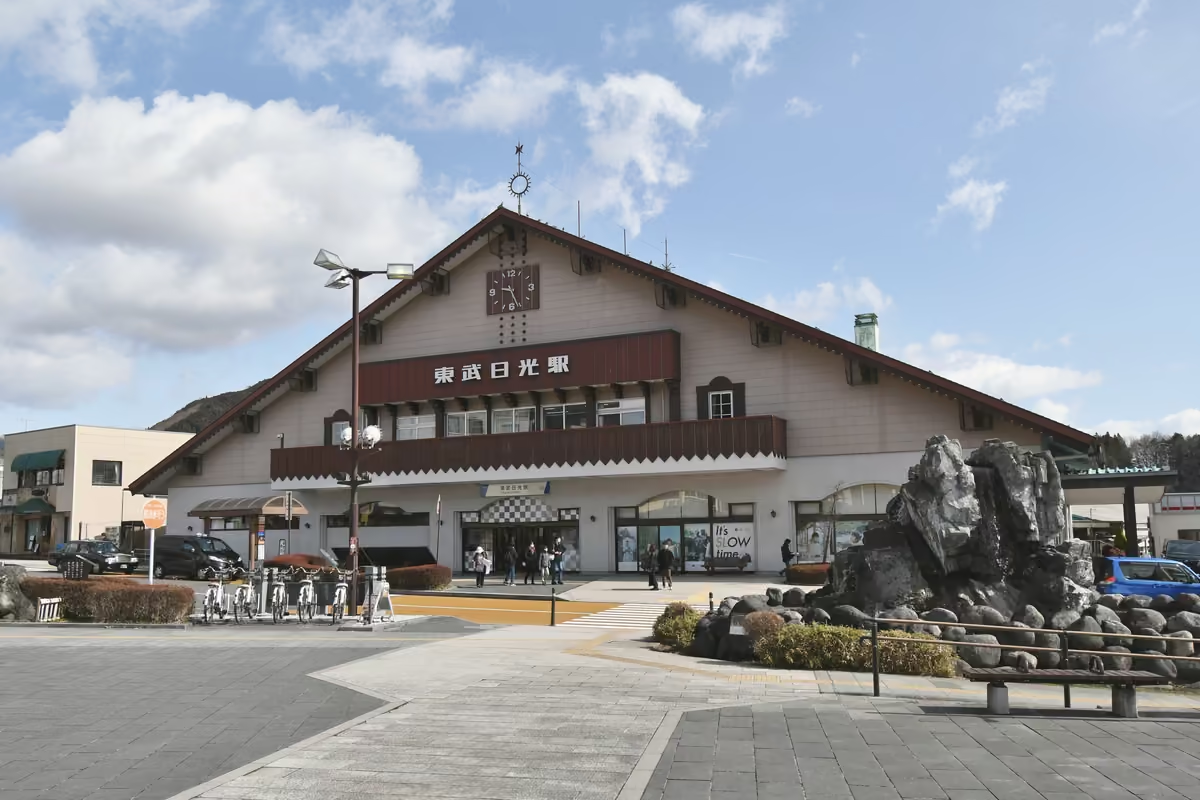

Jump to
Highlights
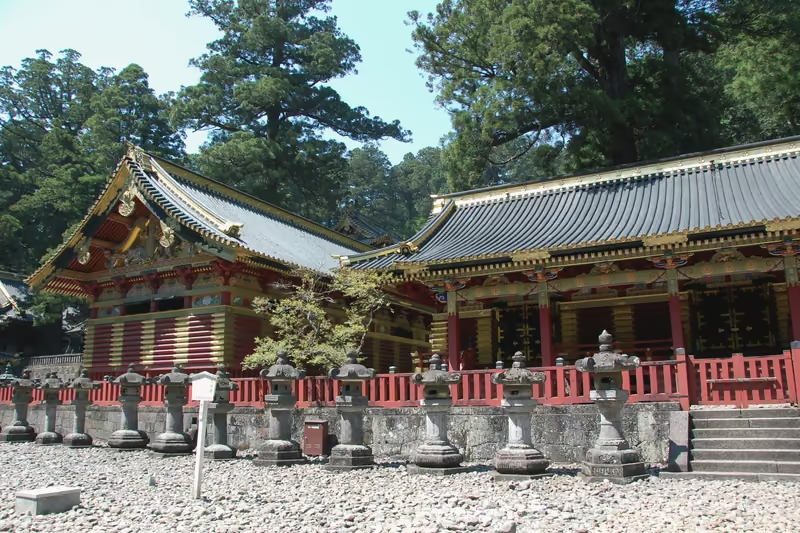
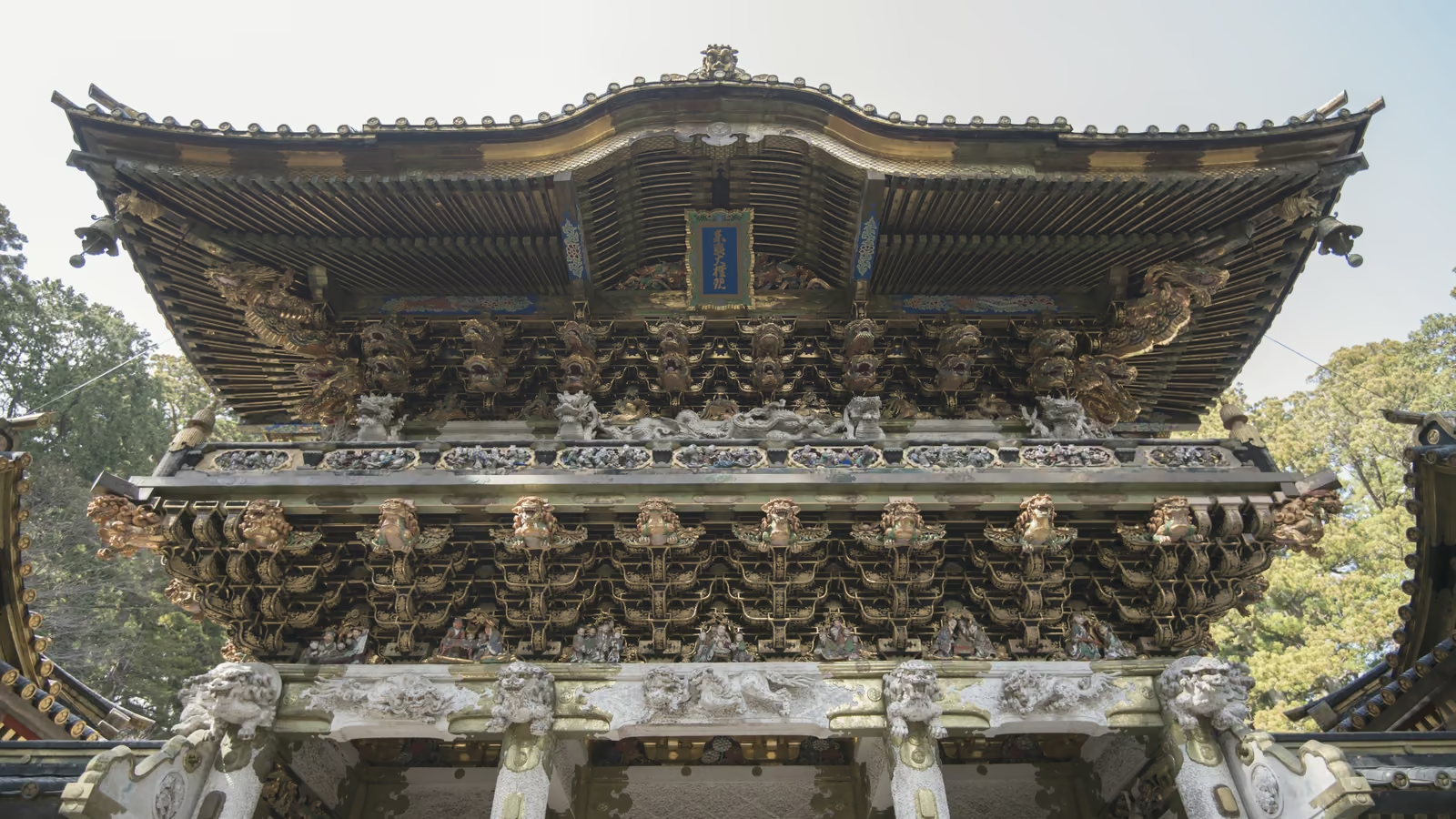
Photo: kanegen, Wikimedia Commons (CC BY 2.0) Nikko Toshogu
The shrine of the first Tokugawa shogun, with the Okusha inner shrine inside the same admission and the Treasure House next door.
1,600 yen (about USD 10) (adult), 550 yen (about USD 3.5) (elementary and junior high); with the Treasure House 2,400 and 870 yen (about USD 5.5).[3]09:00 to 17:00 April to October, 09:00 to 16:00 November to March; last tickets 30 minutes before closing.[3]Official site
Toshogu Treasure House and Art Museum
Toshogu's own museums beside the shrine.
Treasure House 1,000 yen (about USD 6.5) (adult), 400 yen (about USD 2.5) (child); Art Museum 800 and 400 yen (about USD 2.5).[3]Official site
Rinnoji Sanbutsudo
Rinnoji's main hall, the first of the shrine and temple group above Shinkyo.
400 yen (about USD 2.5) (adult), 200 yen (about USD 1.5) (child); with Taiyuin 900 and 400 yen (about USD 2.5).[30]08:00 to 17:00 April to October, 08:00 to 16:00 November to March; entry ends 30 minutes before closing.[30]Official site
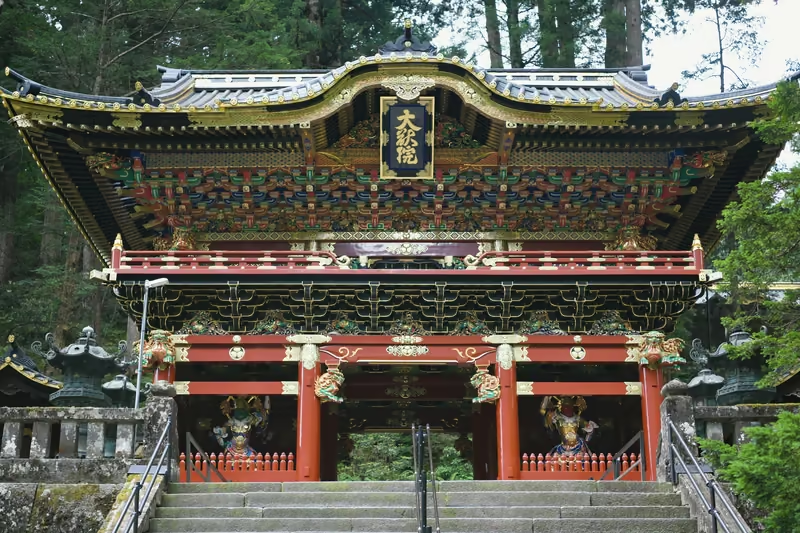
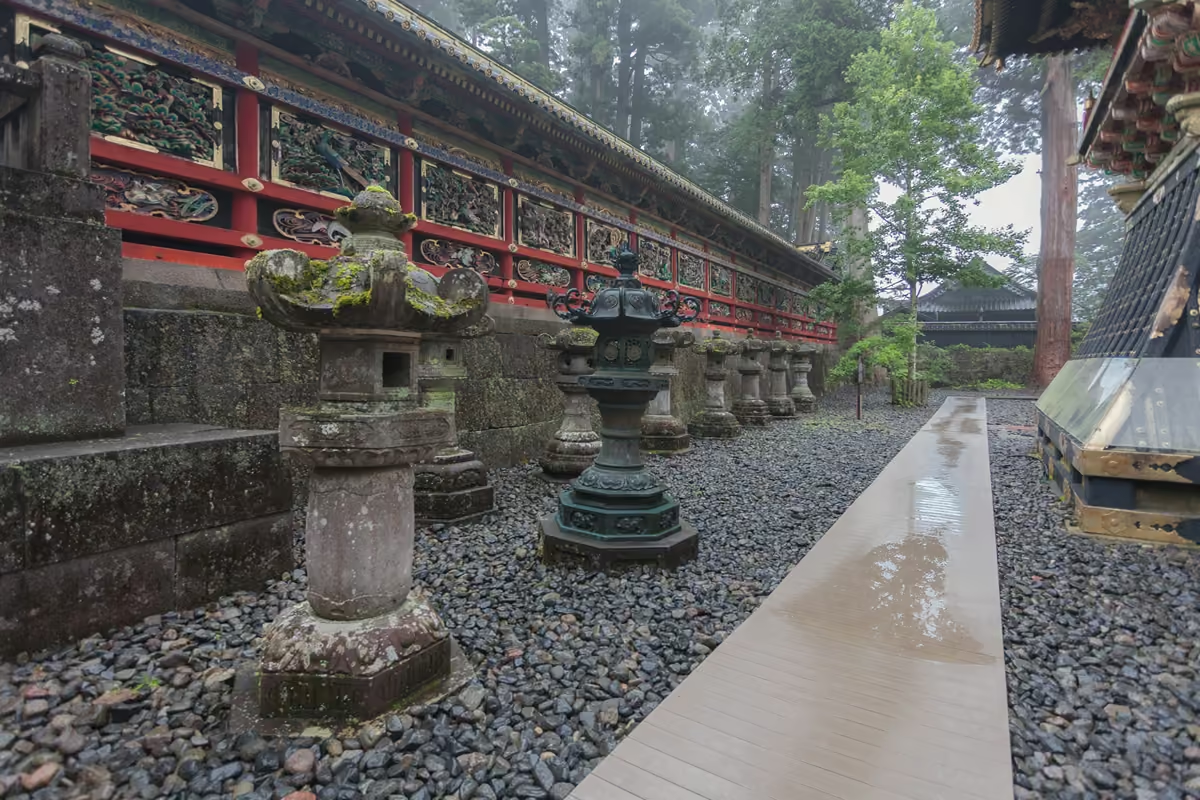
Photo: xiquinhosilva on Flickr, uploaded to Commons by Đoàn Lê Chí Bảo, Wikimedia Commons (CC BY 2.0) Taiyuin
The mausoleum of the third Tokugawa shogun, part of Rinnoji.
550 yen (about USD 3.5) (adult), 250 yen (about USD 1.5) (child).[30]08:00 to 17:00 April to October, 08:00 to 16:00 November to March.[30]Official site
Rinnoji Treasure House and Shoyoen
Rinnoji's treasure house with the Shoyoen garden.
300 yen (about USD 2) (adult), 100 yen (about USD 0.63) (child); Sanbutsudo, Taiyuin and Treasure House together 1,000 and 500 yen (about USD 3).[30]08:00 to 17:00 April to October, 08:00 to 16:00 November to March; closed about ten days a year for exhibition changes.[30]Official site
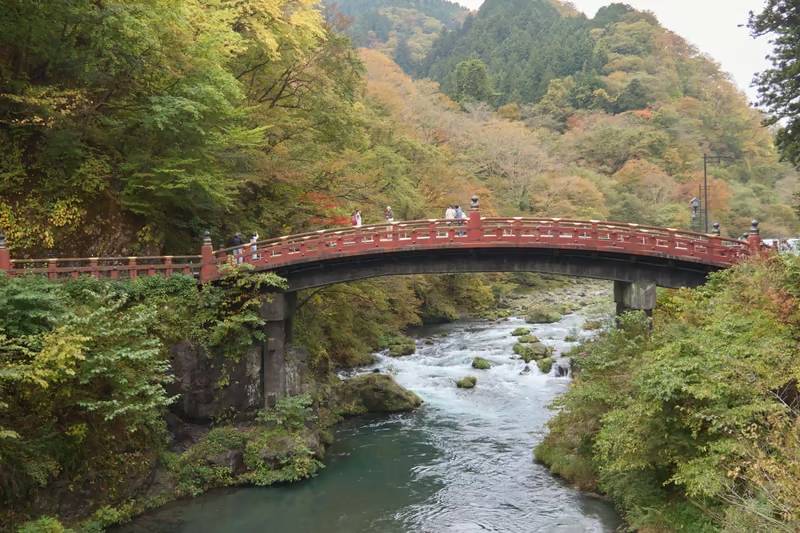
Photo: lumoplank, Wikimedia Commons (CC0) Shinkyo Bridge
The bridge of Futarasan Shrine over the Daiya River, about 28 m long, at the entrance to the shrine area.
300 yen (about USD 2), cash only at the ticket counter.[2]08:30 to 16:30 April to October; 09:30 to 15:30 November to March.[2]Official site
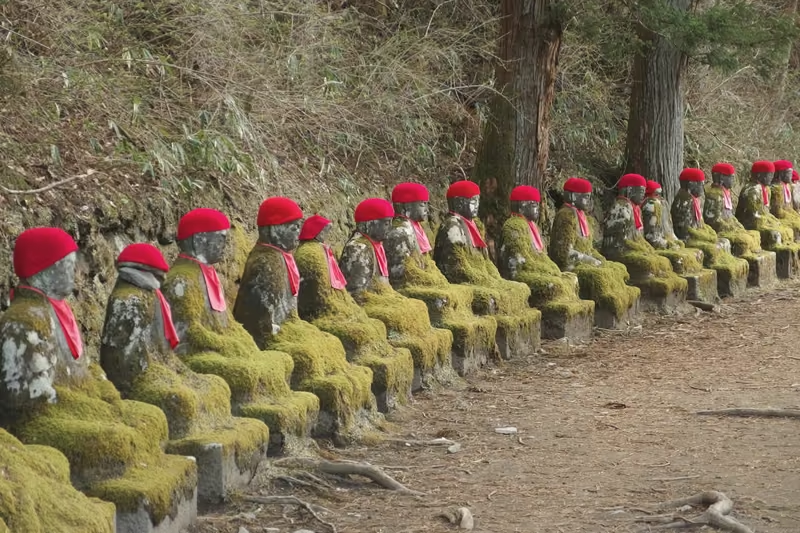
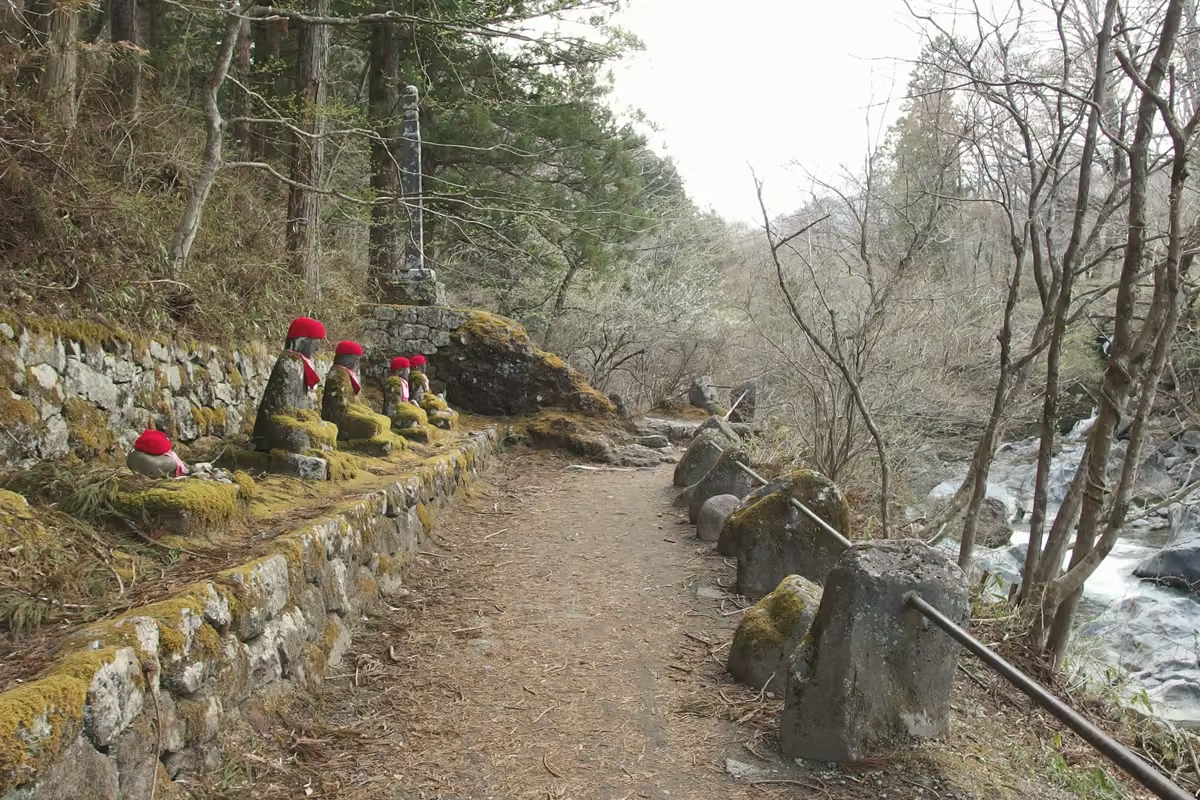
Photo: Guilhem Vellut from Annecy, France, Wikimedia Commons (CC BY 2.0) Kanmangafuchi Abyss
A small gorge by the Daiya River with a riverside path lined with about 70 stone jizo statues.
Open all year.[20]Official site
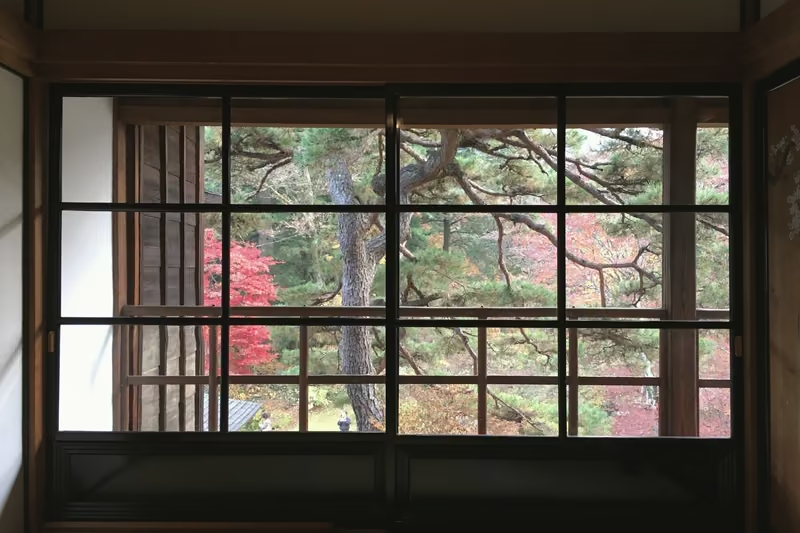
Photo: Gryffindor, Wikimedia Commons (CC0) Nikko Tamozawa Imperial Villa Memorial Park
A former imperial villa, now a prefectural park, 10 minutes by bus from the stations.
600 yen (about USD 4) (adult), 300 yen (about USD 2) (elementary and junior high).[33]09:00 to 17:00 April to October (last entry 16:00), 09:00 to 16:30 November to March (last entry 15:45); closed Tuesdays outside peak periods.[33]Official site
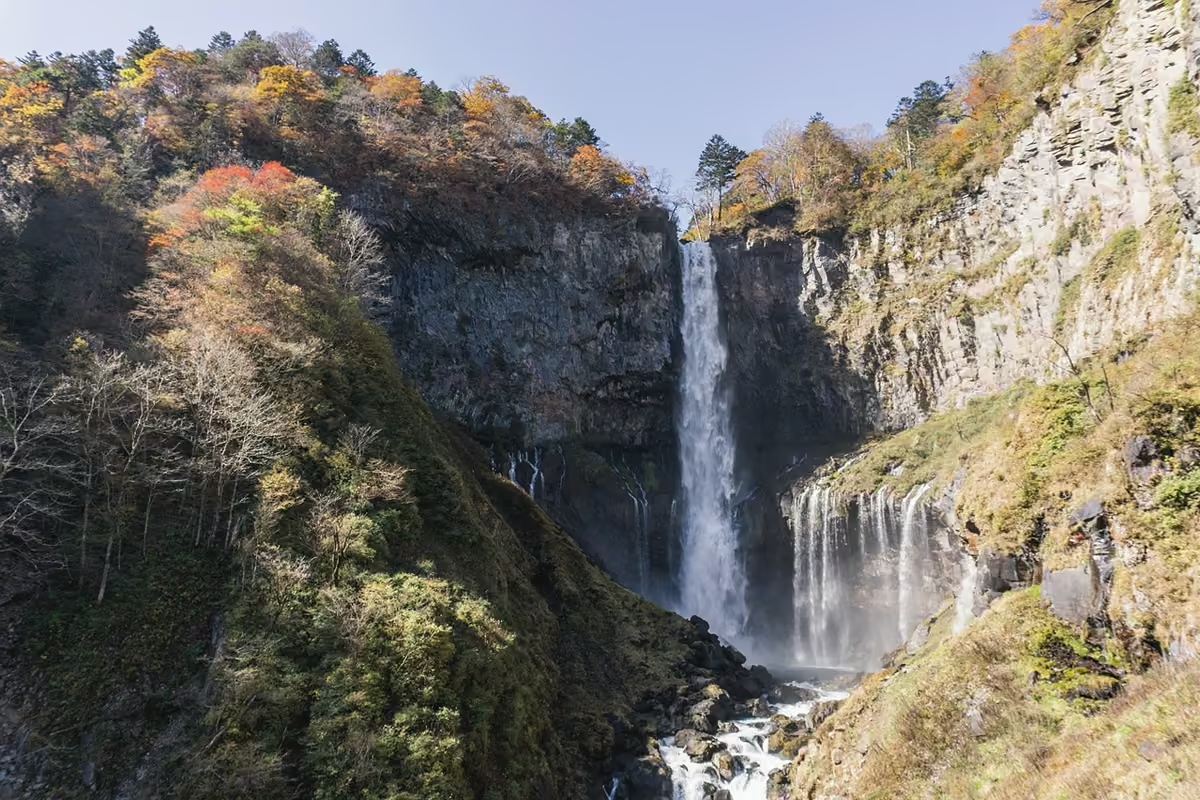
Kegon Falls
A 97 m waterfall below Lake Chuzenji, seen from a platform at its foot reached by a 100 m lift.
Elevator round trip 600 yen (about USD 4) (adult), 400 yen (about USD 2.5) (elementary); car park 500 yen (about USD 3).[31][22]08:00 to 17:00 from 1 March to 30 November, 09:00 to 16:30 from 1 December to the end of February.[31]None; first come, first served.[31]Official site
Lake Chuzenji
The mountain lake above Kegon Falls, with a sightseeing cruise in season and the Italian Embassy House Memorial Park on its shore.
The cruise is included in the NIKKO PASS All Area (8,000 yen (about USD 50) for 4 days).[24]Cruise from mid-April to 30 November.[24]Official site
Nikko Botanical Garden
University of Tokyo garden of mountain plants beside the Daiya River, west of the shrines.
500 yen (about USD 3) (high school age and over); 150 yen (about USD 0.94) junior high and elementary students.[39]Open 1 April to 30 November, 09:00 to 16:30, last entry 16:00. Closed Mondays (the day after when Monday is a holiday).[39]Official site


First 48 hours
- Before you fly
Register in Visit Japan Web. If you hold a foreign passport, buy a NIKKO PASS online (World Heritage Area 3,000 yen for 2 days, All Area 8,000 yen for 4 days) and book the limited express seat separately.
- Arrival at Narita, 14:00
Sort a SIM and yen at the airport, then the Keisei Access Express to Asakusa (about 50 minutes) and a Tobu limited express to Tobu-Nikko (about 1 hour 50 minutes).
- Arrival in Nikko, 18:00
The station tourist information centres close at 17:00 (Tobu-Nikko) and 17:30 (JR Nikko), so pick up maps the next morning from 08:30.
- Day 2, 08:00
Rinnoji opens at 08:00 and Toshogu at 09:00; buy the Rinnoji set ticket before 13:30 in winter. Bring cash for the Shinkyo crossing (300 yen).
- Day 2, afternoon
Bus up to Chuzenji Onsen (about 50 minutes) for Kegon Falls; the elevator runs 09:00 to 16:30 from December. In autumn, allow hours for the road.
If you want a guide for the first day, see guided tours and day trips in Nikko on Viator (opens Viator in a new tab) paid link
Things to book in Nikko
Tours, day trips and tickets in Nikko, booked on Viator.
See Nikko tours on Viator (opens Viator in a new tab) paid link
Where to stay
Around Tobu-Nikko and JR Nikko stations
The two stations are about 3 minutes apart on foot, both have tourist information centres open every day, and every bus to the shrines and the lake starts here.
World Heritage Tour bus to Shinkyo in about 5 minutes (220 yen (about USD 1.5)); limited express to Asakusa in about 1 hour 50 minutes; JR Nikko Line to Utsunomiya in about 45 minutes.[18][2][1]
Shinkyo and the shrine area
For Rinnoji at 08:00 and Toshogu at 09:00 on foot, before the first limited express arrives; Tamozawa and Kanmangafuchi are a short bus ride away.
About 5 minutes by bus from the stations to Shinkyo, 10 to Tamozawa and 15 to the Sogokaikan-mae stop for Kanmangafuchi.[2][19][20]
Chuzenji Onsen, Lake Chuzenji
Kegon Falls is a 5-minute walk from the bus stop, the lake cruise runs from mid-April to 30 November, and the place is quieter once the day buses go down.
Tobu Bus towards Chuzenji Onsen and Yumoto Onsen, about 50 minutes from the stations; the drive normally takes 45 minutes but can pass 4 hours from mid-October to mid-November.[21][22][23][24]
Airport to city
Narita International Airport NRT
Highway buses also run from Narita and Haneda to Nikko.[15][16]
| Option | Time | Pay |
|---|---|---|
| Keisei Sky Access (Access Express) direct to Asakusa, then a Tobu limited express to Tobu-Nikko.[15][17]train | About 50 minutes to Asakusa, then about 1 hour 50 minutes on SPACIA X (the 07:50 from Asakusa arrives at 09:39), plus the change.[15][17] | Tobu limited express tickets are sold online (TOBU Japan Trip Tickets), at Tobu station ticket machines and counters, and by travel agencies.[17] |
Haneda Airport (Tokyo International), linked to Asakusa by the Keikyu and Toei Asakusa lines[15] HND
| Option | Time | Pay |
|---|---|---|
| Keikyu Line to Sengakuji, Toei Asakusa Line to Asakusa, then a Tobu limited express to Tobu-Nikko.[15][17]train | About 21 minutes to Sengakuji and 16 minutes on to Asakusa, then about 1 hour 50 minutes to Tobu-Nikko, plus the changes.[15][17] | Tobu limited express tickets are sold online (TOBU Japan Trip Tickets), at Tobu station ticket machines and counters, and by travel agencies.[17] |
When to go
Warmest month August, average high 73°F (23°C). Coolest month January, average low 18°F (-8°C).[34]
All 12 months
| Month | Weather | Crowds | Holidays | Closures |
|---|---|---|---|---|
| January | Mean -3.9 C (25 F) (highs -0.3 C / 31 F, lows -7.9 C / 18 F), 58 mm, 63 cm of snowfall.[34] | New Year prayers at Toshogu. Tamozawa stays open from 2 to 5 January.[35][33] | 1 January New Year's Day; 11 January 2027 Coming of Age Day.[36] | Tamozawa closed to 1 January; the Okunikko Information Center closes on Mondays from November to May.[33][37] |
| February | Mean -3.5 C (26 F) (highs 0.6 C / 33 F, lows -7.8 C / 18 F), 49 mm, 56 cm of snowfall.[34] | The free guided tour of the shrine area runs once a day from 5 to 14 February 2027 (reception 10:00 to 10:30).[18] | 11 February National Foundation Day; 23 February Emperor's Birthday.[36] | Rinnoji Sanbutsudo closed all day on 3 February.[30] |
| March | Mean -0.3 C (31 F) (highs 4.2 C / 40 F, lows -4.6 C / 24 F), 109 mm, 57 cm of snowfall.[34] | 21 March 2027 Vernal Equinox Day; 22 March 2027 substitute holiday.[36] | Rinnoji Treasure House and Shoyoen close on exhibition-change days.[30] Current hours | |
| April | Mean 5.1 C (41 F) (highs 10.1 C / 50 F, lows 0.2 C / 32 F), 154 mm.[34] | The Lake Chuzenji cruise and the Okunikko hybrid bus start in mid-April. Tamozawa opens every day from 10 April to 9 May.[24][33] | 29 April Showa Day.[36] | Sanbutsudo closed from 11:00 on 1 April and all day on 2 April; parts of Taiyuin are off limits on 18, 19 and 20 April.[30] |
| May | Mean 10.3 C (51 F) (highs 15.3 C / 60 F, lows 5.5 C / 42 F), 177 mm.[34] | Toshogu's Spring Grand Festival on 17 and 18 May: mounted archery on the 17th and the procession of about 1,200 people in samurai costume from 11:00 on the 18th.[35] | 3 May Constitution Memorial Day; 4 May Greenery Day; 5 May Children's Day.[36] | Rinnoji Treasure House and Shoyoen closed on 26 May; parts of Taiyuin off limits on 17 May.[30] |
| June | Mean 14.0 C (57 F) (highs 18.0 C / 64 F, lows 10.4 C / 51 F), 229 mm.[34] | Free guided tours of the shrine area on Tuesdays, Thursdays and Saturdays in April, May, June, October and November.[18] | ||
| July | Mean 18.2 C (65 F) (highs 22.1 C / 72 F, lows 14.9 C / 59 F), 281 mm.[34] | 19 July 2027 Marine Day.[36] | Rinnoji Treasure House and Shoyoen closed on 29 July; parts of Taiyuin off limits on 14 and 15 July.[30] | |
| August | Mean 18.8 C (66 F) (highs 22.9 C / 73 F, lows 15.6 C / 60 F), 333 mm.[34] | Tamozawa opens every day from 13 to 16 August; the Nikko Kendo Tournament at Toshogu is on 17 and 18 August.[33][35] | 11 August Mountain Day.[36] | |
| September | Mean 15.2 C (59 F) (highs 18.9 C / 66 F, lows 11.9 C / 53 F), 409 mm, the wettest month.[34] | 20 September 2027 Respect for the Aged Day; 23 September Autumnal Equinox Day.[36] | Rinnoji Treasure House and Shoyoen closed on 30 September.[30] | |
| October | Mean 9.6 C (49 F) (highs 13.7 C / 57 F, lows 5.7 C / 42 F), 241 mm.[34] | The busiest season. Toshogu's Autumn Festival on 16 and 17 October with mounted archery and the samurai procession; from mid-October to mid-November the road to Lake Chuzenji can take over 4 hours.[35][23][16] | 11 October 2027 Sports Day.[36] | |
| November | Mean 4.4 C (40 F) (highs 8.6 C / 47 F, lows 0.2 C / 32 F), 98 mm.[34] | Autumn traffic on the lake road continues to mid-November. Toshogu and Rinnoji move to winter hours from 1 November; the Lake Chuzenji cruise ends on 30 November.[23][3][30][24] | 3 November Culture Day; 23 November Labour Thanksgiving Day.[36] | Tamozawa closes on Tuesdays again from 15 November.[30][33] Current hours |
| December | Mean -1.0 C (30 F) (highs 2.8 C / 37 F, lows -4.9 C / 23 F), 58 mm, 33 cm of snowfall.[34] | The Kegon Falls elevator moves to winter hours (09:00 to 16:30) from 1 December.[31] | Sanbutsudo closed on the morning of 14 December; Tamozawa closed from 29 December.[30][33] |
What things cost
| Item | What it costs |
|---|---|
| Nikko Toshogu admission (adult) | 1,600 yen (about USD 10); 2,400 yen (about USD 15) with the Treasure House[3] |
| Rinnoji set ticket, Sanbutsudo and Taiyuin (adult) | 900 yen (about USD 5.5); 400 yen (about USD 2.5) child[30] |
| Shinkyo Bridge crossing | 300 yen (about USD 2), cash only[2] |
| Kegon Falls observation elevator, round trip (adult) | 600 yen (about USD 4); 400 yen (about USD 2.5) elementary students[31] |
| Bus, Nikko stations to Shinkyo | 220 yen (about USD 1.5)[18] |
| NIKKO PASS World Heritage Area, 2 days (adult) | 3,000 yen (about USD 19); 1,500 yen (about USD 9.5) child; limited express extra[32] |
| NIKKO PASS All Area, 4 days (adult) | 8,000 yen (about USD 50); 4,000 yen (about USD 25) child; limited express extra[24] |
| Nikko Tamozawa Imperial Villa Memorial Park (adult) | 600 yen (about USD 4); 300 yen (about USD 2) child[33] |
| Toshogu car park, regular car, per day | 600 yen (about USD 4), coins or 1,000 yen (about USD 6.5) notes on exit[1] |
Safety
Do not feed the monkeys or other wild animals: Nikko City has an ordinance banning feeding monkeys, and in the special zones of the national park feeding wildlife can bring a fine of up to 300,000 yen (about USD 1,880).[28]
From mid-October to mid-November the road from Nikko up to Lake Chuzenji can take more than 4 hours instead of the usual 45 minutes; take the train and bus and allow for delays.[23]
Japan Visitor Hotline 050-3816-2787, 24 hours, in English, Chinese, Korean and Japanese, for illness, disasters and other emergencies; police 110.[29]
Scams to watch for
- Card skimming and ATM fraud: watch your card when others handle it, use ATMs in well-lit public places or inside banks, and cover the keypad.[26]
Common mistakes
Myth: The NIKKO PASS covers the limited express from Asakusa.
Actually: Both NIKKO PASS versions include one round trip between Asakusa and Nikko, but the limited express fare is extra, and the passes are sold only to foreign travellers.[32][24]
Myth: The Akechidaira Ropeway is the easy way to see Kegon Falls from above.
Actually: Tobu lists the Akechidaira Ropeway as suspended from 16 January 2026 to 31 August 2027, possibly longer. The Kegon Falls elevator (600 yen (about USD 4)) takes you down to the viewing platform instead.[24][31]
Myth: Driving up to Lake Chuzenji in autumn takes 45 minutes.
Actually: That is the normal time from Nikko Station. From mid-October to mid-November the same drive can take more than 4 hours.[23]
Myth: You can pay for the Shinkyo Bridge crossing by card.
Actually: The 300 yen (about USD 2) crossing ticket is cash only, at the ticket counter.[2]
Myth: The Rinnoji set ticket is on sale until the temple closes.
Actually: Sales of the Sanbutsudo and Taiyuin set ticket end at 14:30 from April to October and 13:30 from November to March, well before the temple closes at 17:00 and 16:00.[30]
Myth: Feeding the monkeys is harmless.
Actually: Nikko City bans feeding monkeys, and feeding wildlife in the national park special zones can bring a fine of up to 300,000 yen (about USD 1,880).[28]
Myth: Tamozawa Imperial Villa is open every day.
Actually: It closes on Tuesdays (the next day after a holiday) and from 29 December to 1 January, except in its peak periods: 10 April to 9 May, 13 to 16 August, 15 October to 14 November and 2 to 5 January.[33]
Sources
Show all sources (39)
- Access and parking (Japanese), Nikko Toshogu.
- Shinkyo Bridge, Nikko City Tourism Association.
- Admission hours and fees (Japanese), Nikko Toshogu.
- Visit Japan Web (policy page), Digital Agency, Government of Japan.
- Visa information, Japan National Tourism Organization.
- Customs procedures for passengers, Japan Customs, Ministry of Finance.
- Credit cards, Japan National Tourism Organization.
- Tipping in Japan, Japan National Tourism Organization.
- IC travel cards, Japan National Tourism Organization.
- Tax-free shopping: the refund method for travellers (Japanese), Japan Tourism Agency, MLIT.
- Japan's tax exemption, Japan National Tourism Organization.
- Prepaid SIM for Travel, SoftBank.
- Wi-Fi and connectivity, Japan National Tourism Organization.
- Internet, Wi-Fi and cell phones, Narita International Airport Corporation.
- Access to Asakusa, Tobu Railway.
- For first-time visitors, Nikko City Tourism Association.
- SPACIA X boarding information, Tobu Railway.
- Free guided tour of the World Heritage shrines and temples, Nikko City Tourism Association.
- Nikko Tamozawa Imperial Villa Memorial Park, Nikko City Tourism Association.
- Kanmangafuchi Abyss, Nikko City Tourism Association.
- Italian Embassy House Memorial Park, Nikko City Tourism Association.
- Access (Japanese), Kegon Falls elevator.
- Getting to and around Nikko, Nikko City Tourism Association.
- NIKKO PASS All Area, Tobu Railway.
- Japan travel advice: safety and security, UK Foreign, Commonwealth and Development Office.
- Travel advice and advisories for Japan, Government of Canada.
- Japan travel advice and safety, Australian Government, Smartraveller.
- Living with wild birds and animals (Japanese), Tochigi Prefecture.
- Emergencies, Japan National Tourism Organization.
- Visiting information (Japanese), Rinnoji.
- Hours and fees (Japanese), Kegon Falls elevator.
- NIKKO PASS World Heritage Area, Tobu Railway.
- Nikko Tamozawa Imperial Villa Memorial Park (Japanese), Nikko Tamozawa Imperial Villa Memorial Park (Tochigi prefectural park).
- Climate normals 1991-2020, Okunikko (Nikko) (monthly), Japan Meteorological Agency.
- Festivals and annual events (Japanese), Nikko Toshogu.
- National holidays (list for 2026 and 2027), Cabinet Office, Government of Japan.
- Tourist information centres, Nikko City Tourism Association.
- Kegon Falls observation elevator (Japanese), Kegon Falls elevator.
- Nikko Botanical Garden: visitor guide (Japanese), Nikko Botanical Garden, Graduate School of Science, University of Tokyo.