
Nagasaki
For: First-time visitors flying into Nagasaki Airport who want the bus into town and the hours and prices of Glover Garden, Dejima, the Atomic Bomb Museum and the Gunkanjima landing tours from official pages. The airport bus to Shinchi Chinatown and Nagasaki Station costs 1,400 yen. Glover Garden costs 1,300 yen, Dejima 1,100, the Atomic Bomb Museum 200, and a standard Gunkanjima landing tour from 5,500.
Entry rules depend on your passport. The rules for UK and Canadian passports are under Before you go on the Japan page.
- Currency
- JPY
- Time zone
- UTC+9, all year
- Advisories
- US: Level 1UK: FCDO does not advise against travel to any part of JapanCanada: Level 1US advice checked Each government's advice
Quick answers
- How do I get from the airport?
- NGS: Airport bus run by Nagasaki Ken-ei Bus and Nagasaki Bus: nonstop by the Dejima road to Shinchi Chinatown, Nagasaki Ekimae and Cocowalk Morimachi (stop 5), or by Showamachi and Urakami (stop 4). Checked .
- Fare: 1,400 yen one way to Shinchi Chinatown or Nagasaki Ekimae; children 700 yen. Checked .
- Every option is under Airport to city.
- Is it safe?
- Advice from each government for Japan:
- US: Level 1. Checked .
- UK: FCDO does not advise against travel to any part of Japan. Checked .
- Canada: Level 1. Checked .
- Do I need a visa?
That depends on your passport. The rules for US, UK, Canadian and Australian passports are in the Japan guide.
i

The one thing
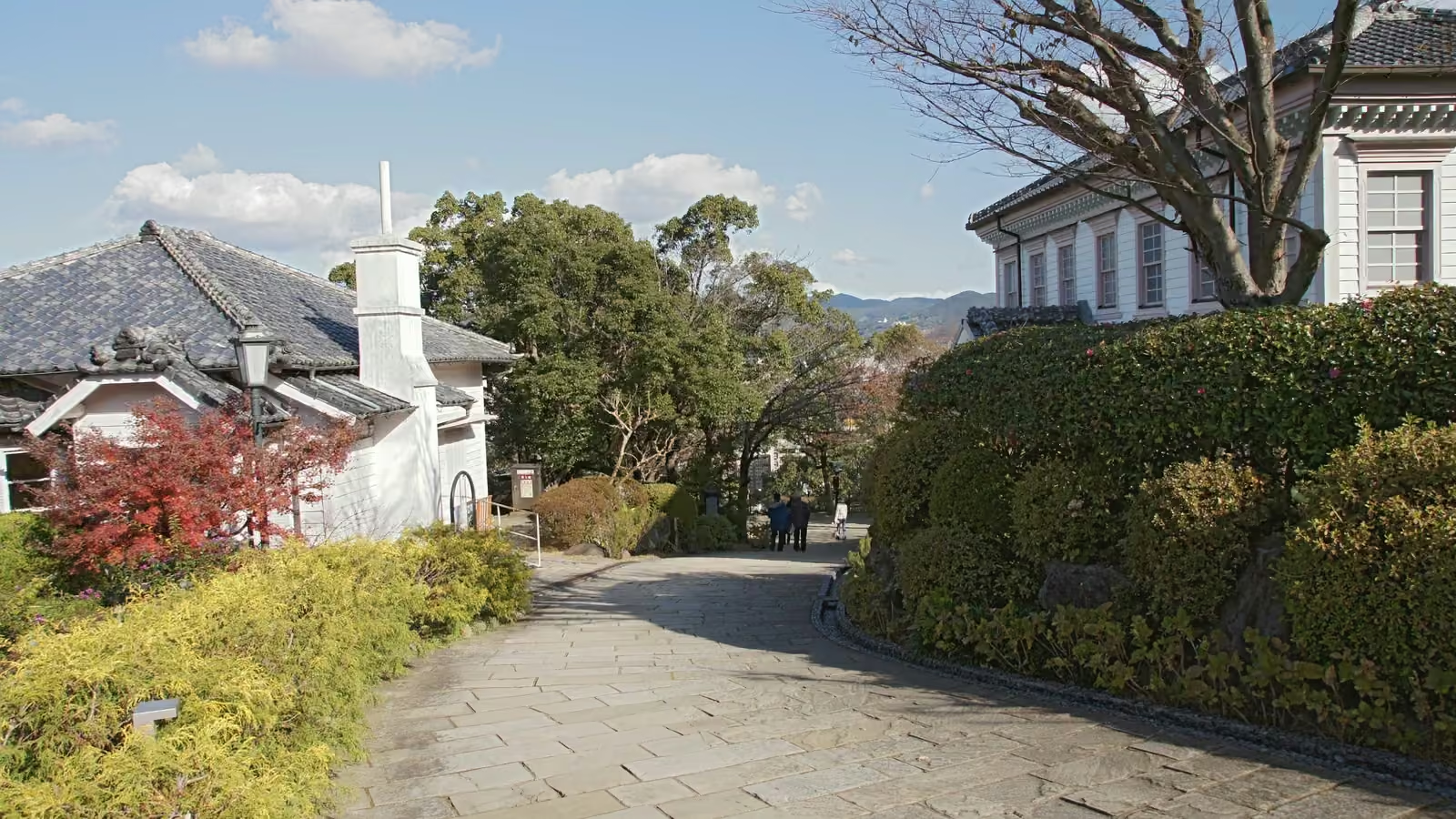
Glover Garden on the Minamiyamate hillside
Glover Garden gathers Meiji-era Western houses, with the former Glover House at its centre, on the slope above Nagasaki harbour. It opens at 08:00 and, on set dates, stays open into the evening.
Nearest stops: Ishibashi, the terminus of the Nagasaki Electric Tramway, and Oura Tenshudo-shita on Nagasaki Bus. The garden has no parking of its own.[1] Price: Adults 1,300 yen (about USD 8); children (elementary to high school) 650 yen (about USD 4).[2] Hours: 08:00 to 18:00, last entry 20 minutes before closing. Night openings on set dates in some seasons.[2]
USD figures are approximate, converted at the ECB euro reference rates of 13 Nov 2026.
- JanHigh 51°F 11°CLow 39°F 4°C
- FebHigh 54°F 12°CLow 40°F 5°C
- MarHigh 60°F 15°CLow 46°F 8°C
- AprHigh 68°F 20°CLow 53°F 12°C
- MayHigh 75°F 24°CLow 61°F 16°C
- JunHigh 80°F 27°CLow 68°F 20°C
- JulHigh 87°F 30°CLow 76°F 25°C
- AugHigh 89°F 32°CLow 78°F 25°C
- SepHigh 84°F 29°CLow 71°F 22°C
- OctHigh 75°F 24°CLow 62°F 17°C
- NovHigh 65°F 19°CLow 52°F 11°C
- DecHigh 56°F 13°CLow 43°F 6°C
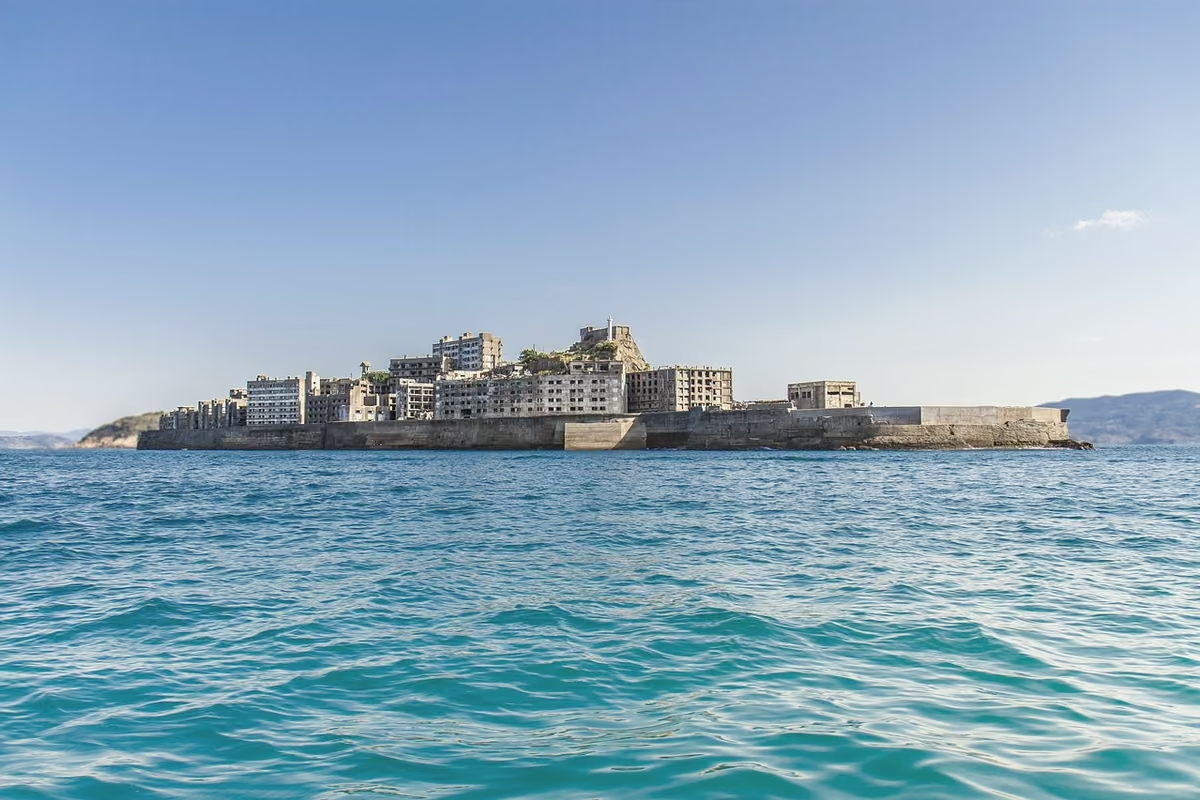
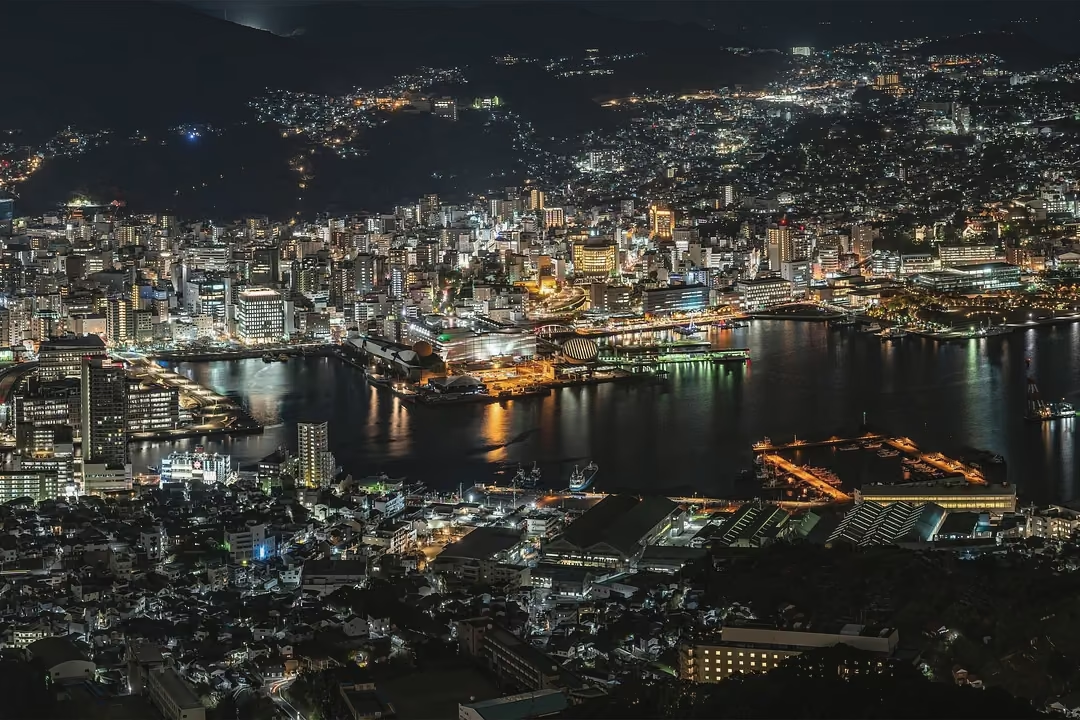
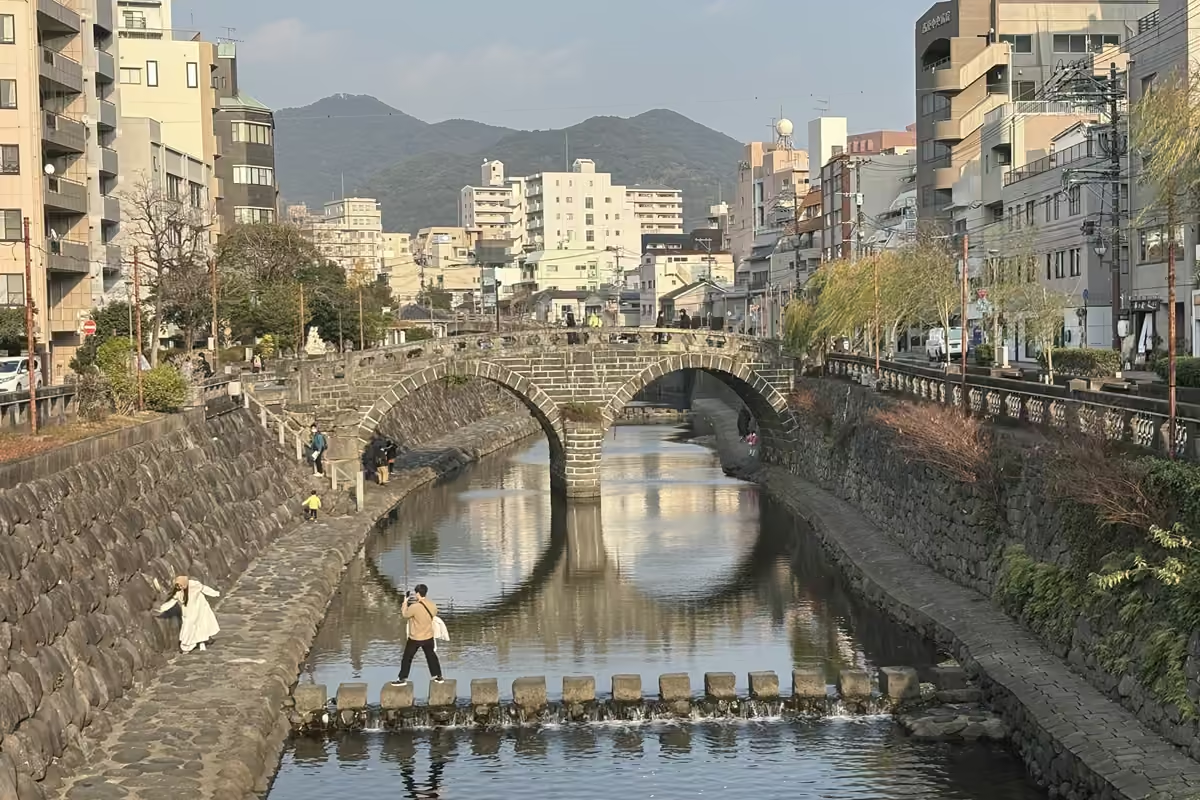
Nagasaki in pictures
4 photographs, each with its photographer and licence.


Jump to
Highlights
Glover Garden
Meiji-era Western residences, among them the former Glover House, on the Minamiyamate hillside above the harbour.
Adults 1,300 yen (about USD 8); children (elementary to high school) 650 yen (about USD 4).[2]08:00 to 18:00, last entry 20 minutes before closing; later night openings on set dates.[2]Official site
Nagasaki Atomic Bomb Museum
The museum of the atomic bombing of Nagasaki, in Hirano-machi.
Permanent exhibition 200 yen (about USD 1.5) for visitors 15 and over; high school age and under free. Audio guide in 12 languages, 160 yen (about USD 1).[14]April and September to March 08:30 to 17:30, May to August 08:30 to 18:30, 7 to 9 August 08:30 to 20:00; entry until 30 minutes before closing. Closed 29 to 31 December.[14]Official site
Nagasaki National Peace Memorial Hall for the Atomic Bomb Victims
The national memorial hall for the victims, in Hirano-machi, with survivor testimonies on film and in writing.
Free.[20]April 08:30 to 17:30, May to August 08:30 to 18:30 (to 20:00 from 7 to 9 August), September to March 08:30 to 17:30. Closed 29 to 31 December.[20]Official site
Dejima
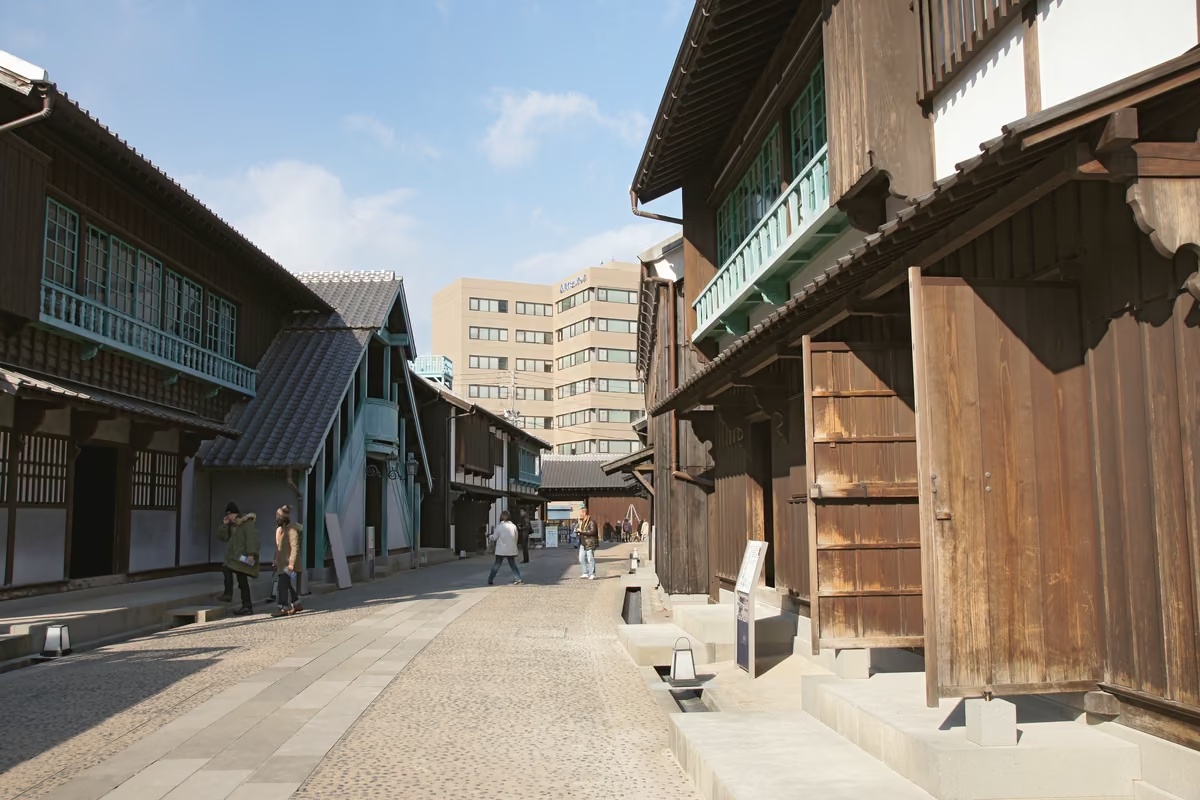
The site of the Dutch trading post of the Edo period, in central Nagasaki.
Adults 1,100 yen (about USD 7); elementary to high school 550 yen (about USD 3.5). No group discount and no re-entry.[13]08:00 to 21:00, last entry 20:40, open all year; some buildings may close for maintenance.[13]Cash, major cards, Suica and other transit IC cards, and several QR payment apps are accepted.[13]Official site
Gunkanjima landing tour
A boat tour to Hashima (Gunkanjima), the abandoned coal-mining island off Nagasaki, with a landing when the sea allows.
Standard plan: adults 5,500 yen (about USD 34) on weekdays, 6,000 yen (about USD 38) on weekends, holidays and school breaks; junior and senior high 4,500 and 5,000 yen (about USD 31); elementary 3,000 and 3,500 yen (about USD 22). The island landing fee is extra.[15]Morning tour leaves Tokiwa pier about 10:30 and returns about 13:05; afternoon tour leaves about 13:40 and returns about 16:10. Check-in at the Gunkanjima Digital Museum from 09:00 and 10:30.[15]Online reservation only, no waiting list; children under 3 cannot board.[15]Official site
Nagasaki Museum of History and Culture
The museum of Nagasaki history and culture, with the Ginrei restaurant.
Permanent exhibition: adults 630 yen (about USD 4), elementary to high school 310 yen (about USD 2).[18]April to November 08:30 to 19:00, December to March 08:30 to 18:00, 1 to 3 January 10:00 to 18:00; last entry 30 minutes before closing. Closed the 1st and 3rd Monday (the next day if a holiday) and 28 to 31 December.[18]Official site
Nagasaki Prefectural Art Museum
The prefectural art museum, with a gallery of modern Spanish art.
Entry to the building free. Collection galleries: adults 420 yen (about USD 2.5), university students and over-70s 310 yen (about USD 2), school pupils 210 yen (about USD 1.5). Special exhibitions are priced separately.[19]10:00 to 20:00 (to 18:00 on 2 and 3 January). Closed the 2nd and 4th Monday (Tuesday if the Monday is a holiday) and 29 December to 1 January.[19]Official site
Nagasaki Confucius Shrine and Historical Museum of China
A Confucian shrine with a museum of Chinese history, in Oura.
Adults 880 yen (about USD 5.5), high school 550 yen (about USD 3.5), elementary and junior high 440 yen (about USD 3), museum included. No group discount.[21]09:30 to 18:00, last entry 17:30.[21]Official site
Kofukuji
An Obaku Zen temple of Chinese style, linked with the monk Ingen.
Adults 500 yen (about USD 3), junior and senior high 200 yen (about USD 1.5), elementary 100 yen (about USD 0.63).[22]08:00 to 17:00, open every day as a rule.[22]Official site
First 48 hours
- Before you fly
Register in Visit Japan Web. Book a Gunkanjima landing tour ahead: Gunkanjima Concierge takes reservations only, and no waiting list.
- Arrival, Nagasaki Airport
Take the airport bus from stop 5 (nonstop, by Shinchi Chinatown) or stop 4 (by Urakami) to Nagasaki Ekimae, 1,400 yen.
- Day 1
The Atomic Bomb Museum from 08:30 and the National Peace Memorial Hall next to it, then Dejima, open to 21:00 with last entry at 20:40.
- Day 2
The morning Gunkanjima tour (boarding at Tokiwa pier about 10:10, back about 13:05), then Glover Garden until 18:00.
Luggage storage by the hour sits near most main stations. Bounce
Where to stay
Nagasaki Station
Where both airport bus routes stop, by the main railway station.
Airport bus from Nagasaki Airport, 1,400 yen (about USD 9), from stop 5 (nonstop) or stop 4 (via Urakami).[10]
Shinchi Chinatown and Dejima
The first stop of the nonstop airport bus, a short walk from the Dejima site.
The nonstop airport bus calls at Shinchi Chinatown before Nagasaki Ekimae, 1,400 yen (about USD 9).[10]
Minamiyamate and Oura
The hillside of Glover Garden and the Confucius Shrine, by the Ishibashi tram terminus.
Ishibashi tram terminus and the Oura Tenshudo-shita bus stop are the nearest stops for Glover Garden.[1]
Stays in these areas can be compared on one site. Expedia
Airport to city
Nagasaki Airport, served by airport buses into Nagasaki city[10] NGS
| Option | Fare |
|---|---|
| Airport bus run by Nagasaki Ken-ei Bus and Nagasaki Bus: nonstop by the Dejima road to Shinchi Chinatown, Nagasaki Ekimae and Cocowalk Morimachi (stop 5), or by Showamachi and Urakami (stop 4).[10]bus | 1,400 yen (about USD 9) one way to Shinchi Chinatown or Nagasaki Ekimae; children 700 yen (about USD 4.5).[10] |
A pre-booked transfer meets late arrivals at a fixed price. Welcome Pickups
When to go
Warmest month August, average high 89°F (32°C). Coolest month January, average low 39°F (4°C).[16]
All 12 months
| Month | Weather | Crowds | Holidays | Closures |
|---|---|---|---|---|
| January | Highs 10.7 C (51 F), lows 4.0 C (39 F), 63.1 mm of precipitation (JMA normals 1991-2020).[16] | New Year's Day (1 Jan) and Coming of Age Day (11 Jan 2027) are national holidays.[17] | 1 January New Year's Day; 11 January 2027 Coming of Age Day.[17] | The Nagasaki Museum of History and Culture opens 10:00 to 18:00 from 1 to 3 January; the Prefectural Art Museum is closed on 1 January and closes at 18:00 on 2 and 3 January.[18][19] |
| February | Highs 12.0 C (54 F), lows 4.5 C (40 F), 84.0 mm of precipitation (JMA normals 1991-2020).[16] | National Foundation Day (11 Feb) and the Emperor's Birthday (23 Feb) are holidays.[17] | 11 February National Foundation Day; 23 February Emperor's Birthday.[17] | |
| March | Highs 15.3 C (60 F), lows 7.5 C (46 F), 123.2 mm of precipitation (JMA normals 1991-2020).[16] | Vernal Equinox Day (21 Mar 2027, with a substitute holiday on 22 Mar).[17] | 21 March 2027 Vernal Equinox Day; 22 March 2027 substitute holiday.[17] | |
| April | Highs 19.9 C (68 F), lows 11.7 C (53 F), 153.0 mm of precipitation (JMA normals 1991-2020).[16] | Showa Day (29 Apr) opens the Golden Week run of holidays.[17] | 29 April Showa Day.[17] | |
| May | Highs 23.9 C (75 F), lows 16.1 C (61 F), 160.7 mm of precipitation (JMA normals 1991-2020).[16] | Golden Week: Constitution Memorial Day (3 May), Greenery Day (4 May) and Children's Day (5 May).[17] | 3 May Constitution Memorial Day; 4 May Greenery Day; 5 May Children's Day.[17] | |
| June | Highs 26.5 C (80 F), lows 20.2 C (68 F), 335.9 mm of precipitation (JMA normals 1991-2020).[16] | No national holiday in June.[17] | ||
| July | Highs 30.3 C (87 F), lows 24.5 C (76 F), 292.7 mm of precipitation (JMA normals 1991-2020).[16] | Marine Day (19 Jul 2027).[17] | 19 July 2027 Marine Day.[17] | |
| August | Highs 31.9 C (89 F), lows 25.3 C (78 F), 217.9 mm of precipitation (JMA normals 1991-2020).[16] | Mountain Day (11 Aug) is a national holiday.[17] | 11 August Mountain Day.[17] | From 7 to 9 August the Atomic Bomb Museum and the National Peace Memorial Hall stay open to 20:00.[14][20] |
| September | Highs 28.9 C (84 F), lows 21.9 C (71 F), 186.6 mm of precipitation (JMA normals 1991-2020).[16] | Respect for the Aged Day (20 Sep 2027) and Autumnal Equinox Day (23 Sep).[17] | 20 September 2027 Respect for the Aged Day; 23 September Autumnal Equinox Day.[17] | |
| October | Highs 24.1 C (75 F), lows 16.5 C (62 F), 102.1 mm of precipitation (JMA normals 1991-2020).[16] | Sports Day (11 Oct 2027).[17] | 11 October 2027 Sports Day.[17] | |
| November | Highs 18.5 C (65 F), lows 11.0 C (52 F), 100.7 mm of precipitation (JMA normals 1991-2020).[16] | Culture Day (3 Nov) and Labour Thanksgiving Day (23 Nov).[17] | 3 November Culture Day; 23 November Labour Thanksgiving Day.[17] | |
| December | Highs 13.1 C (56 F), lows 6.0 C (43 F), 74.8 mm of precipitation (JMA normals 1991-2020).[16] | No national holiday in December.[17] | The Atomic Bomb Museum and the Peace Memorial Hall close 29 to 31 December, the Museum of History and Culture 28 to 31 December, and the Prefectural Art Museum from 29 December.[14][20][18][19] |
What things cost
| Item | What it costs |
|---|---|
| Airport bus, Nagasaki Airport to Nagasaki Ekimae (adult) | 1,400 yen (about USD 9) one way[10] |
| Glover Garden (adult) | 1,300 yen (about USD 8)[2] |
| Dejima (adult) | 1,100 yen (about USD 7)[13] |
| Nagasaki Atomic Bomb Museum (15 and over) | 200 yen (about USD 1.5); high school age and under free[14] |
| Gunkanjima landing tour, standard plan (adult) | 5,500 yen (about USD 34) on weekdays, 6,000 yen (about USD 38) on weekends, holidays and school breaks, plus the island landing fee[15] |
Safety
Japan Visitor Hotline 050-3816-2787, 24 hours, in English, Chinese, Korean and Japanese, for illness, disasters and other emergencies. In a large earthquake indoors, stay put and follow staff; near the coast, move to higher ground.[12]
Scams to watch for
- Touts who steer you to a bar: Smartraveller says this is illegal in Japan and is linked to drink spiking and overcharging.[11]
Common mistakes
Myth: You can turn up at the pier for a Gunkanjima landing.
Actually: Gunkanjima Concierge tours are by advance online reservation only, with no waiting list; children under 3 cannot board.[15]
Myth: The Atomic Bomb Museum costs the same for everyone.
Actually: Since April 2026 the permanent exhibition costs 200 yen (about USD 1.5) for everyone 15 and over, with no group rate, and is free for high school age and under.[14]
Myth: Dejima lets you leave and come back on one ticket.
Actually: There is no re-entry; the ticket is for one visit (adults 1,100 yen (about USD 7)).[13]
Myth: The Museum of History and Culture is closed every Monday.
Actually: It closes on the 1st and 3rd Monday of each month (the next day when that Monday is a holiday) and 28 to 31 December.[18]
Myth: The Prefectural Art Museum charges to go in.
Actually: Entry to the building is free; the collection galleries cost 420 yen (about USD 2.5) for adults and the special exhibitions are priced separately.[19]
Sources
Show all sources (22)
- Glover Garden: access (Japanese), Glover Garden.
- Glover Garden: visitor guide (Japanese), Glover Garden.
- Visit Japan Web (policy page), Digital Agency, Government of Japan.
- Customs procedures for passengers, Japan Customs, Ministry of Finance.
- Credit cards, Japan National Tourism Organization.
- Tipping in Japan, Japan National Tourism Organization.
- Tax-free shopping: the refund method for travellers (Japanese), Japan Tourism Agency, MLIT.
- Prepaid SIM for Travel, SoftBank.
- Wi-Fi and connectivity, Japan National Tourism Organization.
- Access: buses (Japanese), Nagasaki Airport Building.
- Japan travel advice and safety, Australian Government, Smartraveller.
- Emergencies, Japan National Tourism Organization.
- Dejima: visitor information (Japanese), Nagasaki City, Dejima.
- Nagasaki Atomic Bomb Museum: guide (Japanese), Nagasaki City.
- Gunkanjima Concierge: tours and fares (Japanese), Gunkanjima Concierge.
- Climate normals 1991-2020, Nagasaki (monthly), Japan Meteorological Agency.
- National holidays (list for 2026 and 2027), Cabinet Office, Government of Japan.
- Nagasaki Museum of History and Culture (Japanese), Nagasaki Museum of History and Culture.
- Nagasaki Prefectural Art Museum: hours, closed days and fees (Japanese), Nagasaki Prefectural Art Museum.
- Nagasaki National Peace Memorial Hall for the Atomic Bomb Victims (Japanese), Nagasaki National Peace Memorial Hall.
- Nagasaki Confucius Shrine and Historical Museum of China (Japanese), Nagasaki Confucius Shrine.
- Kofukuji: visiting (Japanese), Kofukuji.