

Tokyo
For: First-time visitors landing at Narita or Haneda who want to pick a base, get into the city and book the handful of sights that need tickets in advance. Tokyo has two airports with rail and bus links into the city, a Monday closing habit at museums and gardens, and a few sights (Ghibli Museum, teamLab Planets) that sell out in advance.
Entry rules depend on your passport. The rules for UK and Canadian passports are under Before you go on the Japan page.
- Currency
- Japanese yen[4]Banknotes of 10,000, 5,000, 2,000 and 1,000 yen; coins of 500, 100, 50, 10, 5 and 1 yen.
- Time zone
- UTC+9, all year
- Plug
- 100 volts AC everywhere[3][2]50 Hz in eastern Japan and 60 Hz in the west including Kyoto and Osaka. Sockets take two flat parallel prongs. Dual-voltage chargers work; other devices may need a step-down transformer.
- Advisories
- US: Level 1UK: FCDO does not advise against travel to any part of JapanCanada: Level 1US advice checked Each government's advice
Quick answers
- How do I get from the airport?
- NRT: Train: Keisei Skyliner to Nippori and Keisei Ueno (all seats reserved). Checked .
- Time: As little as 36 minutes to central Tokyo. Checked .
- Fare: Adult base fare 1,280 yen by ticket or 1,267 yen by IC card, plus a 1,300 yen Skyliner ticket. Checked .
- Every option is under Airport to city.
- Is it safe?
- Advice from each government for Japan:
- US: Level 1. Checked .
- UK: FCDO does not advise against travel to any part of Japan. Checked .
- Canada: Level 1. Checked .
- Do I need a visa?
That depends on your passport. The rules for US, UK, Canadian and Australian passports are in the Japan guide.
- What does a day cost?
- The guide gives no daily total. Day tickets and daily caps from its cost table:
- Toei 1-Day Pass (adult): 700 yen for a day on the Toei Subway, Toei buses, the Tokyo Sakura Tram and the Nippori-Toneri Liner. Checked .
i

The one thing
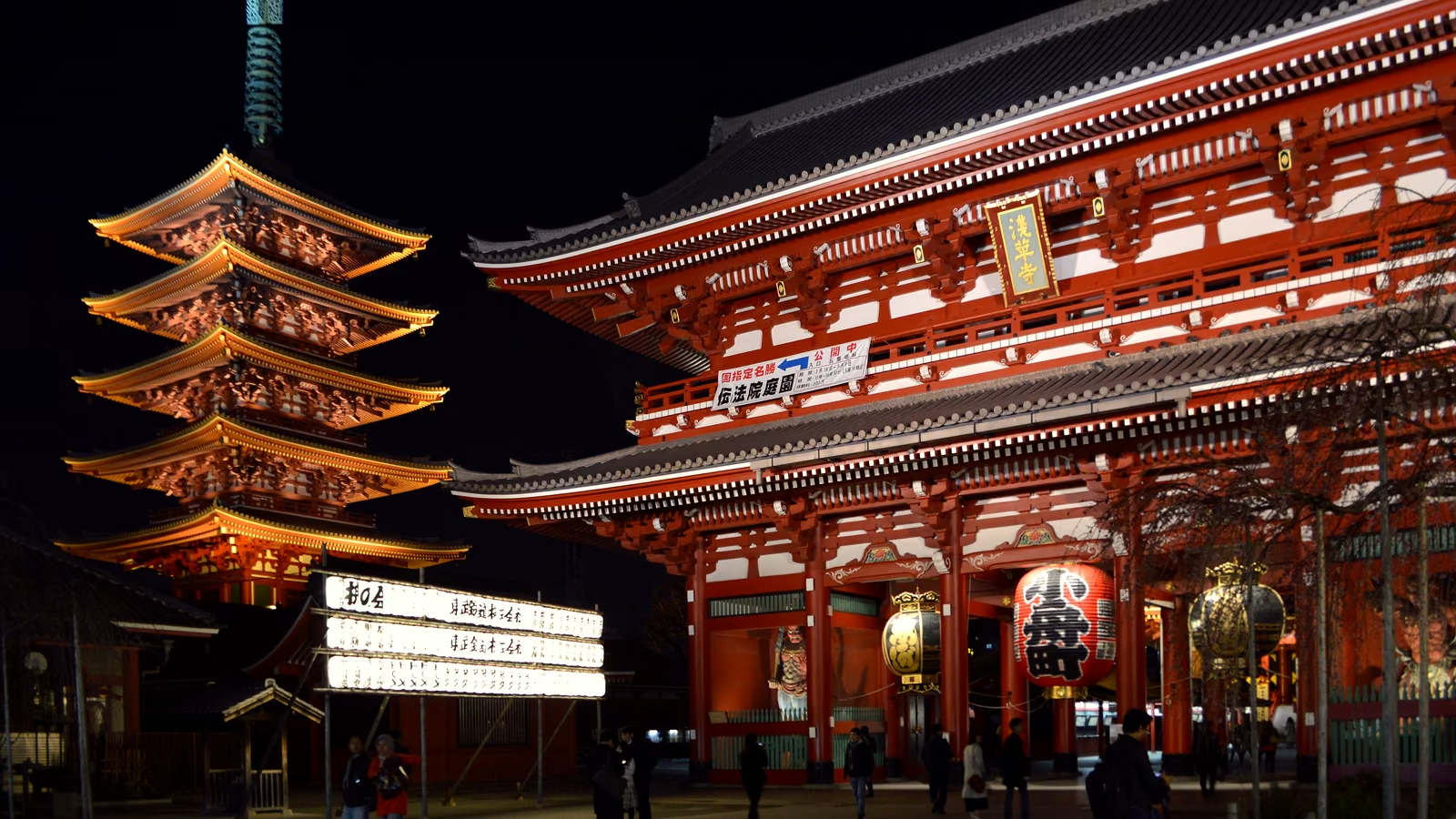
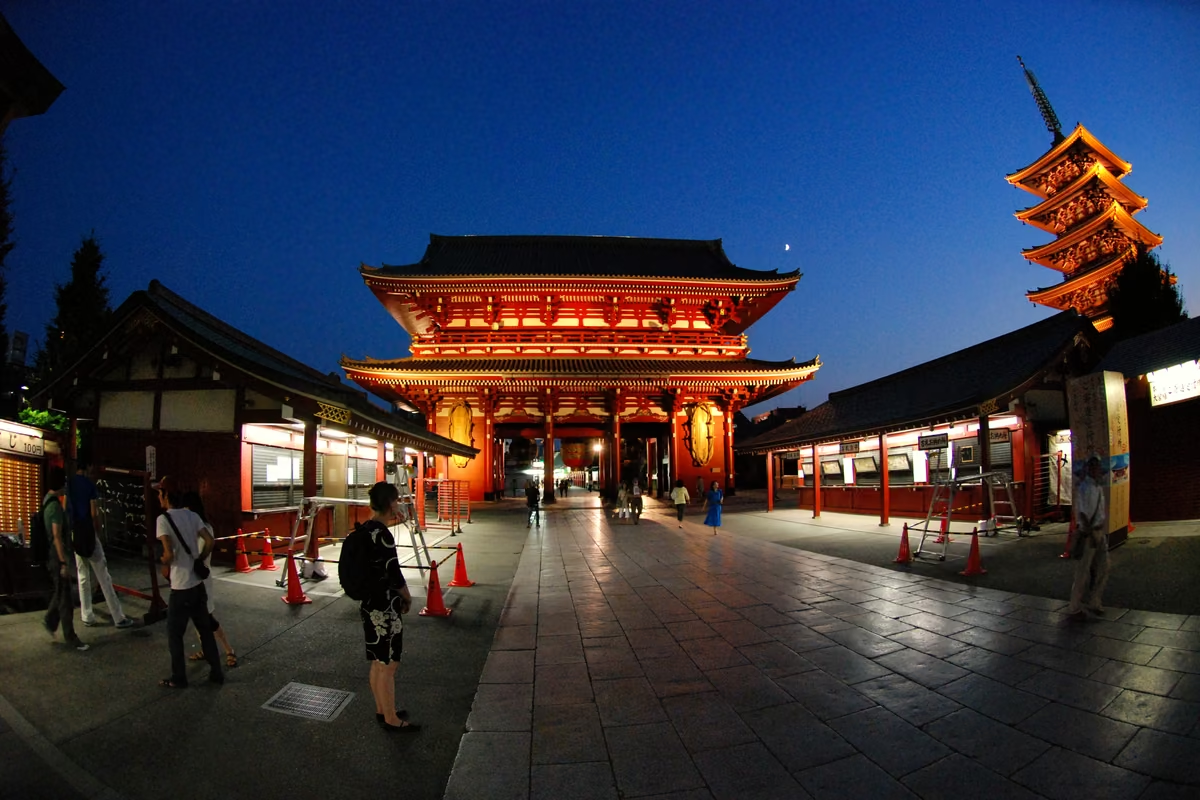
Senso-ji at opening time, Asakusa
Tokyo's oldest temple opens at six in the morning (half past in winter), long before the Nakamise stalls, so the Kaminarimon gate and the main hall are close to empty. The temple charges no admission, and the incense, the lantern and the pagoda are the same whether you come at dawn or at noon.
Go before the stalls open; walk through Kaminarimon and up Nakamise to the main hall. No ticket and no booking.[1] Price: No admission charge is listed by the temple.[1] Hours: Main hall 06:00 to 17:00; opens 06:30 from October to March.[1] Booking: None.[1] Find guided visits on Viator (opens Viator in a new tab) paid linkSome links earn us a commission. How we work
- JanHigh 50°F 10°CLow 34°F 1°C
- FebHigh 52°F 11°CLow 36°F 2°C
- MarHigh 58°F 14°CLow 41°F 5°C
- AprHigh 67°F 19°CLow 50°F 10°C
- MayHigh 74°F 24°CLow 58°F 15°C
- JunHigh 79°F 26°CLow 65°F 19°C
- JulHigh 86°F 30°CLow 72°F 22°C
- AugHigh 88°F 31°CLow 74°F 24°C
- SepHigh 82°F 28°CLow 69°F 20°C
- OctHigh 72°F 22°CLow 59°F 15°C
- NovHigh 62°F 17°CLow 48°F 9°C
- DecHigh 54°F 12°CLow 39°F 4°C
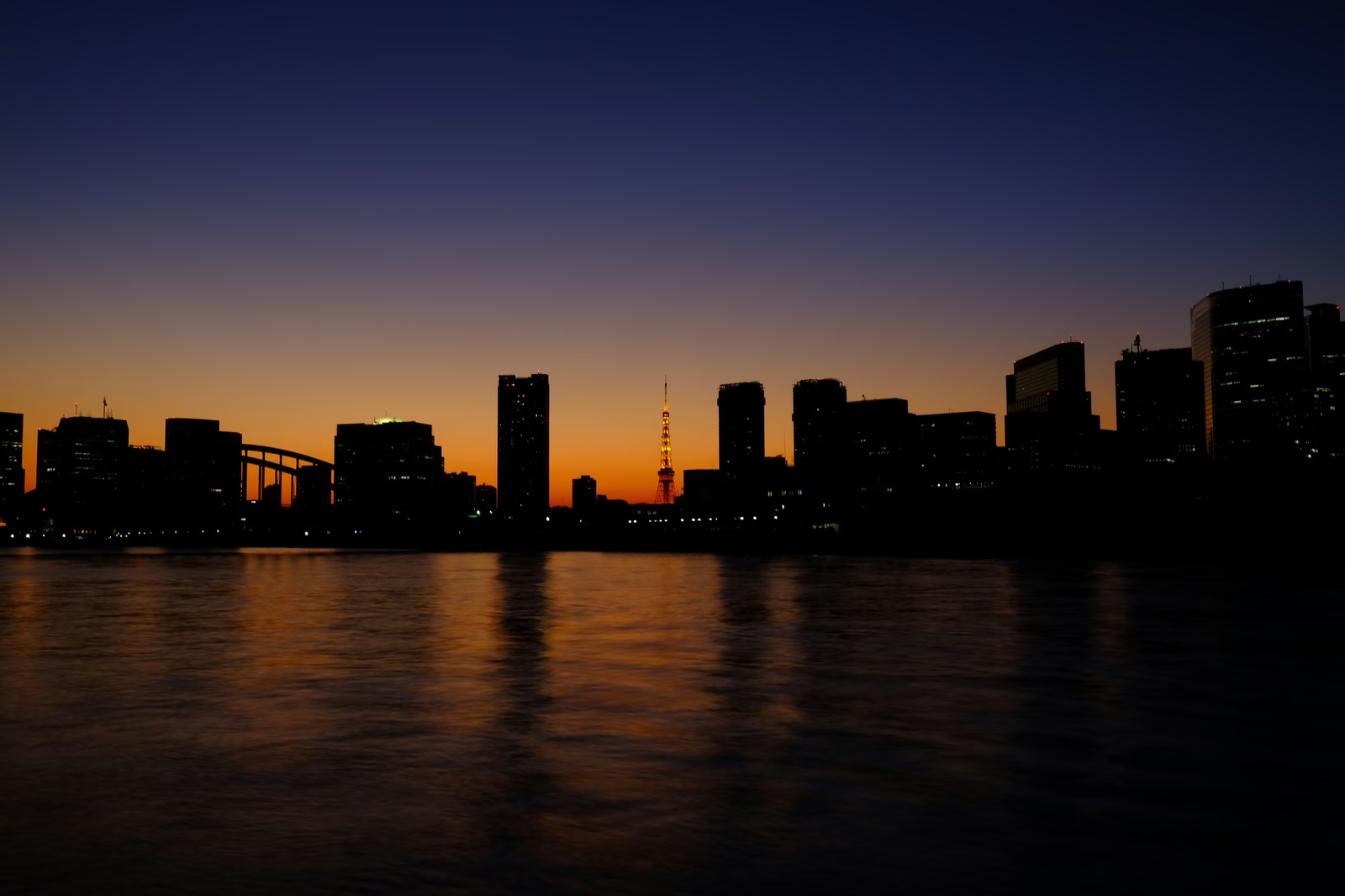
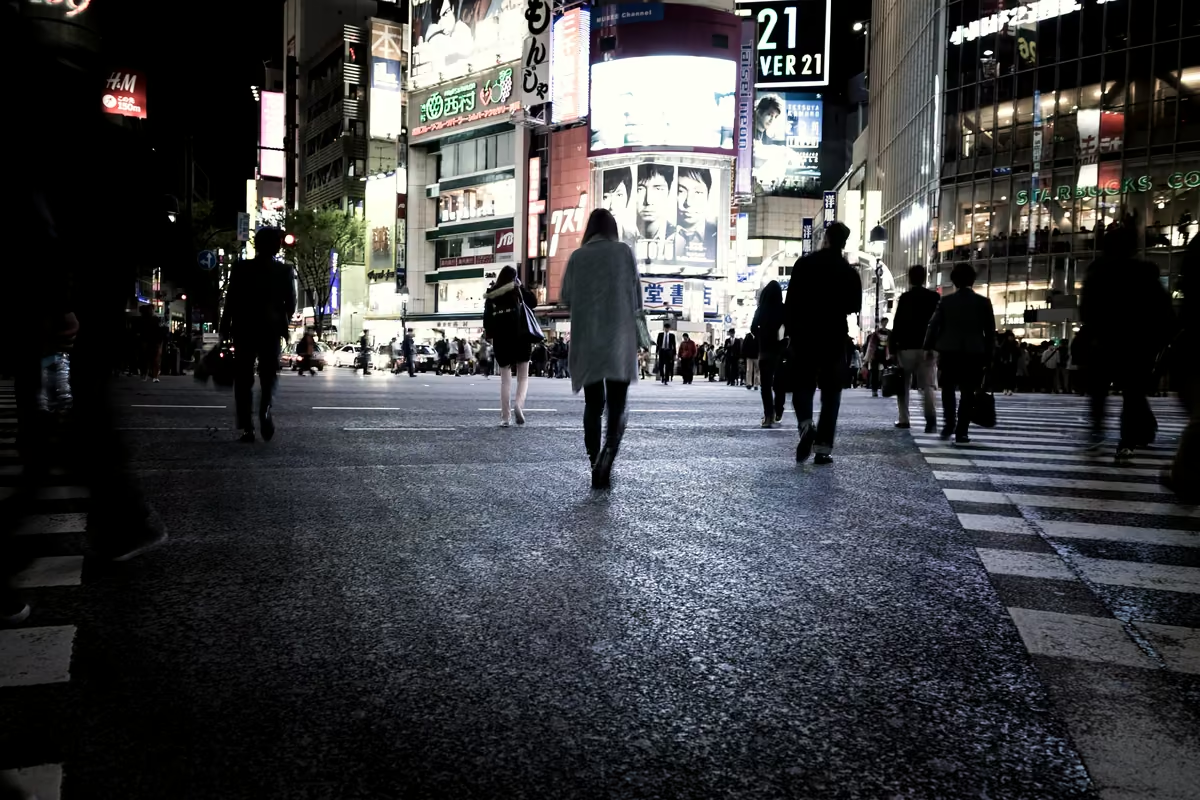
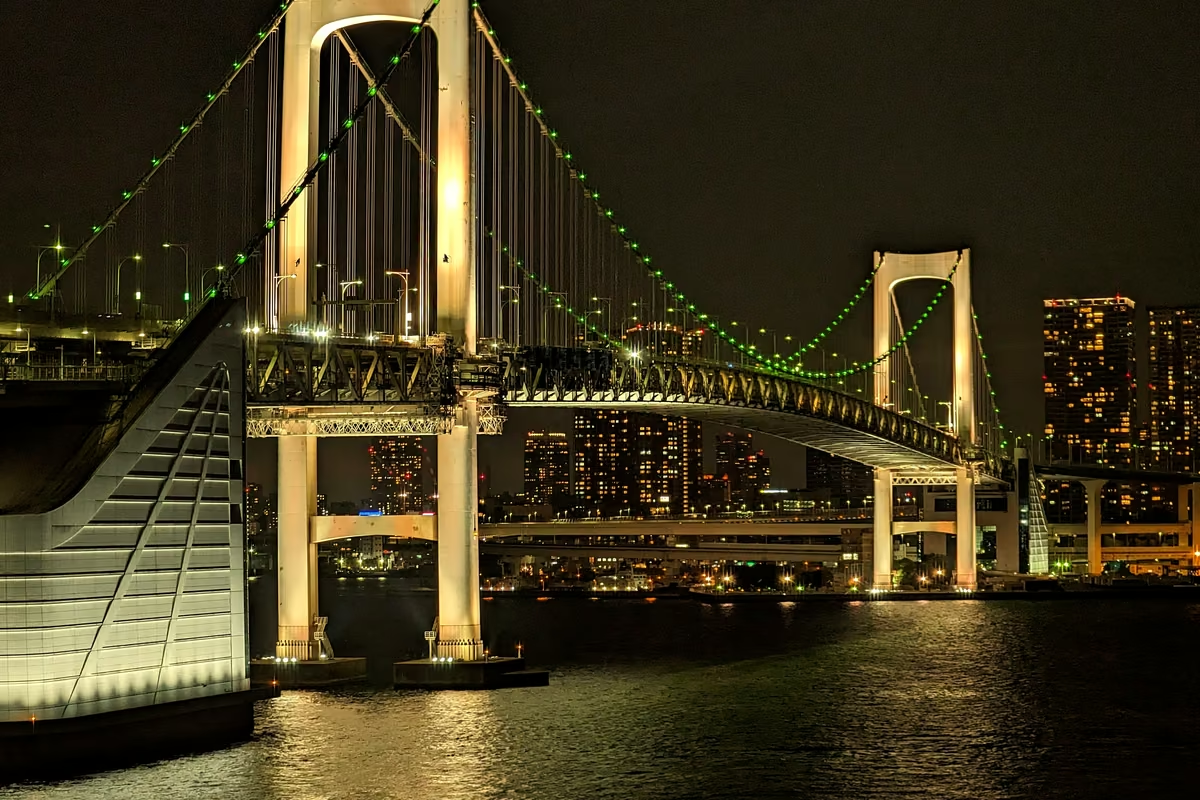
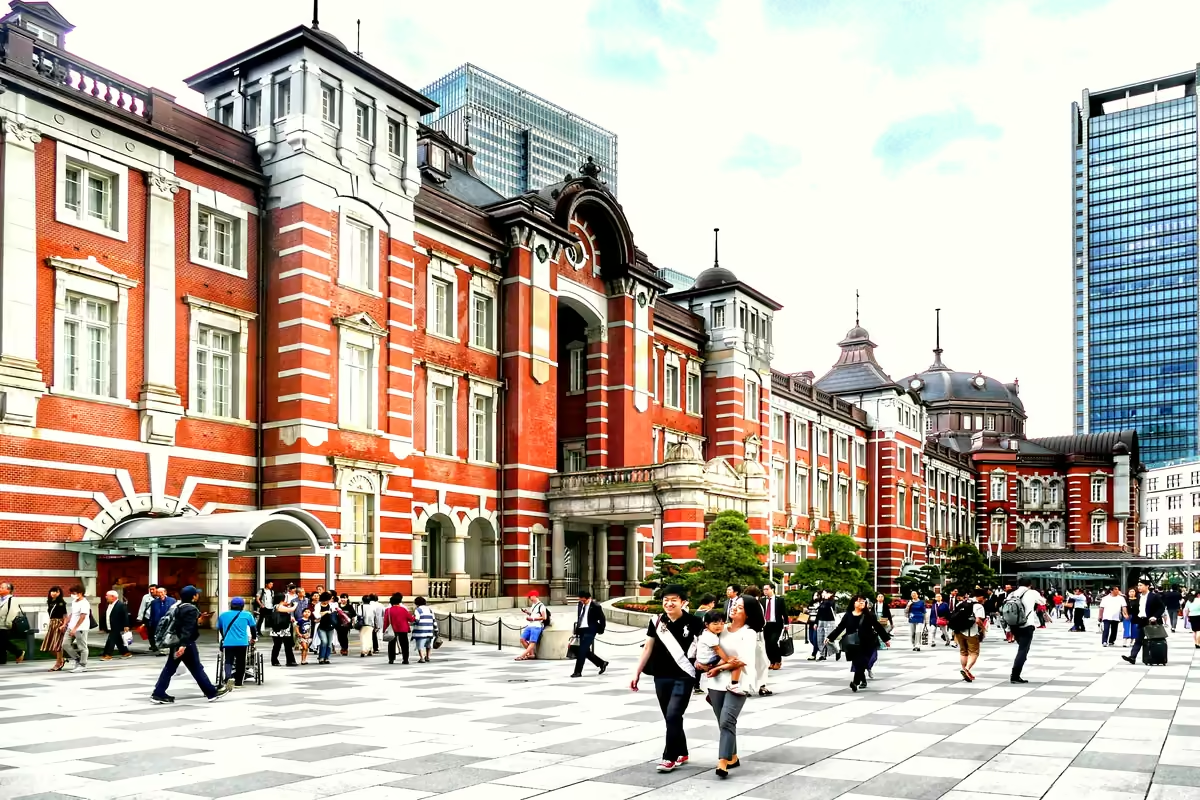
Tokyo in pictures
7 photographs, each with its photographer and licence.







Jump to
Highlights
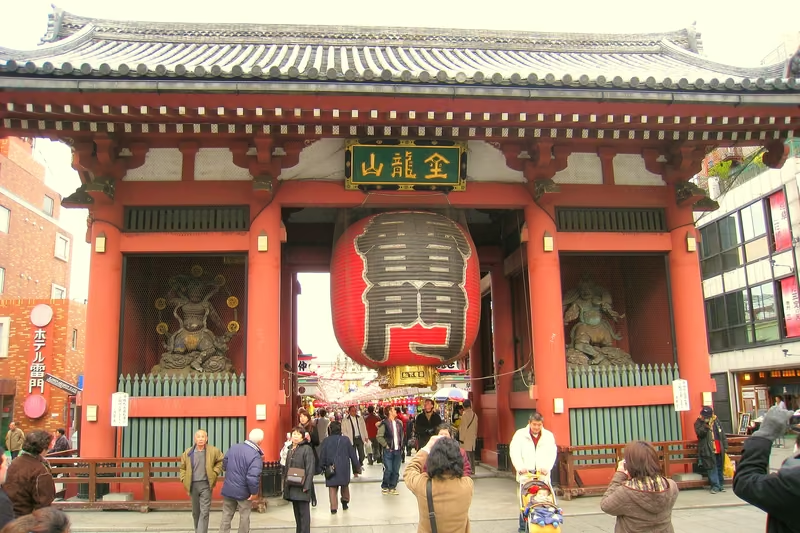
Photo: Daderot, Wikimedia Commons (Public domain) Senso-ji, Asakusa, Tokyo
Tokyo's oldest temple, with the Kaminarimon gate and Nakamise approach.
No admission charge is listed by the temple.[1]Main hall 06:00 to 17:00; opens 06:30 from October to March.[1]None.[1]Official site
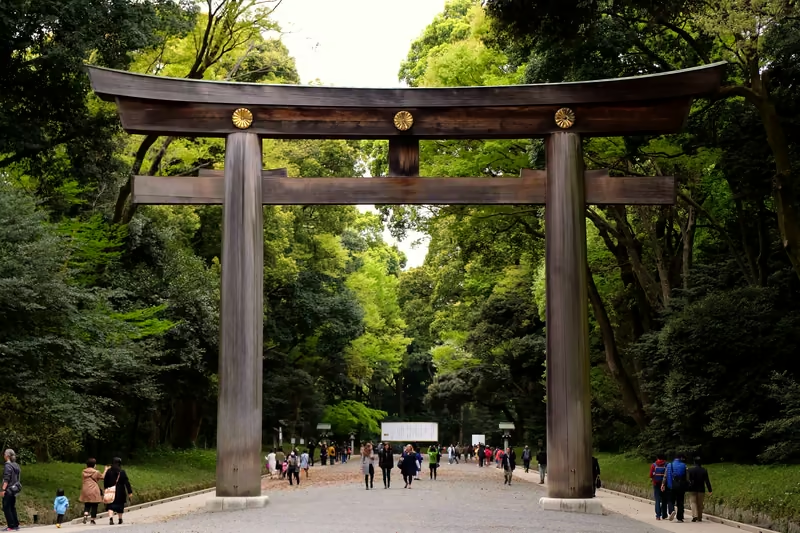
Photo: jessedyck, Wikimedia Commons (CC0 1.0) Meiji Jingu, Harajuku, Tokyo
Shinto shrine in a forested park next to Harajuku and Yoyogi.
Free.[48]Sunrise to sunset: 06:40 to 16:20 in January, 05:00 to 18:30 in June, 06:40 to 16:00 in December; facilities inside mostly 09:00 to 16:00.[48]None.[48]Official site
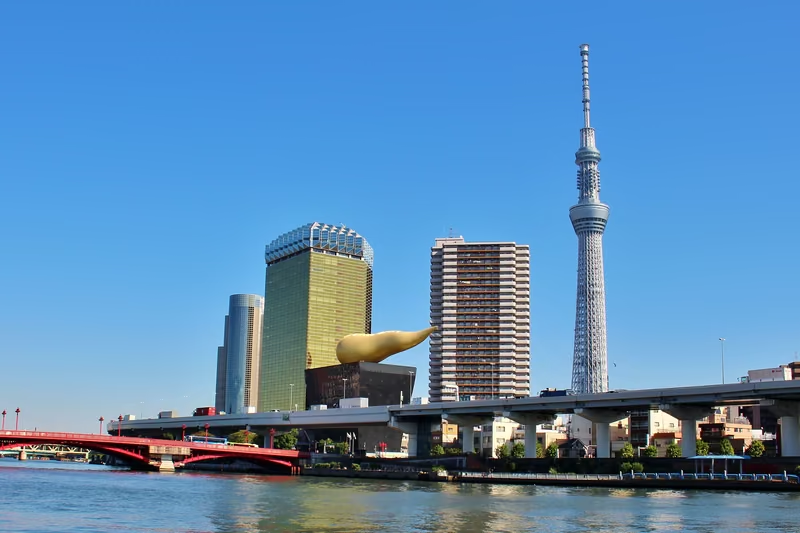
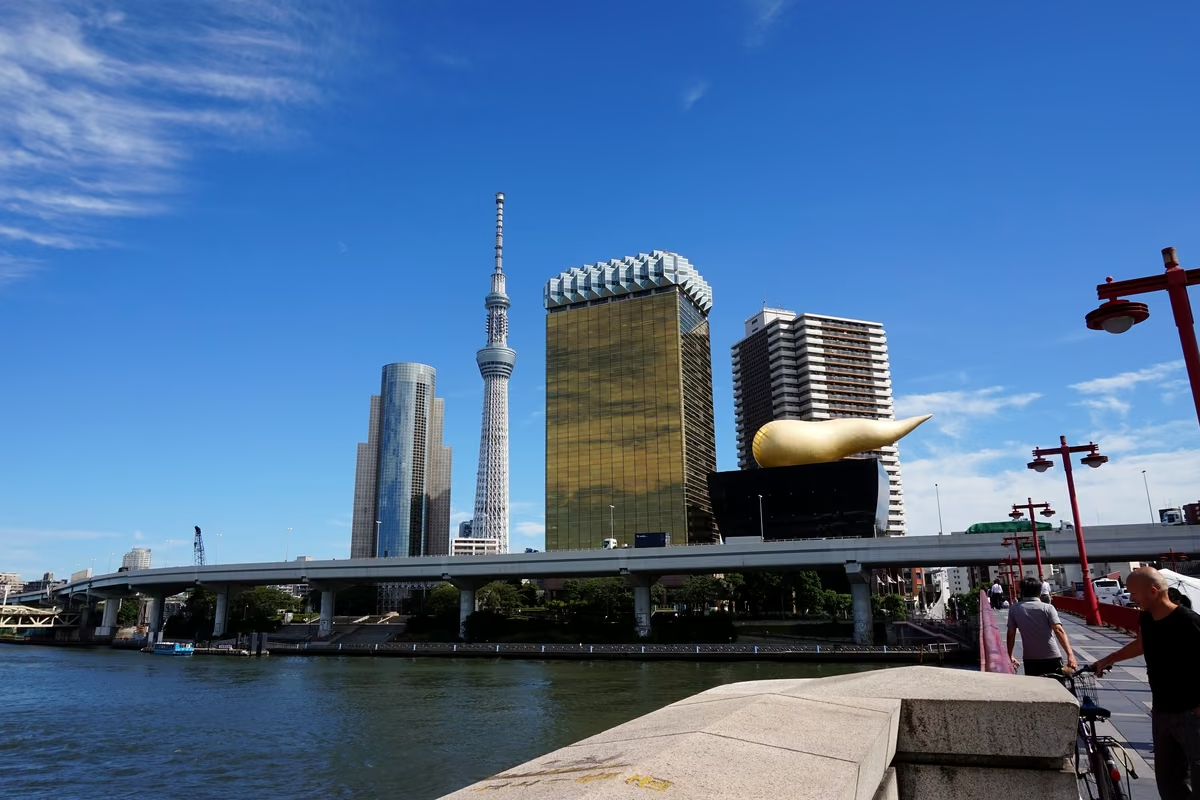
Photo: Yoshio Kohara, Wikimedia Commons (CC BY 3.0) Tokyo Skytree
634 m broadcast tower with observation decks at 350 m and 450 m.
Tembo Deck from 1,800 yen (about USD 11) (adult), deck plus Tembo Galleria from 3,000 yen (about USD 19); a 500 yen (about USD 3) service fee per ticket applies at the counter and machines on the day.[38]Observation decks 10:00 to 22:00, last entry 21:00; the operator's home page shows each day's hours and announces special opening hours.[49]Online purchase recommended and avoids the counter fee; the Enjoy Pack is advance reservation only.[38]Official site
teamLab Planets, Toyosu, Tokyo
Walk-through digital art museum, partly barefoot through water.
Entrance Pass 3,800 yen (about USD 24) (adults 18 and over).[50]Entry is by booked date and time.[50]Timed tickets sold in advance online, at Lawson Ticket and Seven-Eleven Ticket; the QR ticket is emailed two days before.[50]Official site
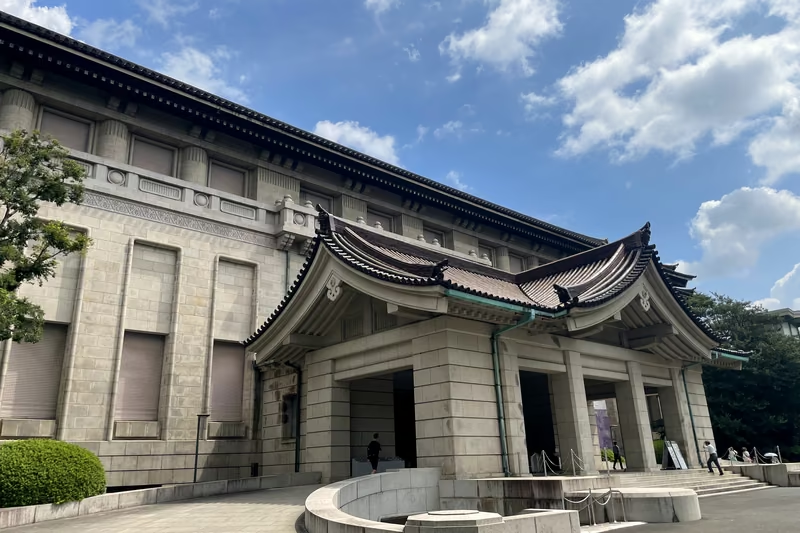
Photo: Eugene Ormandy, Wikimedia Commons (CC0 1.0) Tokyo National Museum, Ueno
Japan's largest collection of Japanese art and archaeology.
1,000 yen (about USD 6.5) regular exhibitions (adult); under 18 and over 70 free.[37]09:30 to 17:00; to 20:00 on Fridays, Saturdays and the Sundays before a Monday holiday; last entry 30 minutes before. Closed Mondays (open on holiday Mondays, closed the next day) and over the year-end holidays; check the museum calendar for the dates.[37]Not required; online tickets avoid counter queues of 30 minutes or more at busy times.[37]Official site
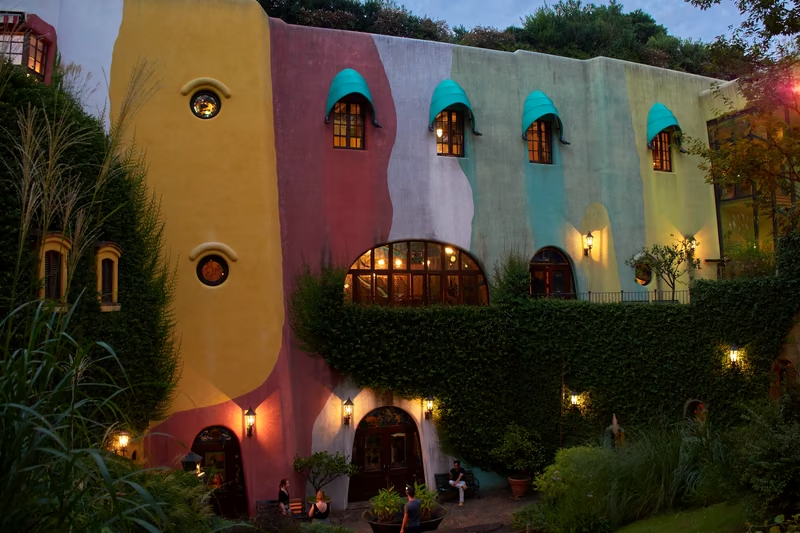
Photo: lumoplank, Wikimedia Commons (CC0 1.0) Ghibli Museum, Mitaka
Studio Ghibli's museum, 20 minutes from Shinjuku on the Chuo line plus a 15-minute walk or community bus.
1,000 yen (about USD 6.5) (adults 19 and over); community bus from Mitaka station 230 yen (about USD 1.5).[51][52]10:00 to 18:00, by booked entry time.[52]Advance reservation only; nothing is sold at the museum. Lawson Ticket releases the next month's tickets at 10:00 JST on the 10th of each month.[51]Official site
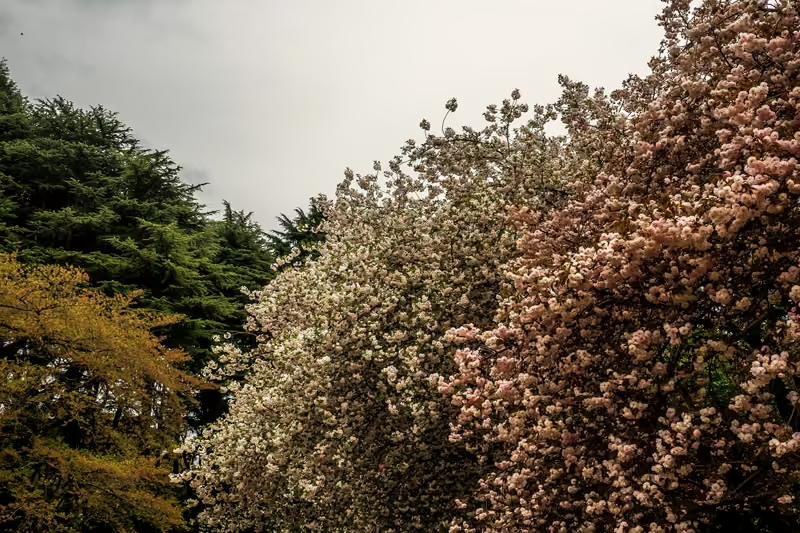
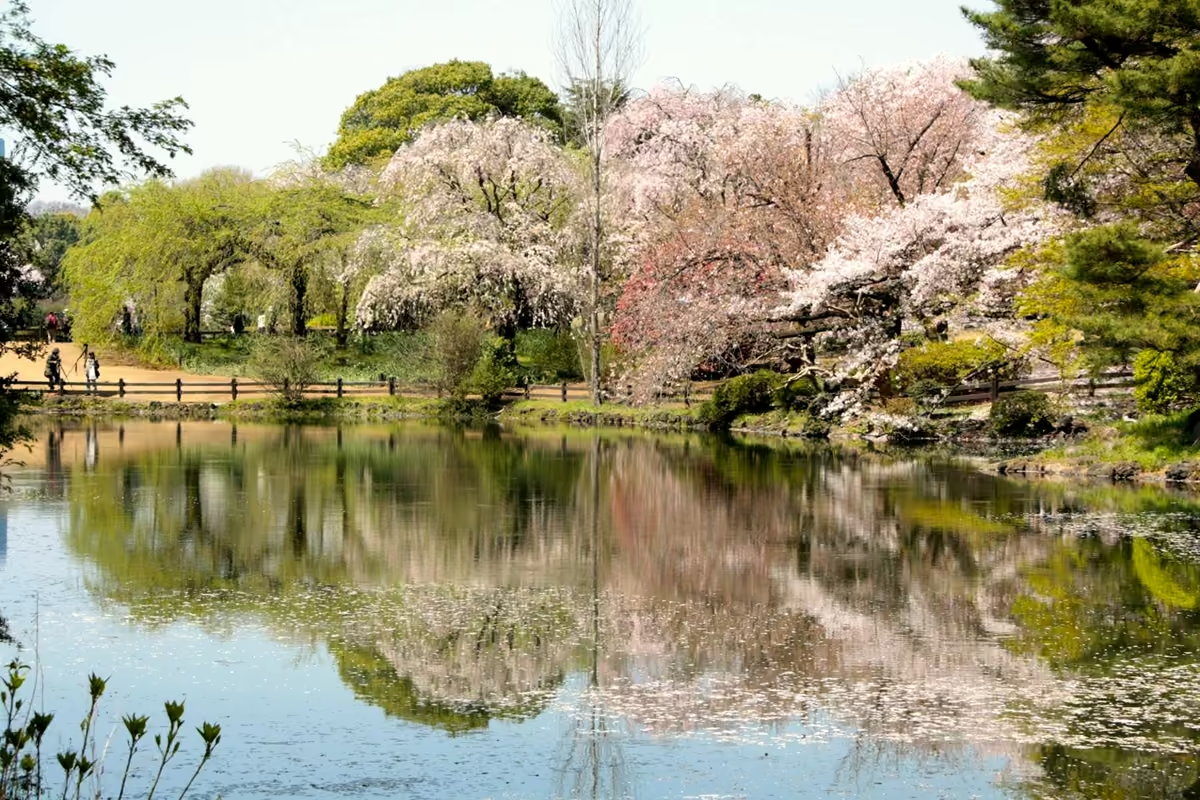
Photo: Ajay Suresh from New York, NY, USA, Wikimedia Commons (CC BY 2.0) Shinjuku Gyoen
National garden with Japanese, English and French sections beside Shinjuku station.
500 yen (about USD 3) (adult).[45]09:00 to 18:00 from 15 March to 30 September (to 19:00 from 11 June to 31 July); 09:00 to 16:30 from 1 October to 14 March; last entry 30 minutes before. Closed Mondays (next weekday if Monday is a holiday) except 25 March to 24 April and 1 to 15 November, and 29 December to 3 January.[45]Not normally required; weekends and holidays in cherry blossom season may need advance reservation.[45]Official site
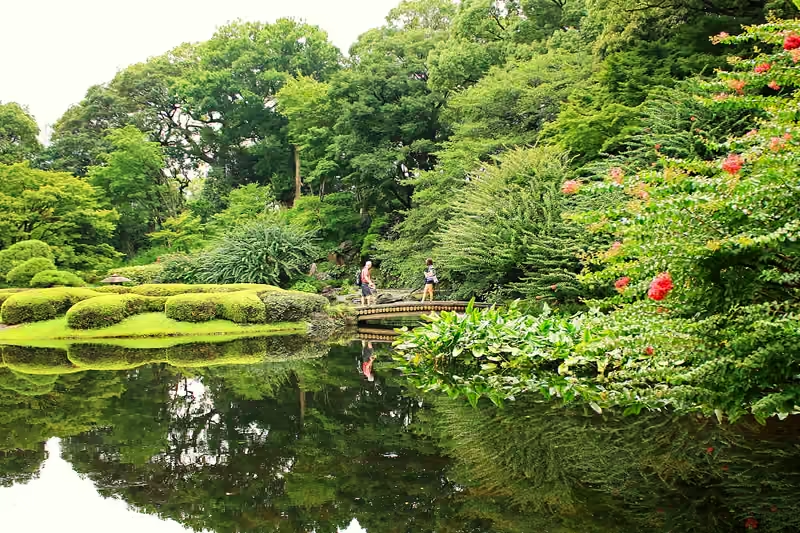
Photo: Andrea Schaffer from Sydney, Australia, Wikimedia Commons (CC BY 2.0) Imperial Palace East Gardens
Former inner grounds of Edo Castle, entered by the Ote-mon, Hirakawa-mon or Kitahanebashi-mon gates near Tokyo Station.
Free.[53]09:00 to 17:00 from 1 March to 14 April and in September; to 18:00 from 15 April to 31 August; to 16:30 in October; to 16:00 from November to the end of February; last entry 30 minutes before. Closed Mondays and Fridays (open on holidays except 23 February), 28 December to 3 January and on some court occasions.[53]None.[53]Official site
Hama-rikyu Gardens
Former shogun's garden on Tokyo Bay with a tidal pond, beside Shiodome.
300 yen (about USD 2); 150 yen (about USD 0.94) aged 65 and over; free for primary school children and younger, and for junior high students living or at school in Tokyo.[54]09:00 to 17:00, last entry 16:30. Closed 29 December to 1 January.[54]Official site
Rikugien Gardens
Edo-period stroll garden around a pond in Komagome, north Tokyo.
300 yen (about USD 2); 150 yen (about USD 0.94) aged 65 and over.[55]09:00 to 17:00, last entry 16:30. Closed 29 December to 1 January.[55]Official site


USD figures are approximate, converted at the ECB euro reference rates of 13 Nov 2026.
First 48 hours
- Before you fly
Register your passport and customs declaration in Visit Japan Web so you can use the electronic gates; it is optional but faster. Check your medicines against the banned list.
- Arrival, 14:00
Clear immigration and customs (electronic declaration gates where available). Pick up a SIM or Wi-Fi router at the terminal counters if you did not load an eSIM, and withdraw yen at a Seven Bank or Japan Post Bank ATM.
- Arrival, 15:00
Narita: Skyliner to Nippori or Ueno (about 36 minutes), N'EX to Tokyo or Shinjuku, or the 1,500 yen TYO-NRT bus to Tokyo Station. Haneda: Monorail to Hamamatsucho (13 minutes) or Keikyu to Shinagawa. Add a Suica or PASMO to your phone or buy a Welcome Suica before you leave the airport.
- Evening
Keep your passport on you; police can ask for it. In Kabukicho, Roppongi, Shibuya and Ikebukuro, ignore touts and never leave a drink unattended.
- Day 2, morning
Museums and gardens mostly close on Mondays and over the New Year. Book timed tickets ahead for the Ghibli Museum (advance only) and teamLab Planets, and buy Skytree tickets online to skip the 500 yen counter fee.
If you want a guide for the first day, see guided tours and day trips in Tokyo on Viator (opens Viator in a new tab) paid link
Luggage storage by the hour sits near most main stations. Bounce
Things to book in Tokyo
Book ahead
Tokyo Skytree
Online purchase recommended and avoids the counter fee.[38]
Book ahead
teamLab Planets, Toyosu, Tokyo
Timed tickets sold in advance online, at Lawson Ticket and Seven-Eleven Ticket.[50]
Tours and day trips
Tours in Tokyo
Tours, day trips and tickets in Tokyo, booked on Viator.
See Tokyo tours on Viator (opens Viator in a new tab) paid link
Where to stay
Ueno and Asakusa (east, Taito ward)
Direct Skyliner from Narita, the Tokyo National Museum and Senso-ji within walking distance or a stop apart, and lower fixed taxi fares from Narita than the west side.
Keisei Skyliner from Narita reaches Nippori and Keisei Ueno in as little as 36 minutes; Keikyu trains from Haneda run through onto the subway towards Asakusa.[21][28]
Tokyo Station and Marunouchi (centre, Chiyoda ward)
Every shinkansen and the Imperial Palace East Gardens at the door; the cheapest Narita bus ends here.
Airport Bus TYO-NRT from Narita in 65 minutes at the fastest for 1,500 yen (about USD 9.5); Airport Limousine Bus from Haneda in about 35 minutes; N'EX from Narita also stops here.[25][33][20]
Shinjuku (west)
The biggest rail hub, Shinjuku Gyoen, and the Chuo line to the Ghibli Museum in 20 minutes.
Airport Limousine Bus from Haneda to Shinjuku Station West Exit in about 35 minutes; N'EX from Narita stops at Shinjuku. Narita fixed-fare taxis to Shinjuku run 31,500 to 32,500 yen (about USD 197 to 203) plus tolls.[33][20][27]
Hamamatsucho and Shinagawa (south)
Fastest from Haneda, on the Yamanote loop, with the shinkansen at Shinagawa.
Tokyo Monorail from Haneda Terminal 3 to Hamamatsucho in 13 minutes at the fastest (520 yen (about USD 3.5)); Keikyu to Shinagawa in about 15 minutes.[29][30][28]
Stays in these areas can be compared on one site. Expedia
Airport to city
Narita International Airport, about 60 km east of central Tokyo, three terminals[20] NRT
| Option | Time | Fare | Pay |
|---|---|---|---|
| Keisei Skyliner to Nippori and Keisei Ueno (all seats reserved).[21]train | As little as 36 minutes to central Tokyo.[21] | Adult base fare 1,280 yen (about USD 8) by ticket or 1,267 yen (about USD 8) by IC card, plus a 1,300 yen (about USD 8) Skyliner ticket. Boarding without a Skyliner ticket adds 300 yen (about USD 2).[22] | Skyliner counters at the Terminal 1 and Terminal 2-3 stations, Keisei counters on 1F of Terminals 1 and 2, Skyliner ticket machines, or the e-ticket site. Major credit cards accepted at counters and machines. Sales open one month ahead.[22] |
| JR Narita Express (N'EX) to Tokyo and Shinjuku.[20]train | 53 minutes at the fastest from Narita Airport to Tokyo Station, with no change of train.[23] | Ordinary car, basic fare plus limited express charge, the same all year: 3,140 yen (about USD 20) to Tokyo, 3,330 yen (about USD 21) to Shinagawa, Shibuya or Shinjuku, 4,480 yen (about USD 28) to Yokohama; Green Car 3,910 and 4,100 yen (about USD 26). The N'EX TOKYO Round Trip Ticket costs 5,200 yen (about USD 33) and covers a return within 14 days. Children pay half.[24][23] | Reserve online from abroad through JR-EAST Train Reservation, or buy up to one month ahead at JR EAST Travel Service Centers, JR ticket offices and the reserved-seat machines; an unreserved-seat ticket costs the same as a reserved one.[24] |
| Airport Bus TYO-NRT to Tokyo Station (JR Bus Kanto, Keisei group and B-Trans).[25]bus | Fastest 65 minutes to Tokyo Station; longer in traffic.[25] | 1,500 yen (about USD 9.5) one way (adult), excluding late-night and early-morning services.[25] | Buy at the airport's bus ticket counters.[26] |
| Fixed-fare taxi from stands at Terminal 1 (no. 15), Terminal 2 (nos. 28 and 31-A) and Terminal 3.[27]taxi | Fixed fares by zone before expressway tolls: 29,000 to 31,000 yen (about USD 181 to 194) to Chuo, Chiyoda, Taito, Bunkyo and Arakawa; 31,500 to 32,500 yen (about USD 197 to 203) to Shinjuku, Shibuya, Meguro, Toshima, Nakano and most of Minato and Shinagawa. Tolls are added, and a surcharge applies 22:00 to 05:00.[27] | No reservation needed; confirm the fixed fare with the driver before getting in. The fixed fare assumes an expressway route; otherwise the meter applies.[27] |
Tokyo International Airport (Haneda), close to the city; international flights mostly use Terminal 3[28] HND
| Option | Time | Fare | Pay |
|---|---|---|---|
| Tokyo Monorail from Terminal 3 to Hamamatsucho (Yamanote line interchange).[29]train | 13 minutes at the fastest; trains about every five minutes.[29] | 520 yen (about USD 3.5) by ticket or 519 yen (about USD 3) by IC card (adult) from Terminal 3 to Hamamatsucho.[30] | Ticket machines take bills and coins and not credit cards; the display switches to English. Suica is accepted at the gates with a 500 yen (about USD 3) card deposit. Gates are on the 2F arrival lobby and 3F departure lobby of Terminal 3.[31][32][28] |
| Keikyu Line from Terminal 3 to Shinagawa, with through trains onto the subway.[28]train | About 15 minutes to Shinagawa (airport estimate).[28] | Keikyu gates are in the Terminal 3 second-floor arrival lobby.[28] | |
| Airport Limousine Bus to Tokyo Station, Shinjuku West Exit and hotels.[33]bus | About 35 minutes to Tokyo Station or to Shinjuku Station West Exit (airport estimate); the operator timetable shows Terminal 3 to Tokyo City Air Terminal in 28 minutes.[33][34] | Adult fares from Haneda: 1,400 yen (about USD 9) to Shinjuku Station and the Shinjuku hotels (700 yen (about USD 4.5) child), 1,000 yen (about USD 6.5) to Tokyo City Air Terminal at Nihonbashi and to Tokyo Big Sight, 1,200 yen (about USD 7.5) to Tokyo Dome Hotel. Seats can be reserved up to five minutes before departure.[35][34] | Buy before boarding: ticket machines in Terminals 1 and 2, machines or bus counters in Terminal 3.[33] |
A pre-booked transfer meets late arrivals at a fixed price. Welcome Pickups
When to go
Warmest month August, average high 88°F (31°C). Coolest month January, average low 34°F (1°C).[43]
All 12 months
| Month | Weather | Crowds | Holidays | Closures |
|---|---|---|---|---|
| January | Mean 5.4 C (42 F) (highs 9.8 C / 50 F, lows 1.2 C / 34 F), 60 mm of rain.[43] | New Year's Day (1 Jan) and Coming of Age Day (11 Jan 2027) are national holidays.[44] | 1 January New Year's Day; second Monday Coming of Age Day.[44] | Shinjuku Gyoen is closed from 29 December to 3 January and on Mondays; many museums follow the same pattern.[45] |
| February | Mean 6.1 C (43 F) (highs 10.9 C / 52 F, lows 2.1 C / 36 F), 57 mm.[43] | National Foundation Day (11 Feb) and the Emperor's Birthday (23 Feb) are holidays.[44] | 11 February National Foundation Day; 23 February Emperor's Birthday.[44] | |
| March | Mean 9.4 C (49 F) (highs 14.2 C / 58 F, lows 5.0 C / 41 F), 116 mm.[43] | Vernal Equinox Day (21 Mar 2027, with a substitute holiday on 22 Mar).[44] | 21 March 2027 Vernal Equinox Day; 22 March 2027 substitute holiday.[44] | Shinjuku Gyoen opens on Mondays from 25 March to 24 April for cherry blossom and may require weekend reservations.[45] |
| April | Mean 14.3 C (58 F) (highs 19.4 C / 67 F, lows 9.8 C / 50 F), 134 mm.[43] | Showa Day (29 Apr) opens the Golden Week run of holidays.[44] | 29 April Showa Day.[44] | |
| May | Mean 18.8 C (66 F) (highs 23.6 C / 74 F, lows 14.6 C / 58 F), 140 mm.[43] | Golden Week: Constitution Memorial Day (3 May), Greenery Day (4 May) and Children's Day (5 May).[44] | 3 May Constitution Memorial Day; 4 May Greenery Day; 5 May Children's Day.[44] | |
| June | Mean 21.9 C (71 F) (highs 26.1 C / 79 F, lows 18.5 C / 65 F), 168 mm. Typhoon season begins.[43] | No national holiday in June.[44] | ||
| July | Mean 25.7 C (78 F) (highs 29.9 C / 86 F, lows 22.4 C / 72 F), 156 mm. Typhoon risk peaks July to September.[43] | Marine Day, third Monday (19 Jul 2027).[44] | Third Monday of July, Marine Day.[44] | Typhoon season June to December, peaking July to September; follow forecasts and local evacuation orders.[8] |
| August | Mean 26.9 C (80 F) (highs 31.3 C / 88 F, lows 23.5 C / 74 F), 155 mm.[43] | Mountain Day (11 Aug) is a national holiday.[44] | 11 August Mountain Day.[44] | |
| September | Mean 23.3 C (74 F) (highs 27.5 C / 82 F, lows 20.3 C / 69 F), 225 mm, the second-wettest month.[43] | Respect for the Aged Day (20 Sep 2027) and Autumnal Equinox Day (23 Sep).[44] | 20 September 2027 Respect for the Aged Day; 23 September Autumnal Equinox Day.[44] | Typhoon peak continues; follow Japan Meteorological Agency warnings.[8] |
| October | Mean 18.0 C (64 F) (highs 22.0 C / 72 F, lows 14.8 C / 59 F), 235 mm, the wettest month on average.[43] | Sports Day, second Monday (11 Oct 2027).[44] | Second Monday of October, Sports Day.[44] | |
| November | Mean 12.5 C (55 F) (highs 16.7 C / 62 F, lows 8.8 C / 48 F), 96 mm.[43] | Culture Day (3 Nov) and Labour Thanksgiving Day (23 Nov).[44] | 3 November Culture Day; 23 November Labour Thanksgiving Day.[44] | Shinjuku Gyoen opens on Mondays 1 to 15 November for the chrysanthemum exhibition.[45] |
| December | Mean 7.7 C (46 F) (highs 12.0 C / 54 F, lows 3.8 C / 39 F), 58 mm.[43] | No national holiday in December.[44] | Year-end closures: Shinjuku Gyoen from 29 December.[45] |
What things cost
| Item | What it costs |
|---|---|
| Tokyo Monorail, Haneda Terminal 3 to Hamamatsucho (adult) | 520 yen (about USD 3.5) by ticket, 519 yen (about USD 3) by IC card[30] |
| Keisei Skyliner, Narita Airport to Keisei Ueno (adult) | 1,280 yen (about USD 8) base fare (1,267 yen (about USD 8) by IC) plus 1,300 yen (about USD 8) Skyliner ticket[22] |
| Airport Bus TYO-NRT, Narita to Tokyo Station (adult) | 1,500 yen (about USD 9.5) one way[25] |
| IC card deposit (Suica, PASMO and regional cards) | 500 yen (about USD 3), refundable; waived on Welcome Suica and TOURIST PASMO[12] |
| Tokyo National Museum, regular exhibitions (adult) | 1,000 yen (about USD 6.5)[37] |
| Tokyo Skytree Tembo Deck, 350 m (adult) | From 1,800 yen (about USD 11); deck plus galleria from 3,000 yen (about USD 19); add 500 yen (about USD 3) per ticket if bought at the counter or machines on the day[38] |
| Prepaid data SIM, 1 GB for 30 days (JNTO figure) | About 3,000 yen (about USD 19)[16] |
| Narita Express, Narita Airport to Tokyo Station (adult, ordinary car) | 3,140 yen (about USD 20) one way; 5,200 yen (about USD 33) for the N'EX TOKYO Round Trip Ticket.[24] |
| Tokyo Metro single fare (adult) | 180 to 330 yen (about USD 1 to 2) by distance with a paper ticket, 178 to 324 yen (about USD 1 to 2) by IC card; children half. The price includes a 10 yen (about USD 0.06) barrier-free levy.[39] |
| Tokyo Subway Ticket, Toei and Tokyo Metro lines (adult) | 1,000 yen (about USD 6.5) for 24 hours, 1,500 yen (about USD 9.5) for 48 hours, 2,000 yen (about USD 13) for 72 hours; children half.[40] |
| Toei 1-Day Pass (adult) | 700 yen (about USD 4.5) for a day on the Toei Subway, Toei buses, the Tokyo Sakura Tram and the Nippori-Toneri Liner.[40] |
| International Tourist Tax (departure tax, per departure) | 3,000 yen (about USD 19) for each departure from Japan from 1 July 2026, up from 1,000 yen (about USD 6.5); a departure on or after that date under certain transport contracts made before it is still charged 1,000 yen (about USD 6.5). Children under 2 and transit passengers leaving within 24 hours of arrival are exempt.[41][42] |
Safety
Japan Visitor Hotline 050-3816-2787, 24 hours, in English, Chinese, Korean and Japanese, for illness, disasters and other emergencies. Tokyo police English helpline 03-3501-0110. In a large earthquake indoors, stay put and follow staff; near the coast, move to higher ground.[36]
Scams to watch for
- Drink spiking and card fraud in Kabukicho, Roppongi, Shibuya and Ikebukuro, often starting with a street tout; most British victims were targeted in Kabukicho.[8]
- Bar and club overcharging, sometimes ending in violence. Never leave a drink unattended and be wary of food or drink from new acquaintances.[9]
- Card skimming and ATM fraud: watch your card when others handle it, use ATMs in well-lit public places or inside banks, and cover the keypad.[9]
Common mistakes
Myth: The Japan Rail Pass always saves money.
Actually: The 7-day ordinary pass costs 50,000 yen (about USD 313) online (53,000 yen (about USD 331) from an overseas agent), 14 days 80,000 yen (about USD 500) and 21 days 100,000 yen (about USD 625). It only pays if the JR fares you would otherwise buy in that window add up to more. Price it against your actual legs on the official site before buying; the airport links alone (Skyliner, Monorail, Haruka) are not JR Pass savings of that size.[46]
Myth: Cards work everywhere in Japan now.
Actually: Canada's advice calls Japan largely cash-based and warns that many ATMs refuse foreign debit cards. JNTO says cards usually fail for short train and subway trips and names Japan Post Bank and Seven Bank ATMs for foreign cards. Carry yen for small restaurants, temples and local transport, or load an IC card.[9][10]
Myth: You need to buy a physical Suica card.
Actually: On an iPhone 8 or later you can add a new Suica, PASMO or ICOCA in the Wallet app with no physical card, loading a balance from a card in Apple Pay, or transfer an existing card. JNTO also lists a Welcome Suica Mobile option.[47][12]
Myth: Leave a tip for good service.
Actually: Tipping is not expected at restaurants, cafes, bars, in taxis or at hotels. The one case JNTO allows is a private guide or interpreter, paid discreetly in an envelope.[11]
Sources
Show all sources (58)
- About Senso-ji (Japanese), Senso-ji.
- Plan your trip, Japan National Tourism Organization.
- Plug and electricity, Japan National Tourism Organization.
- Banknotes and coins in use, Bank of Japan.
- Visit Japan Web (policy page), Digital Agency, Government of Japan.
- Visa information, Japan National Tourism Organization.
- Customs procedures for passengers, Japan Customs, Ministry of Finance.
- Japan travel advice: safety and security, UK Foreign, Commonwealth and Development Office.
- Travel advice and advisories for Japan, Government of Canada.
- Credit cards, Japan National Tourism Organization.
- Tipping in Japan, Japan National Tourism Organization.
- IC travel cards, Japan National Tourism Organization.
- Tax-free shopping: the refund method for travellers (Japanese), Japan Tourism Agency, MLIT.
- Japan's tax exemption, Japan National Tourism Organization.
- Prepaid SIM for Travel, SoftBank.
- Wi-Fi and connectivity, Japan National Tourism Organization.
- International services, NTT Docomo.
- Rakuten Mobile English site, Rakuten Mobile.
- Internet, Wi-Fi and cell phones, Narita International Airport Corporation.
- Access by train, Narita International Airport Corporation.
- Skyliner (English), Keisei Electric Railway.
- Skyliner: how to purchase tickets, Keisei Electric Railway.
- N'EX (Narita Express), East Japan Railway Company.
- N'EX (Narita Express) tickets, East Japan Railway Company.
- Airport Bus TYO-NRT, JR Bus Kanto, Keisei Group and B-Trans.
- Access by bus, Narita International Airport Corporation.
- Access by taxi (fixed fares), Narita International Airport Corporation.
- Train and monorail access, Tokyo International Air Terminal (Haneda Airport).
- Tokyo Monorail (English), Tokyo Monorail.
- Monorail fares, Tokyo Monorail.
- Purchasing tickets, Tokyo Monorail.
- Suica information, Tokyo Monorail.
- Express bus and route bus access, Tokyo International Air Terminal (Haneda Airport).
- Haneda Airport to Tokyo City Air Terminal timetable, Tokyo Airport Transportation (Airport Limousine Bus).
- Haneda Airport to Shinjuku and Nakano area timetable, Tokyo Airport Transportation (Airport Limousine Bus).
- Emergencies, Japan National Tourism Organization.
- Regular exhibitions: hours and admission, Tokyo National Museum.
- Tokyo Skytree tickets, Tokyo Skytree (Tobu Tower Skytree).
- Regular tickets, Tokyo Metro.
- Tickets, Toei Transportation, Tokyo Metropolitan Government.
- No.7195 Outline of the International Tourist Tax, National Tax Agency, Japan.
- FY2026 tax reform (national taxes), Finance, April 2026, Ministry of Finance, Japan.
- Climate normals 1991-2020, Tokyo (monthly), Japan Meteorological Agency.
- National holidays (list for 2026 and 2027), Cabinet Office, Government of Japan.
- Shinjuku Gyoen admission information (Japanese), Ministry of the Environment.
- Japan Rail Pass: types and prices, JR Group (Japan Rail Pass official site).
- Add a Suica, PASMO or ICOCA card to Apple Wallet, Apple Support.
- Visit Meiji Jingu, Meiji Jingu.
- Tokyo Skytree official site: today's operation hours, Tokyo Skytree (Tobu Tower Skytree).
- teamLab Planets TOKYO official tickets, teamLab Planets TOKYO.
- Ghibli Museum tickets, Ghibli Museum, Mitaka.
- Ghibli Museum hours and directions, Ghibli Museum, Mitaka.
- Imperial Palace East Gardens: visiting information, Imperial Household Agency.
- Hama-rikyu Gardens outline, Tokyo Metropolitan Park Association.
- Rikugien Gardens outline, Tokyo Metropolitan Park Association.
- au English site, KDDI (au).
- Exemption of Visa (Short-Term Stay), Ministry of Foreign Affairs of Japan.
- Japan travel advice and safety, Australian Government, Smartraveller.